Gera Animal Park: Discover the Forest Zoo in Martinsgrund
Animal Parks, Zoos & Wildlife Enclosures in Gera: Preview of Upcoming Nature Experiences in Martinsgrund
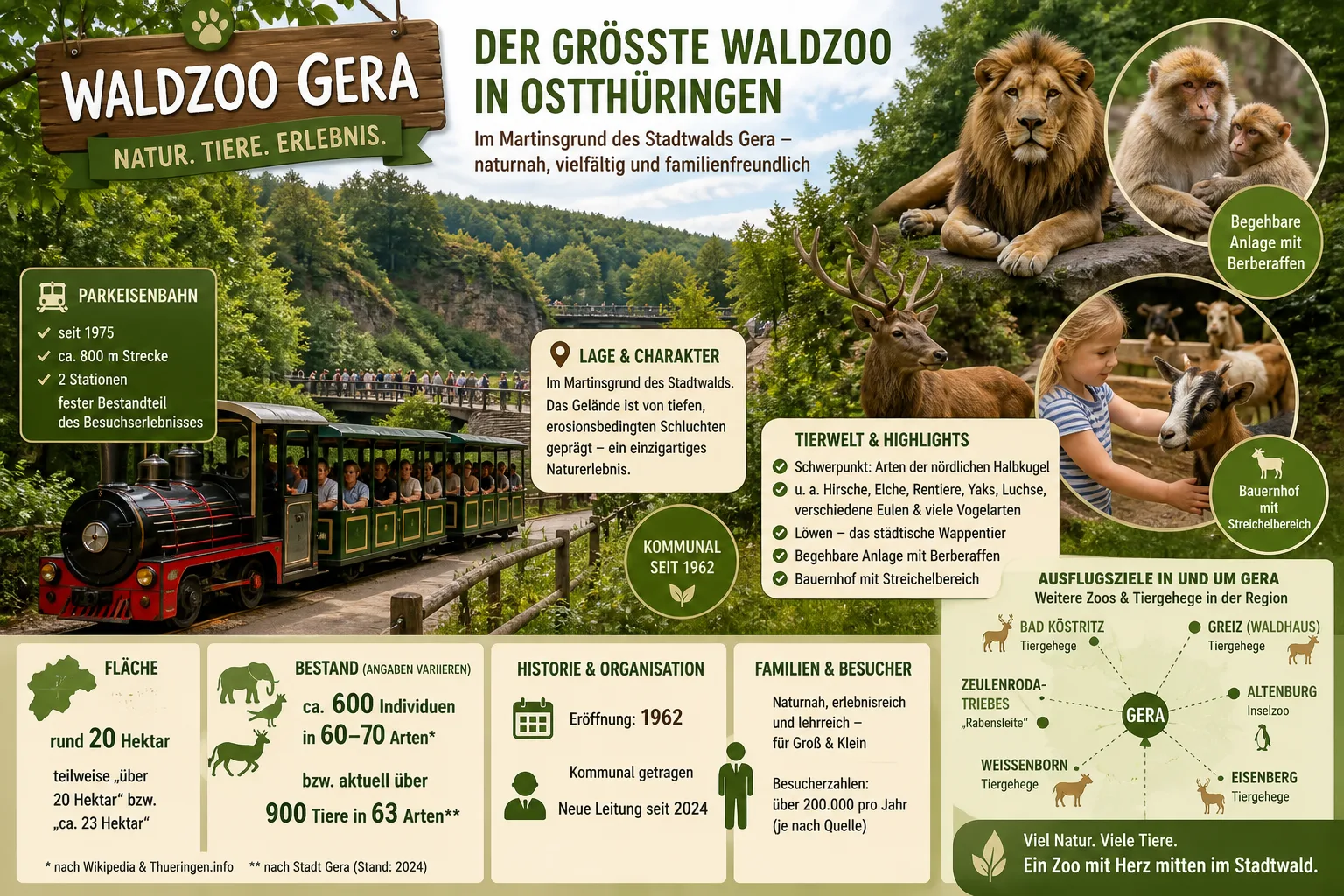
If you are looking for a nature outing in Gera in the coming months, Martinsgrund offers a destination that is particularly well-suited for families, walkers, and animal lovers: the animal park in the city forest. This outlook shows what experiences visitors can expect in the future, how to plan your visit in advance, and which other animal locations in the region are interesting for upcoming weekends.
Animal Park in Martinsgrund: What Awaits You On Site in the Future
For the upcoming excursion season, the animal park in Martinsgrund can be planned as a forest experience with short and longer routes: trails in the hillside forest, shady sections on warm days, and quiet perspectives on enclosures that can be easily combined with breaks. Those who prepare their visit in the coming weeks will benefit especially from two things: a realistic time buffer (for observations and breaks) and a look at the current notices from the operators (e.g., about paths, temporary closures, or daily regulations).
To keep the outing relaxed in the future, it is worth having a plan that does not try to "do everything at once." Especially in wooded facilities, it is normal for animals to be out of sight at times. Good observations often occur later on the round when you move more quietly and include short rest periods.
Animal World & Observation Tips for Your Next Visit
If you visit the animal park in the near future, the experience will be strongly shaped by how you look: fewer "program points," more observation. In facilities with forest and hillside character, many species are best seen when you linger longer at suitable spots.
What You Can Plan Especially Well in the Future
- Hoofed animals in spacious outdoor enclosures: For upcoming visits, quiet morning or later afternoon times are often especially suitable to catch movement phases.
- Predators and crepuscular species: Patience is key. Plan several short stops instead of one long "wait" at just one spot.
- Walk-through areas (if open): Find out about the current rules before your visit. In the coming months, maintaining a respectful distance and avoiding feeding (except where expressly permitted) will continue to be central.
- Farm and petting areas: For future family visits, these areas are often a calm anchor point when younger children need a safe, manageable station in between.
If you "plan in" animal observation for your next outing, it's best to plan time: stand quietly, stay silent, walk by twice. An animal often only appears when the initial bustle has passed.
Animal Welfare: How to Recognize a Good Visit in the Future
In the coming years, it will become increasingly apparent in animal parks and zoos how much modern husbandry is shaped by structures, enrichment, and retreat opportunities. As a visitor, you can look for signs on your next visits that are typically associated with animal welfare-oriented facilities: retreat zones, clear visitor guidance, information (species, habitats, conservation), and understandable rules (e.g., feeding bans, noise protection, distance).
Planning: Arrival, Times, Tickets & a Good Visiting Pace
The most important rule for your future visit: Check the official information on opening hours, admission, and possible restrictions shortly before your visit. In animal facilities, times can change seasonally; weather conditions or operational reasons may also require adjustments.
Practical Planning Steps for the Coming Weeks
- Confirm opening hours on the day of your visit (official website or city info pages).
- Plan enough time: Better to have fewer stations, but more observation time and breaks.
- Consider weather and forest character: Sturdy shoes and a jacket are often useful even in warm months.
- Consideration as a basic rule: Move quietly, do not tap on glass, do not scare animals, do not feed your own food.
Park Train & Visitor Comfort (if offered)
If a park or visitor train is operated in the animal park, it can offer two main advantages in the future: it provides variety for children and helps to reach individual areas with less effort. Whether and when such services run may depend on the day or season—again, check officially in advance.
Around Gera: Ideas for Upcoming Excursions to Animal Parks & Wildlife Enclosures
If you want to visit more than one animal location in the coming months, it is worth planning excursions "in stages": one destination per weekend, with enough time for travel, breaks, and a short walk in the area. In Thuringia and the surrounding area, you will find different concepts—from smaller wildlife enclosures focusing on regional species to more developed animal parks.
A good strategy for the coming weekends is to select destinations according to these criteria:
- Focus: mainly native wildlife, farm education, or mixed animal husbandry.
- Terrain: more accessible circular path vs. natural hillside/forest character.
- Family factors: proximity to playgrounds, picnic opportunities, shady paths.
- Quality of information: well-explained species and conservation content, clear behavioral rules.
This creates a plannable network of nature and animal experiences from Gera that can be varied over the coming months—without every outing having to be a "major project."
Future & Responsibility: What Modern Animal Parks Will Focus on in the Future
In the near future, it will become even clearer for many animal parks that visitor interest and responsibility go hand in hand. In public communication, these topics will often come to the fore:
- Transparency: understandable information on animal care, enclosure design, and educational goals.
- Species conservation & education: conveying habitats, biodiversity, and human impact.
- Visitor guidance: routing and rules that reduce stress for animals.
- Sustainability in operations: energy, resources, nature-oriented land management (where feasible).
This can be a good guide for your next visit: Choose facilities that clearly explain why animals are kept the way they are—and that actively involve visitors in respectful behavior.
Note on classification: This article is a planning and orientation contribution. The official information from the respective operators (e.g., on opening hours, offers, rules, and daily changes) is always binding.