
Matthias Eisenberg
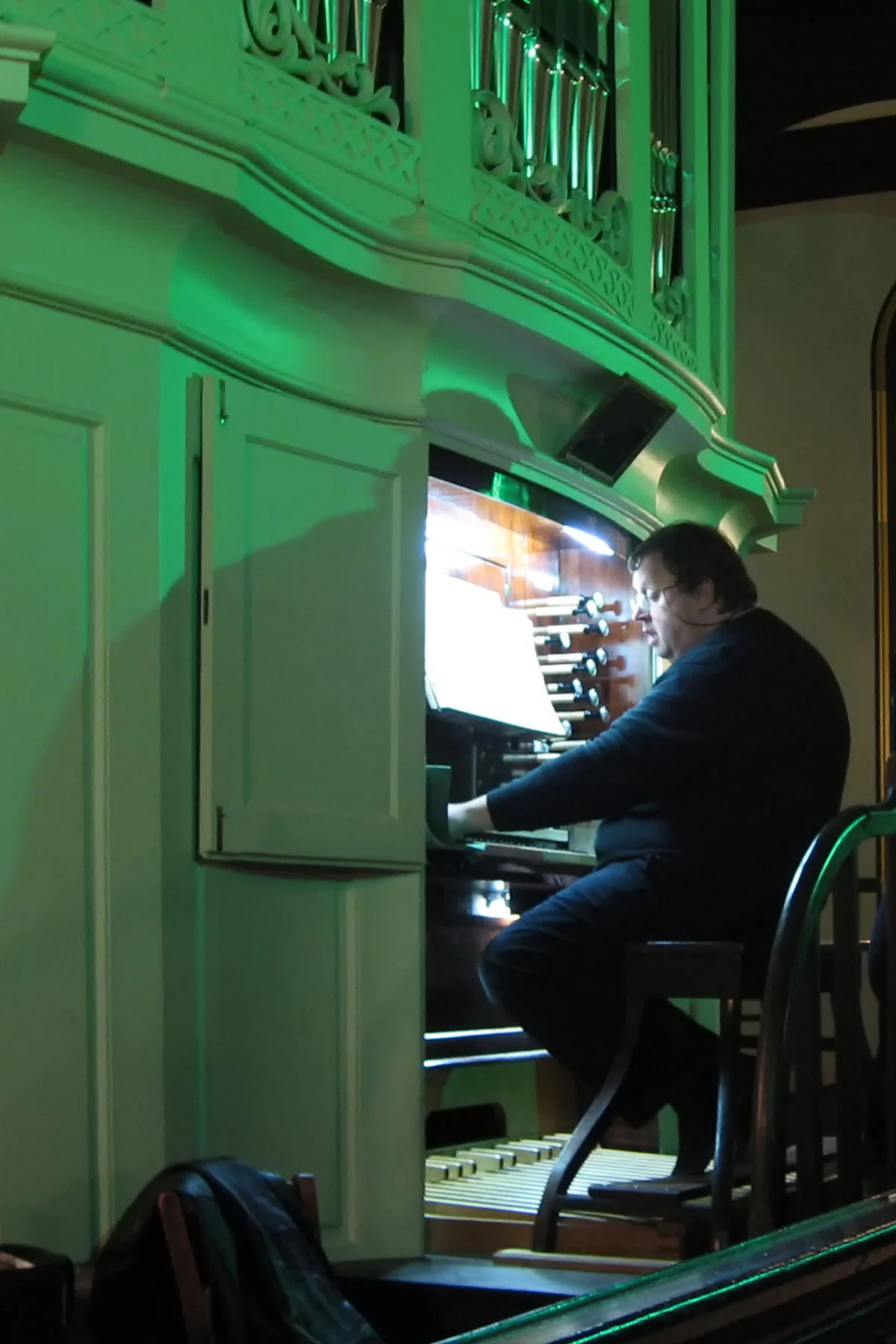
Image from Wikipedia
Image from Wikipedia
Matthias Eisenberg – Organ Art Between Bach, Improvisation, and Stage Magic
A German Organist with Extraordinary Charisma
Matthias Eisenberg, born on January 15, 1956, in Elstra near Kamenz, is one of the defining German organists, harpsichordists, and church musicians of his generation. His artistic career combines early musical influences, academic excellence, and a stage presence that has become unusually popular, even within the classical organ circuit. The result is a musical career based equally on virtuosity, stylistic awareness, and improvisational freedom. ([de.wikipedia.org](https://de.wikipedia.org/wiki/Matthias_Eisenberg))
Early Shaping: Music as a Way of Life
Eisenberg's musical path began exceptionally early. By the age of nine, he was serving as an organist in Saxon parishes, having previously taken piano lessons and been a member of the Dresdner Kreuzchor for five years. This early connection to vocal culture, liturgical practice, and instrumental technique continues to shape his understanding of sound, harmony, and musical architecture to this day. ([de.wikipedia.org](https://de.wikipedia.org/wiki/Matthias_Eisenberg))
His studies took him to the Hochschule für Musik "Felix Mendelssohn Bartholdy" in Leipzig, where he studied under Wolfgang Schetelich and passed the A-exam in 1978. Even during his studies, he won international competitions, including the improvisation competition in Weimar. These accolades signify not only technical mastery but also the creative spontaneity that would significantly define Eisenberg's profile as a master of free improvisation. ([de.wikipedia.org](https://de.wikipedia.org/wiki/Matthias_Eisenberg))
Leipzig and the Early Breakthrough in the Concert Scene
In 1980, Kurt Masur appointed Eisenberg as principal organist at the Gewandhaus in Leipzig, while simultaneously serving as harpsichordist with the Leipzig Bach Orchestra. Thus, he found himself early on at the center of a musically rich metropolis, where the repertoire of Johann Sebastian Bach, Saxon organ culture, and symphonic concert practice intersected. His appearances on East German television and successes outside the GDR, such as at the Bach Festival in Graz and at the Bach Academy in Stuttgart, further strengthened his reputation beyond the regional scene. ([de.wikipedia.org](https://de.wikipedia.org/wiki/Matthias_Eisenberg))
The turning point in 1986, when Eisenberg did not return to the GDR from a tour in the Federal Republic, marked a biographical and artistic watershed. After stations in Bad Homburg and Hanover, he developed into a freelance organist and harpsichordist, performing with chamber ensembles and symphony orchestras in Europe, Asia, North and South America, as well as in Australia. This international reach lent his career a radiance that extends far beyond classical church music. ([de.wikipedia.org](https://de.wikipedia.org/wiki/Matthias_Eisenberg))
St. Severin on Sylt and the Triumph of the Audience
From 1992 to 2004, Matthias Eisenberg served as a church musician at St. Severin in Keitum on Sylt. During this period, he combined liturgical responsibility with an intense concert life, showcasing his unique ability to transform spiritual spaces into vibrant sound environments. The press described him as an internationally renowned organist whose artistic life principle includes improvisation and immediate communication with the audience. ([de.wikipedia.org](https://de.wikipedia.org/wiki/Matthias_Eisenberg))
Particularly memorable was his performance in January 2001 at the Leipzig Gewandhaus after 15 years away. The venue had been sold out for weeks, the audience responded with standing ovations, and the encore series lasted more than an hour. Such moments demonstrate that Eisenberg's musical career is based not only on institutional recognition but on a genuine emotional connection between the artist and the audience. ([matthias-eisenberg.de](https://matthias-eisenberg.de/))
Awards, Titles, and Institutional Recognition
In 2003, Eisenberg was appointed professor and church music director; in the same year, the Minister-President of Schleswig-Holstein, Heide Simonis, awarded him the honorary title of Professor for his contributions to organ playing and organ maintenance. At the end of 2022, he was also named an honorary citizen of his hometown, Elstra. These honors attest to his stature as an authority in organ culture and underline the institutional appreciation that his work has received over the decades. ([de.wikipedia.org](https://de.wikipedia.org/wiki/Matthias_Eisenberg))
Since November 2004, he has served as cantor and organist at the Luther, Moritz, and Johanniskirchen in Zwickau. While tensions did arise with the congregation later, this phase also shows how closely Eisenberg's artistic self-understanding is connected to concrete church music practice, youth work, and the nurturing of a vibrant organ culture. Therefore, his biography is not just a sequence of stations but an example of how artistic development and church duties intersect productively. ([de.wikipedia.org](https://de.wikipedia.org/wiki/Matthias_Eisenberg))
Discography: Bach, Baroque, and Sonic Partnerships
Matthias Eisenberg's discography is extensive and documents his stylistic breadth. His official website features recordings such as In dulci jubilo (2010), Mathias Schmutzler & Matthias Eisenberg (2006), Power Play - Harmonic Brass & Matthias Eisenberg (2005), and several productions from the early 2000s, including Matthias Eisenberg - An Organ Concert, Organ Music from St. Severin, Keitum, and J.S. Bach Organ Works. This selection highlights an artist who not only interprets the core repertoire but continually recontextualizes it in new sonic environments. ([matthias-eisenberg.de](https://matthias-eisenberg.de/))
Particularly notable is the combination of solo works and collaborations with trumpet, brass ensembles, vocal ensembles, and orchestral formations. Titles such as Feidman & Eisenberg, The trumpets shall sound, Widor 5th Organ Symphony, or Mendelssohn: 6 Sonatas Op. 65 illustrate the range between the preservation of baroque tradition, romantic repertoire, and concert virtuosity. The long-running series Bach, Organ Works also points to a discographic continuity that positions Eisenberg as one of the reliable Bach interpreters of his generation. ([matthias-eisenberg.de](https://matthias-eisenberg.de/))
Musical Development and Style: Improvisation as a Signature
Eisenberg's artistic identity thrives on the connection between historical fidelity to works and free improvisation. Sources explicitly describe him as a master of free improvisation; moreover, his discography includes several recordings with an improvisational character. Particularly in organ playing, this results in a personal tone that does not separate liturgical function, concert dramaturgy, and spontaneous invention but instead merges them into a vibrant unity. ([matthias-eisenberg.de](https://matthias-eisenberg.de/))
His style is never merely academic but always communicative. This is evident in the choice of instruments, the maintenance of large organ constructions, and the willingness to work with prominent soloists or brass formations. Eisenberg's interpretations align with the German organ tradition originating from Bach, but in the 20th and 21st centuries, it has developed a new closeness to audiences, sonic openness, and concert aesthetics. ([matthias-eisenberg.de](https://matthias-eisenberg.de/))
Cultural Influence and Resonance
Matthias Eisenberg has significantly broadened the perception of the organist profession in Germany. The press has emphasized his unusual popularity, his creative power, and the allure of his concerts, which have captivated a wide audience even in church settings. His work in Sylt, Leipzig, Zwickau, and numerous international venues has made him an ambassador of German organ culture, convincingly merging liturgical depth and concert brilliance. ([matthias-eisenberg.de](https://matthias-eisenberg.de/))
The description in the press as "internationally renowned organist" and the reference to collaboration with artists such as Mathias Schmutzler, Giora Feidman, or Harmonic Brass further attest to his influence on the interplay of organ, chamber music, and popular classical music. It is this blend of sacred authority, technical brilliance, and audience-friendly programming that secures Eisenberg a permanent place in the German music landscape. ([de.wikipedia.org](https://de.wikipedia.org/wiki/Matthias_Eisenberg))
Conclusion
Matthias Eisenberg represents an organ art that does not conserve tradition but brings it to life. His career combines early education, competitive strength, international concert activity, improvisational freedom, and a discography that illuminates the repertoire from Bach to collaborative crossover productions. Those who want to experience how genuine stage energy emerges from church music should hear Matthias Eisenberg live. ([matthias-eisenberg.de](https://matthias-eisenberg.de/))
Official Channels of Matthias Eisenberg:
- Instagram: no official profile found
- Facebook: no official profile found
- YouTube: no official profile found
- Spotify: no official profile found
- TikTok: no official profile found