Moritz Rinke
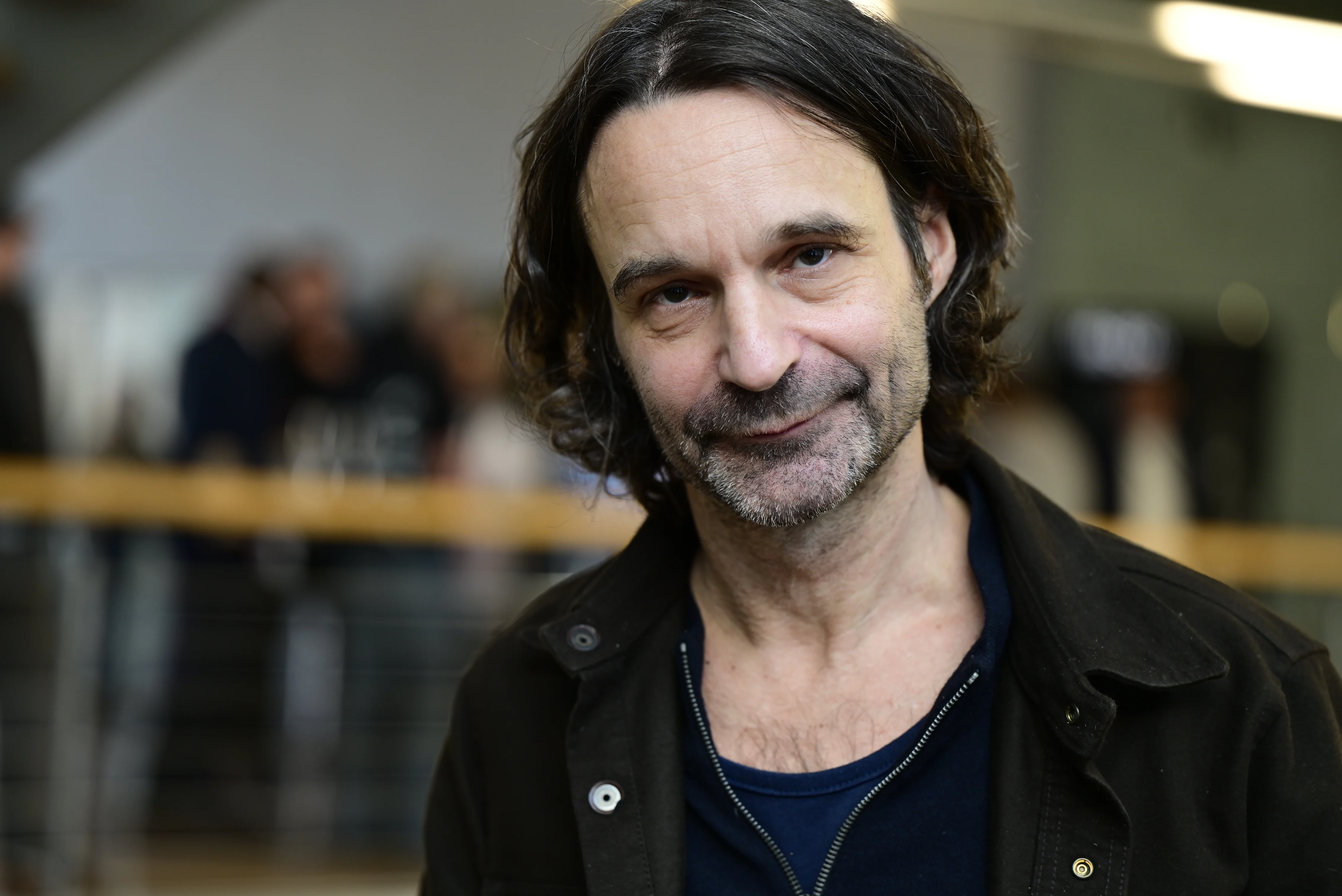
Image from Wikipedia
Image from Wikipedia
Moritz Rinke – Playwright, Novelist, and Subtle Chronicler of the Present
An Author Between Stage, Society, and Contemporary Life
Moritz Rinke, born on August 16, 1967, in Worpswede near Bremen, is one of the most prominent German-speaking playwrights and novelists of his generation. The Berlin-based author combines literary precision with sharp social observation and has established a firm place in contemporary theater and literary life through his plays, novels, and essays. His work traverses the realms of comedy, farce, family stories, and diagnoses of the present – always with an eye on the mechanics of human relationships and the fractures of modern life. (de.wikipedia.org)
Biographical Roots in Worpswede and the Journey to Gießen
Rinke grew up in Worpswede, a place with a strong cultural aura that has always represented creativity, landscape, and individuality in German art history. After completing his Abitur and civil service, he studied Applied Theater Science at the University of Gießen under Andrzej Wirth – an academic environment that has shaped the aesthetic openness of his later works. Early on, Rinke combined literary writing with journalistic practice, working for media outlets such as Süddeutsche Zeitung, Frankfurter Allgemeine Zeitung, Die Zeit, and Theater heute. (munzinger.de)
This dual heritage from theory and daily journalism is crucial to his work. Rinke does not conceive theater as merely a mouthpiece but as a space for observation, conflict, and precisely crafted dialogues. The journalistic school sharpened his insight into social friction, while theater studies provided the formal approach – a combination that continues to influence his dramaturgy today. (germanistik-magazin-jlu.de)
The Breakthrough on Theater Stages
As early as the mid-1990s, Rinke was invited to the Berliner Stückemarkt with early plays, including "Der graue Engel," "Der Mann, der noch keiner Frau Blöße entdeckte," and later "Republik Vineta." This set the course: Rinke quickly evolved into an author whose works were embraced by major stages and intensely discussed within the German-speaking theater scene. His texts found their way to renowned venues and were constantly re-examined through different aesthetic interpretations. (berlinerfestspiele.de)
Rinke's ability to narrate conflicts not only psychologically but also socially is considered pivotal. His plays address relationship dynamics, roles, loss, irony, and the uncertainties of modern biographies. This quality defines his uniqueness: he does not write in a strictly naturalistic manner but with a sense for condensed situations where comedy and melancholy lie closely together. (welt.de)
Novels, Narrative Prose, and Literary Polyphony
In addition to theater, Moritz Rinke has also made a name for himself as a novelist. His book publications include "Der Blauwal im Kirschgarten," "Der Mann, der durch das Jahrhundert fiel," "Wir lieben und wissen nichts," "Der längste Tag im Leben des Pedro Fernández García," "Unser kompliziertes Leben," and "Ich könnte hier stundenlang sitzen und auf den Rasen schauen." These titles showcase the breadth of his writing: from literary playfulness with traditions to the observation of familial and societal upheavals. (rowohlt-theaterverlag.de)
Rinke's prose bears the hallmark of a dramatist while maintaining its own identity. Dialogical tension, pointed scene direction, and a keen sense for tonal shifts also characterize his novels. The combination of narrative ease and formal discipline makes his texts equally appealing to readers and theater audiences. (rowohlt-theaterverlag.de)
Acknowledgment, Awards, and Authority in the Literary Field
Rinke also received early recognition in journalism: He was awarded the Axel Springer Prize twice by Tagesspiegel, among others for a report on Marlene and a piece about the Love Parade in 1997. These accolades underline that his authorship has developed not only on stage but also in the journalistic field. His profile as an author with social sensibility became visible early and has been reliably confirmed. (de.wikipedia.org)
Institutionally, Rinke is also present. He served as a guest professor for Dramatic Writing at the German Literature Institute in Leipzig and later as a guest lecturer in Paderborn. Such teaching positions not only mark acknowledgment but also impact: Rinke is among the voices that not only practice contemporary writing but also pass it on and reflect upon it. (rowohlt-theaterverlag.de)
Style, Language, and Dramatic Signature
Rinke's writing thrives on precision, pace, and a fine balance of wit and seriousness. His plays are often grounded in relationships, societal roles, and an undercurrent of crisis energy. Critics frequently highlight that he does not treat classical subjects in a museum-like manner but transfers them into the present – for example, in "Westend," which clearly references Goethe's "Wahlverwandtschaften" or in recent works that interlink artificial intelligence and humanism. (die-deutsche-buehne.de)
It is precisely this tension between literary tradition and contemporary analysis that gives his texts their appeal. Rinke employs comedy, irony, and emotional precision without caricaturing his characters. The language remains fluid, the dialogues are incisive, and beneath the surface of levity often lie vulnerability, alienation, and the quest for orientation in a hurried world. (nachtkritik.de)
Critical Reception and Cultural Influence
Theater criticism has consistently paid attention to Rinke's work. Reviews commend his ability to translate contemporary themes into playful, often light-footed forms while also noting his tendency toward intensification and overloading complex subjects. This ambivalence is part of his artistic signature: Rinke fully exploits the form of comedy as well as the melancholic depth of a family piece or reflections on societal upheavals. (die-deutsche-buehne.de)
His cultural influence is reflected in the strong presence on German stages and the enduring relevance of his themes. Rinke writes about relationships, urban lifestyles, breaks in tradition, and the fragile balance between individual freedom and social expectations. Thus, he counts among the authors who not only accompany but also shape contemporary theater in the German-speaking world. (berlinerfestspiele.de)
Current Works and New Perspectives
Even in the 2020s, Moritz Rinke remains productive and present. In 2021, the novel "Der längste Tag im Leben des Pedro Fernández García" was published, in 2023 "Unser kompliziertes Leben," and in 2024 "Ich könnte hier stundenlang sitzen und auf den Rasen schauen" followed. Concurrently, new theater works are drawing attention, including the AI comedy "Sophia oder das Ende der Humanisten," which was discussed and performed in Vienna and Berlin in 2025 and 2026. (rowohlt-theaterverlag.de)
Additionally, his public presence extends beyond writing: In 2024, Rinke, together with his wife, opened the Turkish restaurant "Müsterek Meyhane" in Berlin. This detail adds to the picture of an author who processes cultural experience not only in texts but also lives and expands it in everyday life. Thus, his biography remains open, current, and polyphonic. (de.wikipedia.org)
Conclusion: An Author with Attitude, Wit, and Theatrical Intelligence
Moritz Rinke is exciting because he unites literary form and social observation in a rarely clear way. His dramas and novels connect intelligence with accessibility, critique with humor, and aesthetic ambition with narrative energy. Those who appreciate contemporary literature and modern theater with a sense for subtext, pace, and psychological tension will find in Rinke an author of lasting relevance. (rowohlt-theaterverlag.de)
It is precisely live on stage that his texts unfold their full effect: in the interplay of language, acting, and direction, in the friction between comedy and crisis. Moritz Rinke remains an author who should not only be read but also experienced. (die-deutsche-buehne.de)
Official Channels of Moritz Rinke:
- Instagram: No official profile found
- Facebook: No official profile found
- YouTube: No official profile found
- Spotify: No official profile found
- TikTok: No official profile found
Sources:
- Wikipedia – Moritz Rinke
- Rowohlt Theater Verlag – Moritz Rinke
- Berliner Festspiele – Moritz Rinke
- Munzinger Biography – Moritz Rinke
- Bloomsbury Publishing – Moritz Rinke
- Renaissance-Theater Berlin – Sophia oder das Ende der Humanisten
- Die Deutsche Bühne – Review of Sophia oder das Ende der Humanisten
- Tagesspiegel – Review and Report on Moritz Rinke
- DIE ZEIT – Moritz Rinke at the Renaissance Theater
- Carlsen – Moritz Rinke
Upcoming Events
Sophia or the End of Humanists
Sophia or the End of Humanists, Comedy by Moritz Rinke
Sophia or the End of the Humanists, Comedy by Moritz Rinke
Sophia or the End of the Humanists
Sophia or the End of Humanists, Comedy by Moritz Rinke
Sophia or the End of the Humanists, Comedy by Moritz Rinke
Sophia or the End of Humanists, Comedy by Moritz Rinke
Sophia or the End of the Humanists, Comedy by Moritz Rinke
Sophia or the End of Humanists, Comedy by Moritz Rinke