
Mortal Sin
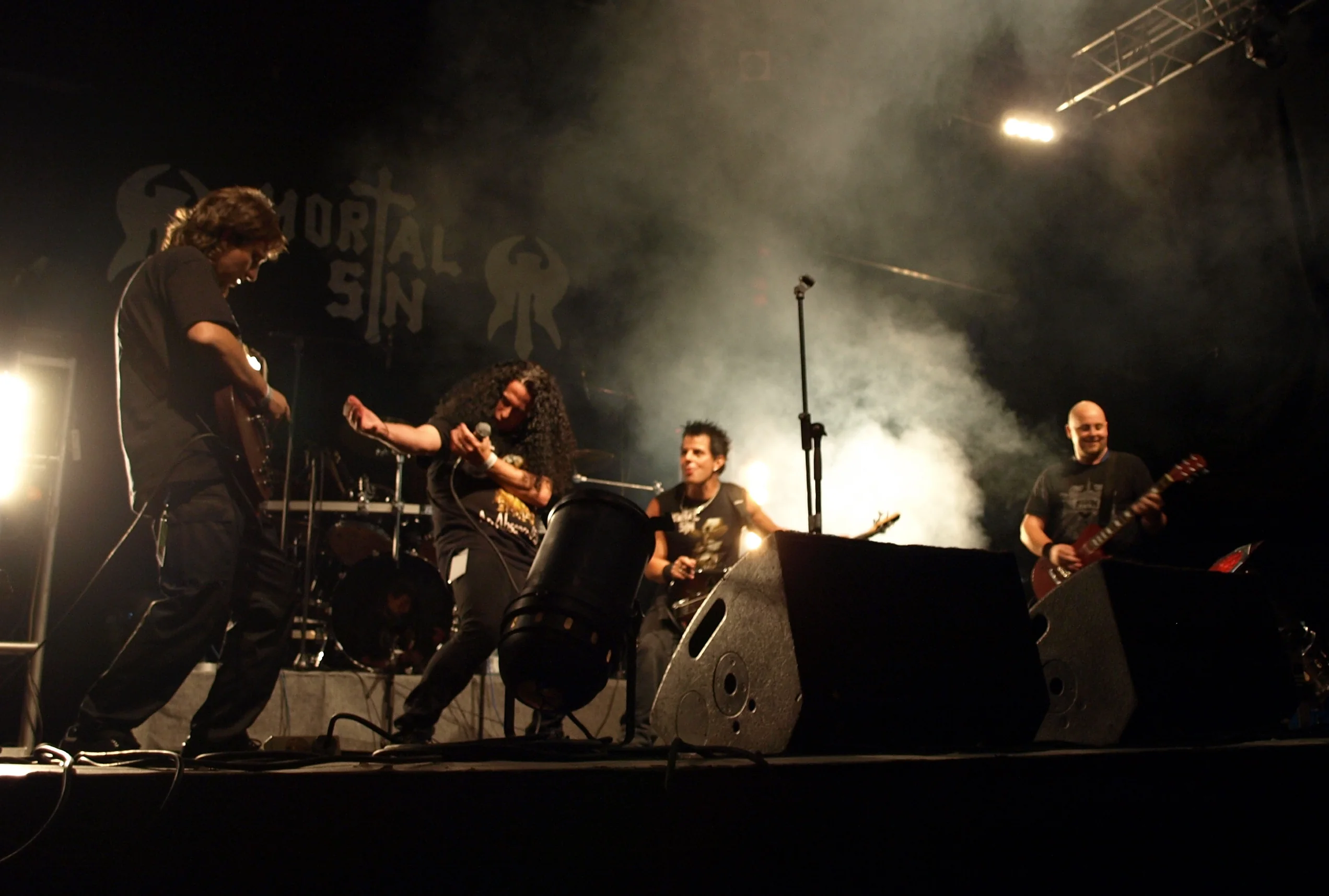
Image from Wikipedia
Image from Wikipedia
Mortal Sin – Australia's Thrash Metal Force from Sydney
A Band That Shaped Australian Thrash Metal
Mortal Sin is an Australian thrash metal band from the Sydney area, considered one of the early and influential forces in the scene since its founding in 1985. Their name stands for uncompromising speed, aggressive riffs, and a stage presence that has attained cult status over decades. The band's history is marked by upheavals, reunions, line-up changes, and a distinct musical profile that remains instantly recognizable in the international metal landscape.
Biography: The Beginning in Sydney in the 1980s
Mortal Sin was formed in 1985 by singer Mat Maurer and drummer Wayne Campbell. Together with guitarists Keith Krstin and Paul Carwana, as well as bassist Andy Eftichiou, they recorded their debut album Mayhemic Destruction which was initially self-released. Even this early material showcased the hunger of a band that wanted to not just copy international thrash metal but infuse it with their own identity.
The breakthrough came through the attention of a major label: Phonogram took over the distribution of the album in 1987 and re-released it worldwide with a changed cover. This opened the door for Mortal Sin to greater recognition far beyond Australia. In the rapidly growing thrash scene of the 1980s, the band became a name closely followed by fans of the genre.
The Early Rise: Touring, Debut, and International Attention
By 1988, Mortal Sin went on a support tour for Metallica, a signal that visibly marked their position in the thrash hierarchy. A year later, the second album Face of Despair followed, which was accompanied by a European tour as the opening act for Testament and Faith No More. These milestones secured the band in an international context where precision, hardness, and live energy determined success or obscurity.
However, the early years were also characterized by line-up changes. After Maurer's departure, the band was temporarily on the brink of dissolution before Andy Eftichiou took the reins and continued with a new line-up. These breaks are part of the Mortal Sin narrative: they show a band that never followed a smooth path but continually reinvented itself under pressure.
New Direction and Stylistic Shifts in the 1990s
In 1991, Every Dog Has its Day, the third studio album, was released, which hit the Australian market under the title Rebellious Youth. The sound clearly distanced itself from the original thrash profile and moved closer to a more commercial power metal style. While this stylistic opening brought new ideas, it did not yield a sustainable commercial breakthrough.
During this phase, the band faced legal and personnel tensions, further intensifying their internal instability. Ultimately, Mortal Sin temporarily disbanded. Nevertheless, this phase is important for the band's history as it illustrates how willing Mortal Sin was to change their musical language, even when the market did not respond with lasting success.
Reunion and Second Career: Return with New Energy
In 2004, a second reunion took place with former members Campbell, Maurer, and Eftichiou along with guitarists Joe Buttigieg and Mick Sultana. A DVD featuring recordings from their first concert was self-released and documented this return to the stage. The recognition in the Hall of Fame of the Brain & Kerrang Australian Heavy Metal Music Awards underscored the band's legendary status within the heavy metal culture.
After this restart, the line-up changed once again, but Mortal Sin continued to work diligently. With Luke Cook on drums and Nathan Shea on guitar, new musicians stepped in to bring the sound into the present. The studio album An Absence of Faith was released in 2007, followed by the official live bootleg Mortal Thrashing Mad in the same year.
Discography: An Overview of Key Releases
The discography of Mortal Sin tells the story of a band that has consistently attacked, navigating between self-releases, label phases, and reunion productions. The debut Mayhemic Destruction from 1986 remains the central reference point in the band's history. It stands for the raw, fast, and immediate sound with which Mortal Sin cemented their name in the thrash scene.
Face of Despair from 1989 and Every Dog Has its Day from 1991 mark the next steps in their development, while An Absence of Faith and Psychology of Death document the later phase. These releases are complemented by EPs such as Out of the Darkness, the live album Mortal Thrashing Mad - Official Live Bootleg, and various demos. Together, they constitute a catalog that showcases the band as a lasting and adaptable force in Australian metal.
Musical Development: Between Thrash Rawness and Controlled Hardness
Musically, Mortal Sin operates within thrash metal, with clear roots in speed metal. Their early albums are considered heavily influenced by Metallica, yet the band resisted easy classification from the start. This tension between influence and independence adds to the appeal of their music: fast riffing, precise drumming, angular song structures, and an energy that is particularly intense on stage.
A notable peculiarity within the often religion-critical thrash metal genre is the Christian elements found in their logos and lyrics. These contrasts provide Mortal Sin with a profile that sets them apart from the typical genre canon. The later recordings also demonstrate how the band sharpened and condensed their songwriting, keeping it contemporary with new production while not fully losing the old hardness.
Critical Reception and Placement in Metal History
Music press consistently described Mortal Sin as powerful representatives of a classic thrash school, especially impressive live. Reviews of later albums emphasize their old-school qualities and proximity to the major influences of the genre. At the same time, the band was recognized for their energy, consistency, and their status as Australian pioneers.
International tours further reinforced this impression. Performances with Metallica, Testament, Faith No More, Overkill, Anthrax, Destruction, Sepultura, Exodus, and Heathen showed that Mortal Sin operated within an environment where the highest demands for speed, tightness, and impact were placed. These concerts shaped their reputation as a band that particularly thrives in a live context.
Cultural Influence: Australian Thrash Icon with Lasting Impact
Mortal Sin is among the earliest pure thrash bands in Australia and has significantly shaped the scene in Sydney. Their influence extends beyond mere discography, as they provide an example of how a local metal band can establish international relevance. In Australia, they represent the combination of underground energy, professional touring practice, and long-lasting fan connections.
Especially the reunions of the 2000s and 2020s showcase how strong the legacy of Mayhemic Destruction remains. The band utilizes anniversaries not only as nostalgic reflections but as a new platform for their story. This ensures that Mortal Sin remains a vibrant name in the heavy metal cosmos and not just a chapter from the past.
Current Projects and New Activity
Currently, the focus is on the celebration of 40 years of Mayhemic Destruction. Mortal Sin announced tour activities in Australia, Europe, and Tokyo in 2026, highlighting the anniversary character of this phase. Their return to major stages emphasizes that the name Mortal Sin still holds weight decades after their founding.
This renewed activity reflects a band that is not just managing its history but transferring it to the here and now. For fans of classic thrash metal, this serves as a strong signal: Mortal Sin remains a part of the vibrant scene and not merely a historical reference to the 1980s.
Conclusion: Why Mortal Sin Remains Exciting Today
Mortal Sin combines Australian metal history, uncompromising energy, and a tumultuous but impressively consistent career. Their albums narrate a story of artistic development, stylistic openness, and a clear stance on their own identity. For those who wish to experience thrash metal in its rawest yet historically significant form, they find here a band with substance, character, and real stage power.
Especially in live settings, Mortal Sin unleashes their full impact: loud, precise, direct, and with the confidence of a band that has earned its status through hard work. Anyone who gets the chance to experience Mortal Sin live should seize it. Few other Australian thrash bands connect past and present as convincingly as this formation from Sydney.
Official Channels of Mortal Sin:
- Instagram: No official profile found
- Facebook: No official profile found
- YouTube: No official profile found
- Spotify: No official profile found
- TikTok: No official profile found
Sources:
- Wikipedia – Mortal Sin
- Mortal Sin – Official Website
- Mortal Sin – Linktree
- laut.de – Mortal Sin
- Encyclopaedia Metallum – Mortal Sin
- Wikipedia: Image and text source