
Greizer Str. 37, Gera
Greizer Str. 37, 07545 Gera, Germany
Museum of Applied Arts | Opening Hours & Directions
The Museum of Applied Arts Gera is a place for everyone who does not want to view design, craftsmanship, and the history of everyday life separately. Housed in the Ferbersche House, one of the most impressive baroque residential buildings in the city, it is located on the edge of the Gera old town and combines historical architecture with a collection that ranges from Art Deco to functionalism to GDR design. The city of Gera officially describes the house as the only specialized museum of its kind in Thuringia. The collection includes around 100,000 objects and presents ceramics, furniture, fashion, living culture, photography, advertising graphics, and many other forms of applied art in a larger cultural context. This is precisely what makes this place appealing: here, you not only see beautiful things but also learn how design responds to the spirit of the times, lifestyle, and innovation. The museum is therefore suitable for design enthusiasts as well as families, school groups, architecture lovers, and anyone looking for a cultural destination with its own profile in Gera. ([gera.de](https://www.gera.de/museum-fuer-angewandte-kunst))
Opening Hours, Admission, and Visitor Services
If you want to plan your visit well, you should first check the official service hours. According to visitor services, the Museum of Applied Arts Gera is open from Tuesday to Sunday from 11:00 AM to 5:00 PM; it is closed on Mondays. These times apply not only to on-site visits but also to telephone availability. This makes the museum particularly suitable for a culturally aware day trip or an afternoon stroll through the old town. The visitor service also mentions the most important prices: an individual ticket costs 6.00 euros, reduced 4.00 euros. Additionally, there are other options such as the annual admission ticket for all museums in the city of Gera for 45.00 euros, group tickets for ten or more people, and various combination tickets. A surcharge of 1.50 euros per person is charged for public tours, and guided tours by appointment cost an additional 40.00 euros per tour. This is interesting for visitors who do not just want to walk through the rooms but want to understand the collection in context. The official visitor service also points out that children and young people up to 18 years have free admission and that certain other groups can also enter the museum free of charge. Anyone using the opening hours should always check before their trip whether special regulations, holidays, or renovation phases apply, as individual dates may vary for museums. For SEO-oriented user guidance, the topics of opening hours, admission prices, and visitor services are particularly important. ([gera.de](https://www.gera.de/museum-fuer-angewandte-kunst/besucherservice))
Directions, Parking, and Location on the Edge of the Old Town
The location of the museum is one of its greatest advantages. The official site describes the house as a building on the edge of the Gera old town and also refers to the Ferbersche House near the Gera Town Hall. This makes the way there easily understandable for city visitors: you move through a historical, central part of Gera where culture, history, and short distances can be pleasantly combined. The address is Greizer Straße 37-39, 07545 Gera. For the search intent of directions and parking, it is important that no dedicated parking lot for visitors is mentioned on the museum's page. This suggests that public parking options in the city center should be used for the visit. The city of Gera generally recommends parking in the vicinity of the city center for events and additionally points out that cashless payment can be made with the Parkster app in municipal parking areas. This is practical for museum visitors because it allows for flexible planning of the trip, especially if one wants to continue walking through the old town, to the town hall, or to other cultural places afterward. Therefore, those arriving by car should not rely on a special museum parking space but plan on city center parking as a realistic solution. Those traveling on foot benefit from the location in a historic quarter with a short distance to other sights. This combination of a central old town location and classic museum atmosphere makes the site so attractive. ([gera.de](https://www.gera.de/museum-fuer-angewandte-kunst))
Permanent Exhibition Art Deco and Functionalism
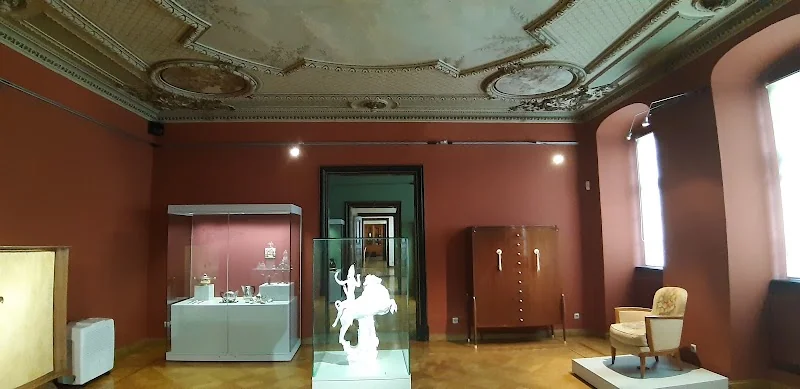
The thematic heart of the house is the permanent exhibition “Art Deco and Functionalism. Applied Art Between the World Wars.” The title already shows how clearly the museum sets its thematic line: it is not about isolated individual pieces, but about design in the tension between modernity, everyday life, and social change. According to the official description, the exhibition presents porcelain, tableware, clothing, furniture, jewelry, and graphics of modernity. This creates a broad picture of applied art that makes visible both the elegance of Art Deco and the objective language of form of functionalism. The focus is particularly strong in the area of Bauhaus ceramics, in the new-objective photography of Aenne Biermann, in the works of architect and designer Thilo Schoder, and in modern ceramics. These themes not only form art-historical focal points but also ideal SEO terms because they bundle many search queries related to design history, Bauhaus, photography, and living culture. The collection thus connects regional significance with supra-regional radiance. Visitors experience not only a sequence of beautiful objects but a precisely curated view of how good design shapes everyday life. This is particularly important for a museum of applied arts: the objects should not only be admired but understood. Therefore, this exhibition is equally interesting for school classes, design students, cultural travelers, and returning visitors. Those searching for exhibition, permanent exhibition, or Art Deco will find here a house with surprisingly clear professional identity. ([gera.de](https://www.gera.de/museum-fuer-angewandte-kunst))
Collection, Ferbersche House, and Museum History
The Museum of Applied Arts is remarkable not only for its exhibits but also for its history. It was officially founded in 1983 by decision of the Gera district council and opened on October 6, 1984. Until 1991, it was named “Museum of Craft.” The Ferbersche House was deliberately chosen as a location to create a cultural attraction in an environment where many historical neighboring buildings were destroyed in the war and later replaced by prefabricated buildings. This decision shapes the impact of the house to this day: the baroque facade stands for continuity while the contents focus on the modernity of the 20th century. The city of Gera also emphasizes that the museum can look back on over 180 exhibitions in its history. This is a strong signal for vitality, continuity, and curatorial work over decades. According to its mission statement, the collection includes around 100,000 objects and forms a core of ceramics, furniture, fashion, and everyday objects from Art Deco to GDR design. The vintage prints of Aenne Biermann and the works of Thilo Schoder also have special radiance. Thus, the museum is not only a showcase but also a cultural-historical repository for the city of Gera and far beyond. Those who know the history of the house experience the exhibition differently: not as a random collection but as a grown institution with a clear collection policy, a long history of openings, and a strong regional mandate. ([gera.de](https://www.gera.de/meldung/40-jahre-museum-fuer-angewandte-kunst))
Guided Tours, Workshops, and Museum Education
For many visitors, a museum only comes to life through mediation, and this is exactly where the Museum of Applied Arts Gera offers a remarkable program. The museum education is aimed not only at adults interested in specialist knowledge but also at kindergarten groups and school classes. According to the official site, the bookable offers are each based on a collection area of the museum and are linked to a practical component. This is an important point because applied art is particularly well understood when one can also experience material, form, and design oneself. In addition to workshops, there are public tours through the permanent exhibition Art Deco and Functionalism, private tours on request, and special tours for school classes. The public tour lasts about 60 minutes and incurs an additional charge of 1.50 euros on top of the admission fee. Private tours can be booked on request, also last about 60 minutes, and cost an additional 40.00 euros on top of the admission fee if booked in advance. Tours for school classes are planned for 60 to 90 minutes and are free within the framework of the curriculum. This structure of offerings shows that the museum is well set up not only for individual tours but also for groups, educational institutions, and organized visits. Therefore, terms such as museum education, guided tours, workshops, and school classes are relevant for keyword analysis. Anyone planning a visit should definitely consider the mediation offers, as they make the museum visit a much deeper experience in content. Especially with topics like Bauhaus, ceramics, photography, and design, educational mediation is often the key to ensuring that details are not overlooked. ([gera.de](https://www.gera.de/tourismus-freizeit-kultur/museen/museum-fuer-angewandte-kunst/vermittlung-/-angebote))
Photos, Highlights, and Special Impressions
Those searching for photos usually expect a quick visual impression, and this is exactly where the Museum of Applied Arts showcases its strengths. The official description already refers to the Ferbersche House with its baroque facade, while the museum's page itself shows images from the permanent exhibition, including views into the exhibition, objects from Bauhaus contexts, and designed furniture pieces. The house is thus not only historically interesting but also visually clear and atmospheric. The combination of baroque shell and modern collection creates strong contrasts: representative architecture outside, a precisely narrated access to design, living culture, and craftsmanship inside. This contrast makes the place photogenic and at the same time content-wise appealing. It is particularly exciting that the museum does not rely on a single highlight but on the totality of its perspective: Art Deco, functionalism, Bauhaus ceramics, Aenne Biermann, Thilo Schoder, modern ceramics, and GDR design together form a profile that is unique in Thuringia. Therefore, anyone planning a cultural stop in Gera gets more than just a pretty motif for the camera. You get a place where you can trace the development of forms, materials, and decors over the 20th century. This is also a strong incentive for social media, as the rooms visually tell a story immediately. However, for the actual visit, not only the impression counts but also the substance: the museum is small enough for a concentrated tour and at the same time rich enough in themes to discover new facets even on return visits. This is exactly why the house is worthwhile for all those seeking culture with real informational value. ([gera.de](https://www.gera.de/museum-fuer-angewandte-kunst))
Sources:
Show moreShow less
Museum of Applied Arts | Opening Hours & Directions
The Museum of Applied Arts Gera is a place for everyone who does not want to view design, craftsmanship, and the history of everyday life separately. Housed in the Ferbersche House, one of the most impressive baroque residential buildings in the city, it is located on the edge of the Gera old town and combines historical architecture with a collection that ranges from Art Deco to functionalism to GDR design. The city of Gera officially describes the house as the only specialized museum of its kind in Thuringia. The collection includes around 100,000 objects and presents ceramics, furniture, fashion, living culture, photography, advertising graphics, and many other forms of applied art in a larger cultural context. This is precisely what makes this place appealing: here, you not only see beautiful things but also learn how design responds to the spirit of the times, lifestyle, and innovation. The museum is therefore suitable for design enthusiasts as well as families, school groups, architecture lovers, and anyone looking for a cultural destination with its own profile in Gera. ([gera.de](https://www.gera.de/museum-fuer-angewandte-kunst))
Opening Hours, Admission, and Visitor Services
If you want to plan your visit well, you should first check the official service hours. According to visitor services, the Museum of Applied Arts Gera is open from Tuesday to Sunday from 11:00 AM to 5:00 PM; it is closed on Mondays. These times apply not only to on-site visits but also to telephone availability. This makes the museum particularly suitable for a culturally aware day trip or an afternoon stroll through the old town. The visitor service also mentions the most important prices: an individual ticket costs 6.00 euros, reduced 4.00 euros. Additionally, there are other options such as the annual admission ticket for all museums in the city of Gera for 45.00 euros, group tickets for ten or more people, and various combination tickets. A surcharge of 1.50 euros per person is charged for public tours, and guided tours by appointment cost an additional 40.00 euros per tour. This is interesting for visitors who do not just want to walk through the rooms but want to understand the collection in context. The official visitor service also points out that children and young people up to 18 years have free admission and that certain other groups can also enter the museum free of charge. Anyone using the opening hours should always check before their trip whether special regulations, holidays, or renovation phases apply, as individual dates may vary for museums. For SEO-oriented user guidance, the topics of opening hours, admission prices, and visitor services are particularly important. ([gera.de](https://www.gera.de/museum-fuer-angewandte-kunst/besucherservice))
Directions, Parking, and Location on the Edge of the Old Town
The location of the museum is one of its greatest advantages. The official site describes the house as a building on the edge of the Gera old town and also refers to the Ferbersche House near the Gera Town Hall. This makes the way there easily understandable for city visitors: you move through a historical, central part of Gera where culture, history, and short distances can be pleasantly combined. The address is Greizer Straße 37-39, 07545 Gera. For the search intent of directions and parking, it is important that no dedicated parking lot for visitors is mentioned on the museum's page. This suggests that public parking options in the city center should be used for the visit. The city of Gera generally recommends parking in the vicinity of the city center for events and additionally points out that cashless payment can be made with the Parkster app in municipal parking areas. This is practical for museum visitors because it allows for flexible planning of the trip, especially if one wants to continue walking through the old town, to the town hall, or to other cultural places afterward. Therefore, those arriving by car should not rely on a special museum parking space but plan on city center parking as a realistic solution. Those traveling on foot benefit from the location in a historic quarter with a short distance to other sights. This combination of a central old town location and classic museum atmosphere makes the site so attractive. ([gera.de](https://www.gera.de/museum-fuer-angewandte-kunst))
Permanent Exhibition Art Deco and Functionalism
The thematic heart of the house is the permanent exhibition “Art Deco and Functionalism. Applied Art Between the World Wars.” The title already shows how clearly the museum sets its thematic line: it is not about isolated individual pieces, but about design in the tension between modernity, everyday life, and social change. According to the official description, the exhibition presents porcelain, tableware, clothing, furniture, jewelry, and graphics of modernity. This creates a broad picture of applied art that makes visible both the elegance of Art Deco and the objective language of form of functionalism. The focus is particularly strong in the area of Bauhaus ceramics, in the new-objective photography of Aenne Biermann, in the works of architect and designer Thilo Schoder, and in modern ceramics. These themes not only form art-historical focal points but also ideal SEO terms because they bundle many search queries related to design history, Bauhaus, photography, and living culture. The collection thus connects regional significance with supra-regional radiance. Visitors experience not only a sequence of beautiful objects but a precisely curated view of how good design shapes everyday life. This is particularly important for a museum of applied arts: the objects should not only be admired but understood. Therefore, this exhibition is equally interesting for school classes, design students, cultural travelers, and returning visitors. Those searching for exhibition, permanent exhibition, or Art Deco will find here a house with surprisingly clear professional identity. ([gera.de](https://www.gera.de/museum-fuer-angewandte-kunst))
Collection, Ferbersche House, and Museum History
The Museum of Applied Arts is remarkable not only for its exhibits but also for its history. It was officially founded in 1983 by decision of the Gera district council and opened on October 6, 1984. Until 1991, it was named “Museum of Craft.” The Ferbersche House was deliberately chosen as a location to create a cultural attraction in an environment where many historical neighboring buildings were destroyed in the war and later replaced by prefabricated buildings. This decision shapes the impact of the house to this day: the baroque facade stands for continuity while the contents focus on the modernity of the 20th century. The city of Gera also emphasizes that the museum can look back on over 180 exhibitions in its history. This is a strong signal for vitality, continuity, and curatorial work over decades. According to its mission statement, the collection includes around 100,000 objects and forms a core of ceramics, furniture, fashion, and everyday objects from Art Deco to GDR design. The vintage prints of Aenne Biermann and the works of Thilo Schoder also have special radiance. Thus, the museum is not only a showcase but also a cultural-historical repository for the city of Gera and far beyond. Those who know the history of the house experience the exhibition differently: not as a random collection but as a grown institution with a clear collection policy, a long history of openings, and a strong regional mandate. ([gera.de](https://www.gera.de/meldung/40-jahre-museum-fuer-angewandte-kunst))
Guided Tours, Workshops, and Museum Education
For many visitors, a museum only comes to life through mediation, and this is exactly where the Museum of Applied Arts Gera offers a remarkable program. The museum education is aimed not only at adults interested in specialist knowledge but also at kindergarten groups and school classes. According to the official site, the bookable offers are each based on a collection area of the museum and are linked to a practical component. This is an important point because applied art is particularly well understood when one can also experience material, form, and design oneself. In addition to workshops, there are public tours through the permanent exhibition Art Deco and Functionalism, private tours on request, and special tours for school classes. The public tour lasts about 60 minutes and incurs an additional charge of 1.50 euros on top of the admission fee. Private tours can be booked on request, also last about 60 minutes, and cost an additional 40.00 euros on top of the admission fee if booked in advance. Tours for school classes are planned for 60 to 90 minutes and are free within the framework of the curriculum. This structure of offerings shows that the museum is well set up not only for individual tours but also for groups, educational institutions, and organized visits. Therefore, terms such as museum education, guided tours, workshops, and school classes are relevant for keyword analysis. Anyone planning a visit should definitely consider the mediation offers, as they make the museum visit a much deeper experience in content. Especially with topics like Bauhaus, ceramics, photography, and design, educational mediation is often the key to ensuring that details are not overlooked. ([gera.de](https://www.gera.de/tourismus-freizeit-kultur/museen/museum-fuer-angewandte-kunst/vermittlung-/-angebote))
Photos, Highlights, and Special Impressions
Those searching for photos usually expect a quick visual impression, and this is exactly where the Museum of Applied Arts showcases its strengths. The official description already refers to the Ferbersche House with its baroque facade, while the museum's page itself shows images from the permanent exhibition, including views into the exhibition, objects from Bauhaus contexts, and designed furniture pieces. The house is thus not only historically interesting but also visually clear and atmospheric. The combination of baroque shell and modern collection creates strong contrasts: representative architecture outside, a precisely narrated access to design, living culture, and craftsmanship inside. This contrast makes the place photogenic and at the same time content-wise appealing. It is particularly exciting that the museum does not rely on a single highlight but on the totality of its perspective: Art Deco, functionalism, Bauhaus ceramics, Aenne Biermann, Thilo Schoder, modern ceramics, and GDR design together form a profile that is unique in Thuringia. Therefore, anyone planning a cultural stop in Gera gets more than just a pretty motif for the camera. You get a place where you can trace the development of forms, materials, and decors over the 20th century. This is also a strong incentive for social media, as the rooms visually tell a story immediately. However, for the actual visit, not only the impression counts but also the substance: the museum is small enough for a concentrated tour and at the same time rich enough in themes to discover new facets even on return visits. This is exactly why the house is worthwhile for all those seeking culture with real informational value. ([gera.de](https://www.gera.de/museum-fuer-angewandte-kunst))
Sources:
Museum of Applied Arts | Opening Hours & Directions
The Museum of Applied Arts Gera is a place for everyone who does not want to view design, craftsmanship, and the history of everyday life separately. Housed in the Ferbersche House, one of the most impressive baroque residential buildings in the city, it is located on the edge of the Gera old town and combines historical architecture with a collection that ranges from Art Deco to functionalism to GDR design. The city of Gera officially describes the house as the only specialized museum of its kind in Thuringia. The collection includes around 100,000 objects and presents ceramics, furniture, fashion, living culture, photography, advertising graphics, and many other forms of applied art in a larger cultural context. This is precisely what makes this place appealing: here, you not only see beautiful things but also learn how design responds to the spirit of the times, lifestyle, and innovation. The museum is therefore suitable for design enthusiasts as well as families, school groups, architecture lovers, and anyone looking for a cultural destination with its own profile in Gera. ([gera.de](https://www.gera.de/museum-fuer-angewandte-kunst))
Opening Hours, Admission, and Visitor Services
If you want to plan your visit well, you should first check the official service hours. According to visitor services, the Museum of Applied Arts Gera is open from Tuesday to Sunday from 11:00 AM to 5:00 PM; it is closed on Mondays. These times apply not only to on-site visits but also to telephone availability. This makes the museum particularly suitable for a culturally aware day trip or an afternoon stroll through the old town. The visitor service also mentions the most important prices: an individual ticket costs 6.00 euros, reduced 4.00 euros. Additionally, there are other options such as the annual admission ticket for all museums in the city of Gera for 45.00 euros, group tickets for ten or more people, and various combination tickets. A surcharge of 1.50 euros per person is charged for public tours, and guided tours by appointment cost an additional 40.00 euros per tour. This is interesting for visitors who do not just want to walk through the rooms but want to understand the collection in context. The official visitor service also points out that children and young people up to 18 years have free admission and that certain other groups can also enter the museum free of charge. Anyone using the opening hours should always check before their trip whether special regulations, holidays, or renovation phases apply, as individual dates may vary for museums. For SEO-oriented user guidance, the topics of opening hours, admission prices, and visitor services are particularly important. ([gera.de](https://www.gera.de/museum-fuer-angewandte-kunst/besucherservice))
Directions, Parking, and Location on the Edge of the Old Town
The location of the museum is one of its greatest advantages. The official site describes the house as a building on the edge of the Gera old town and also refers to the Ferbersche House near the Gera Town Hall. This makes the way there easily understandable for city visitors: you move through a historical, central part of Gera where culture, history, and short distances can be pleasantly combined. The address is Greizer Straße 37-39, 07545 Gera. For the search intent of directions and parking, it is important that no dedicated parking lot for visitors is mentioned on the museum's page. This suggests that public parking options in the city center should be used for the visit. The city of Gera generally recommends parking in the vicinity of the city center for events and additionally points out that cashless payment can be made with the Parkster app in municipal parking areas. This is practical for museum visitors because it allows for flexible planning of the trip, especially if one wants to continue walking through the old town, to the town hall, or to other cultural places afterward. Therefore, those arriving by car should not rely on a special museum parking space but plan on city center parking as a realistic solution. Those traveling on foot benefit from the location in a historic quarter with a short distance to other sights. This combination of a central old town location and classic museum atmosphere makes the site so attractive. ([gera.de](https://www.gera.de/museum-fuer-angewandte-kunst))
Permanent Exhibition Art Deco and Functionalism
The thematic heart of the house is the permanent exhibition “Art Deco and Functionalism. Applied Art Between the World Wars.” The title already shows how clearly the museum sets its thematic line: it is not about isolated individual pieces, but about design in the tension between modernity, everyday life, and social change. According to the official description, the exhibition presents porcelain, tableware, clothing, furniture, jewelry, and graphics of modernity. This creates a broad picture of applied art that makes visible both the elegance of Art Deco and the objective language of form of functionalism. The focus is particularly strong in the area of Bauhaus ceramics, in the new-objective photography of Aenne Biermann, in the works of architect and designer Thilo Schoder, and in modern ceramics. These themes not only form art-historical focal points but also ideal SEO terms because they bundle many search queries related to design history, Bauhaus, photography, and living culture. The collection thus connects regional significance with supra-regional radiance. Visitors experience not only a sequence of beautiful objects but a precisely curated view of how good design shapes everyday life. This is particularly important for a museum of applied arts: the objects should not only be admired but understood. Therefore, this exhibition is equally interesting for school classes, design students, cultural travelers, and returning visitors. Those searching for exhibition, permanent exhibition, or Art Deco will find here a house with surprisingly clear professional identity. ([gera.de](https://www.gera.de/museum-fuer-angewandte-kunst))
Collection, Ferbersche House, and Museum History
The Museum of Applied Arts is remarkable not only for its exhibits but also for its history. It was officially founded in 1983 by decision of the Gera district council and opened on October 6, 1984. Until 1991, it was named “Museum of Craft.” The Ferbersche House was deliberately chosen as a location to create a cultural attraction in an environment where many historical neighboring buildings were destroyed in the war and later replaced by prefabricated buildings. This decision shapes the impact of the house to this day: the baroque facade stands for continuity while the contents focus on the modernity of the 20th century. The city of Gera also emphasizes that the museum can look back on over 180 exhibitions in its history. This is a strong signal for vitality, continuity, and curatorial work over decades. According to its mission statement, the collection includes around 100,000 objects and forms a core of ceramics, furniture, fashion, and everyday objects from Art Deco to GDR design. The vintage prints of Aenne Biermann and the works of Thilo Schoder also have special radiance. Thus, the museum is not only a showcase but also a cultural-historical repository for the city of Gera and far beyond. Those who know the history of the house experience the exhibition differently: not as a random collection but as a grown institution with a clear collection policy, a long history of openings, and a strong regional mandate. ([gera.de](https://www.gera.de/meldung/40-jahre-museum-fuer-angewandte-kunst))
Guided Tours, Workshops, and Museum Education
For many visitors, a museum only comes to life through mediation, and this is exactly where the Museum of Applied Arts Gera offers a remarkable program. The museum education is aimed not only at adults interested in specialist knowledge but also at kindergarten groups and school classes. According to the official site, the bookable offers are each based on a collection area of the museum and are linked to a practical component. This is an important point because applied art is particularly well understood when one can also experience material, form, and design oneself. In addition to workshops, there are public tours through the permanent exhibition Art Deco and Functionalism, private tours on request, and special tours for school classes. The public tour lasts about 60 minutes and incurs an additional charge of 1.50 euros on top of the admission fee. Private tours can be booked on request, also last about 60 minutes, and cost an additional 40.00 euros on top of the admission fee if booked in advance. Tours for school classes are planned for 60 to 90 minutes and are free within the framework of the curriculum. This structure of offerings shows that the museum is well set up not only for individual tours but also for groups, educational institutions, and organized visits. Therefore, terms such as museum education, guided tours, workshops, and school classes are relevant for keyword analysis. Anyone planning a visit should definitely consider the mediation offers, as they make the museum visit a much deeper experience in content. Especially with topics like Bauhaus, ceramics, photography, and design, educational mediation is often the key to ensuring that details are not overlooked. ([gera.de](https://www.gera.de/tourismus-freizeit-kultur/museen/museum-fuer-angewandte-kunst/vermittlung-/-angebote))
Photos, Highlights, and Special Impressions
Those searching for photos usually expect a quick visual impression, and this is exactly where the Museum of Applied Arts showcases its strengths. The official description already refers to the Ferbersche House with its baroque facade, while the museum's page itself shows images from the permanent exhibition, including views into the exhibition, objects from Bauhaus contexts, and designed furniture pieces. The house is thus not only historically interesting but also visually clear and atmospheric. The combination of baroque shell and modern collection creates strong contrasts: representative architecture outside, a precisely narrated access to design, living culture, and craftsmanship inside. This contrast makes the place photogenic and at the same time content-wise appealing. It is particularly exciting that the museum does not rely on a single highlight but on the totality of its perspective: Art Deco, functionalism, Bauhaus ceramics, Aenne Biermann, Thilo Schoder, modern ceramics, and GDR design together form a profile that is unique in Thuringia. Therefore, anyone planning a cultural stop in Gera gets more than just a pretty motif for the camera. You get a place where you can trace the development of forms, materials, and decors over the 20th century. This is also a strong incentive for social media, as the rooms visually tell a story immediately. However, for the actual visit, not only the impression counts but also the substance: the museum is small enough for a concentrated tour and at the same time rich enough in themes to discover new facets even on return visits. This is exactly why the house is worthwhile for all those seeking culture with real informational value. ([gera.de](https://www.gera.de/museum-fuer-angewandte-kunst))
Sources:
Upcoming Events
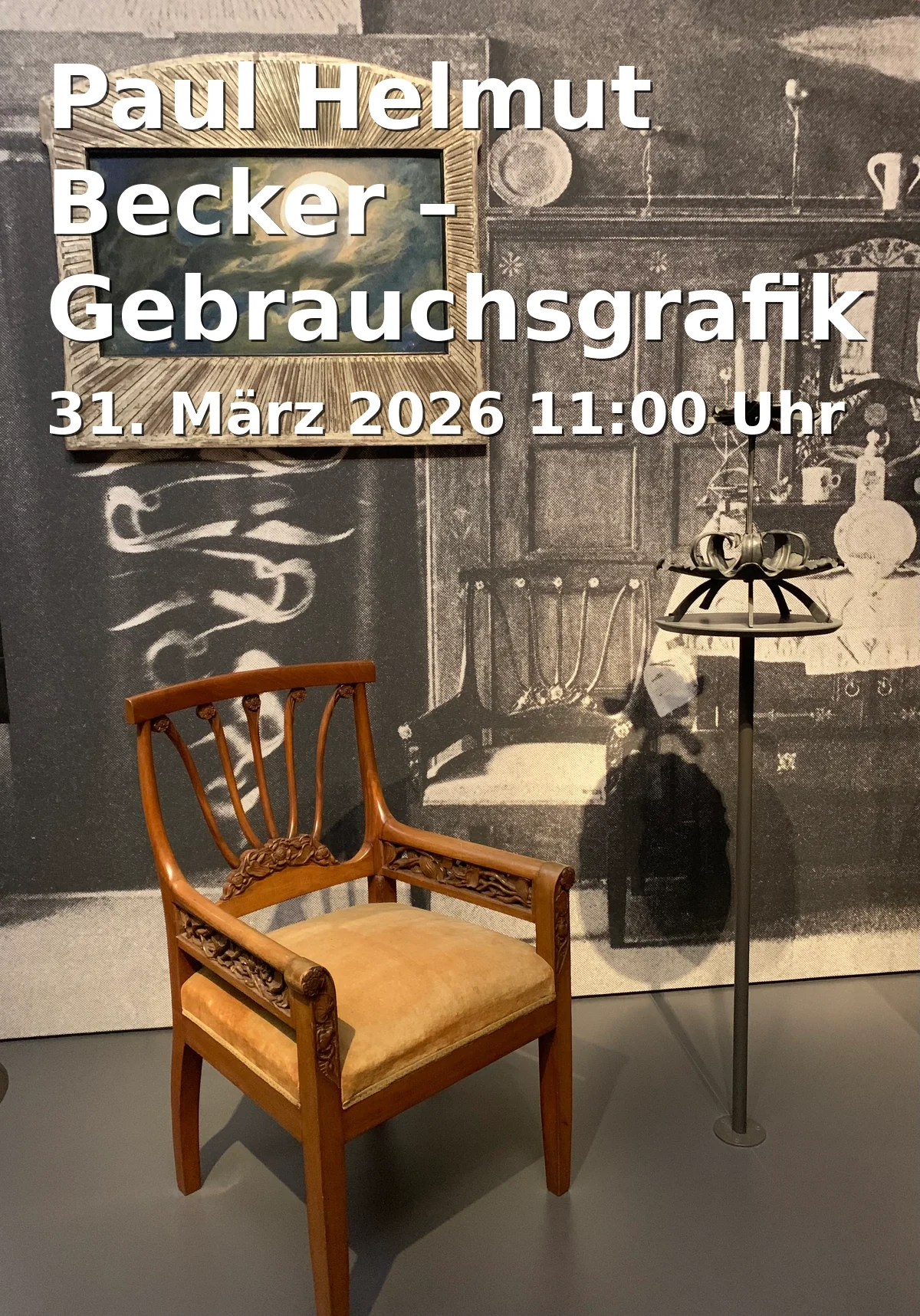
Paul Helmut Becker – Applied Graphics between Tradition and Economic Policy of the GDR
Experience design history closely at MAK Gera: Paul Helmut Becker's packaging, logos, and typography showcase GDR brand culture. 31.03.2026–14.02.2027, 11 AM–5 PM, 5 EUR. A clear view of form and function – discover now. #AppliedGraphics
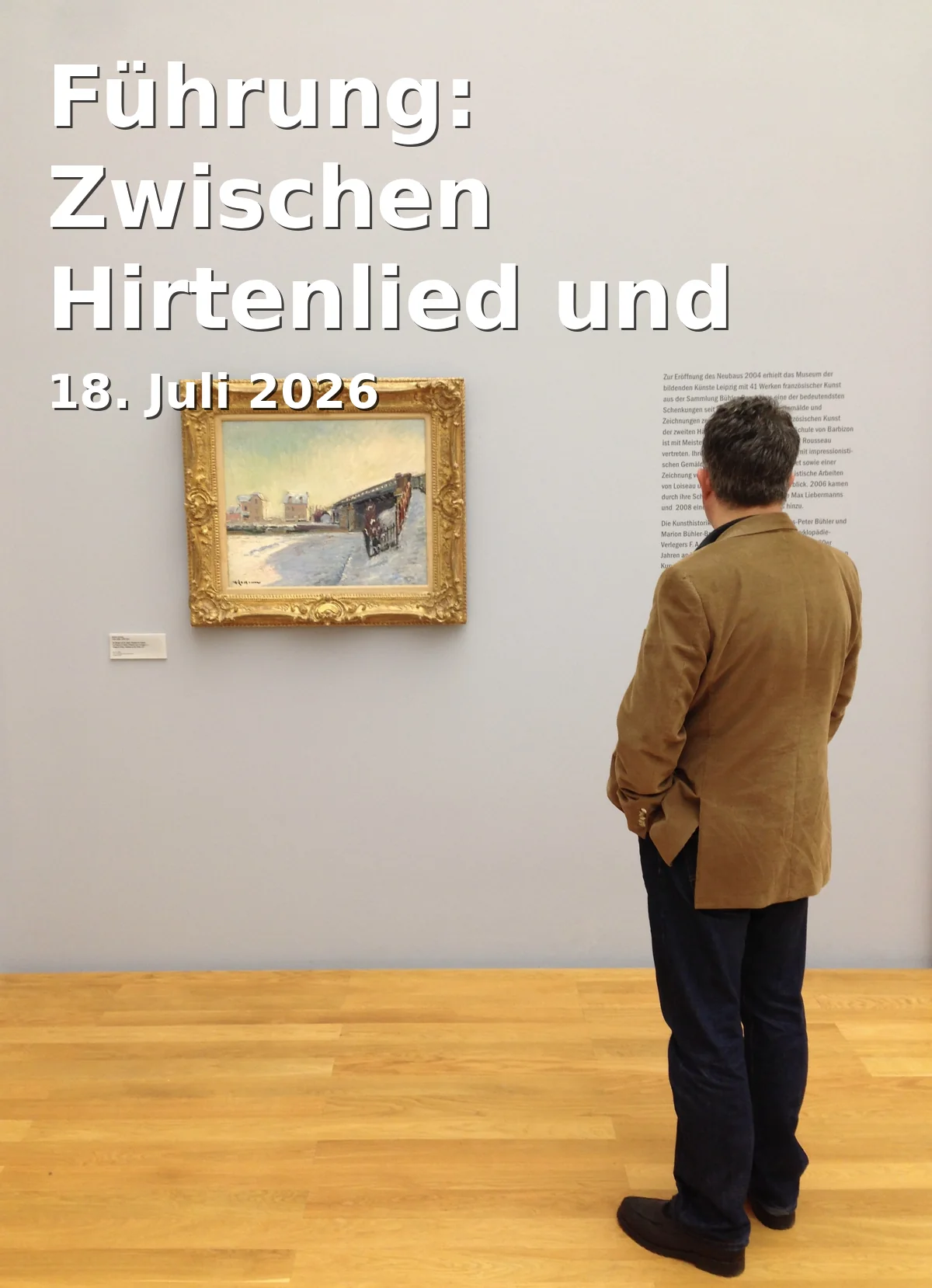
Guided Tour: Between Shepherd's Song and Adventure
Join an exciting tour of the exhibition at the Museum of Applied Arts in Gera and discover 19th-century art.
Frequently Asked Questions
Reviews
Mike Moran
3. January 2013
Visited "Zwischen Johanna und Klementine", an exhibition of GDR adverts from 1950 to 1970. Very interesting and inspiring!
Tobias Fett
3. August 2019
Beautiful exhibition rooms. Amazing permanent exhibition and changing topical exhibitions.
Анатолий Крапивянский
1. February 2026
I really enjoyed it. The museum is warm and cozy. The staff is friendly and always willing to help. There are many interesting exhibits that deserve special attention. There's a drawing room for children. I highly recommend visiting.
Steffi Engelstädter
13. November 2025
An interesting visit to the two exhibitions, "Art Deco" and "Textile Patterns: From Gera to the World." The interactive, hands-on exhibit was fun for everyone, not just the children. A detailed presentation of the fashion industry and its key players during the Industrial Revolution, extending into the GDR era.
Anna Trusova
2. January 2025
Today we attended the opening of a ceramics exhibition. Amazing pieces, sometimes with a strange imagination, and superb craftsmanship. Here you can see ceramics in the form of still lifes, in the form of metal ingots seemingly torn apart by an explosion (of which many people in cities where war has come have the misfortune to witness), in the form of bizarre hamburgers or other food, in the form of forest spirits, tree stumps, and moss. I'll definitely visit other exhibitions at this museum.