
Gera
Nicolaiberg 3, 07545 Gera, Deutschland
Museumshöhler Gera | Tickets & Tours
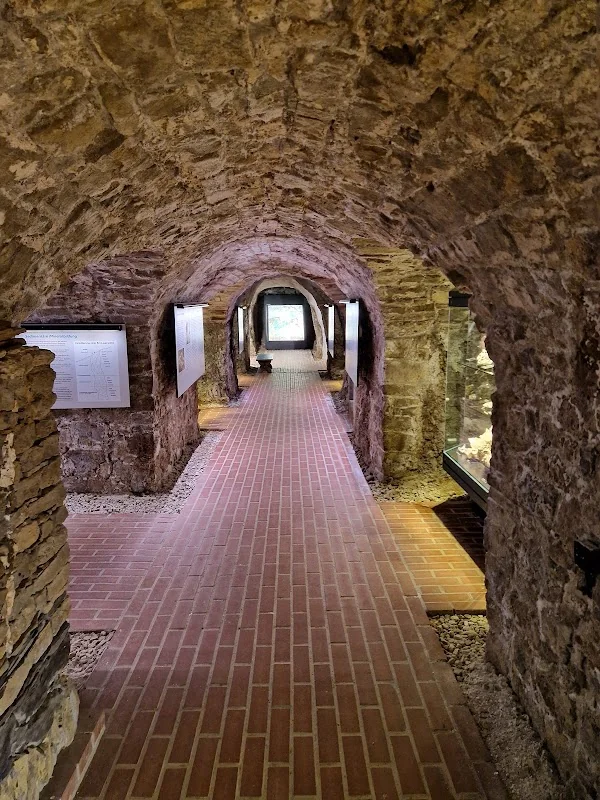
The Museumshöhler Gera is not a classic exhibition with large halls, but an underground tour through the brewing and beer history of the city. Beneath the old town lies a historic system of cellars, predominantly established in the 16th and 17th centuries. These passages arose from a very practical need: Gera homeowners had the right to brew beer, and because suitable rock cellars were lacking in the area, they moved the storage underground. Today, it is precisely these cellars that create the unique fascination of the place. Visitors experience a labyrinth that reaches up to ten meters deep, where consistent temperatures of 12 to 13 degrees prevail, and which was opened for tours in the 1980s. The entrance is located at the back of the Natural History Museum in the Schreibersches Haus at Nicolaiberg 3, right in the historical old town above the marketplace. So, those searching for Museumshöhler Gera are not just looking for a place, but a vibrant form of city history that is continued beneath the surface. ([gera.de](https://www.gera.de/tourismus-freizeit-kultur/museen/museumshoehler))
Tickets for Museumshöhler Gera and current admission prices
When searching for tickets for Museumshöhler Gera, it is important to know that the city organizes the facility as a guided object and not as a freely accessible museum. The official visitor service page states that the price for a single ticket is 6.00 euros. Reduced admission costs 4.00 euros, among others for trainees and students over 19 years, severely disabled persons with valid ID, seniors with pension ID, as well as holders of the Thuringian Volunteer Card and the Geraer Simson Card. This makes the pricing structure clear and straightforward for an uncomplicated visit. It is also particularly helpful that children and teenagers up to 18 years have free admission. Also, students as part of their education, certain cooperation partners of the museums, and other defined groups are included among the exempt visitors. For anyone planning a private or occasion-related use, the city additionally states a flat rate of 40.00 euros for registered formats such as lectures, anniversaries, or children's birthdays. ([gera.de](https://www.gera.de/tourismus-freizeit-kultur/museen/museumshoehler/besucherservice))
So, those looking for Museumshöhler Gera tickets are practically searching for the right type of tour rather than a simple online shop purchase. The official site points out that combination tickets may be offered for defined periods and exhibition projects if multiple institutions are to be visited together. Additionally, special admission prices may apply for special exhibitions and events in the museums, including the Gera Museum Night. This flexible structure is interesting for visitors who want to combine their stay in Gera with several cultural stops. It is also very important to note the information regarding groups and larger parties: Public tours are primarily aimed at individual visitors, while larger groups should book a private tour through Gera Information. This keeps the tour in the narrow passages manageable, personal, and well-controlled. Therefore, those who plan early secure not only admission but especially the appropriate form of access. ([gera.de](https://www.gera.de/tourismus-freizeit-kultur/museen/museumshoehler/besucherservice))
For SEO searches regarding tickets, it is also worthwhile to look at the actual visitor logic of the Museumshöhler. It is not a place that can be entered spontaneously and arbitrarily, but a monument that is accessed through guided tours. Visitor management ensures that the historic passages are preserved and the atmosphere is maintained. At the same time, the experience remains consciously close and personal. The price information, the exemptions, and the options for special formats make the offer transparent. So, anyone planning a family outing, a club trip, or a small private cultural tour can orient themselves quite well based on the official information. Especially because the Museumshöhler Gera is located in the old town and can only be experienced as part of guided tours, a clear ticket and booking situation is a real advantage. Planning becomes easier, expectations become more realistic, and the visit gains quality even before the actual descent. ([gera.de](https://www.gera.de/tourismus-freizeit-kultur/museen/museumshoehler/besucherservice))
Opening hours, tours, and pre-registration
The public tours in the Museumshöhler Gera take place according to the official visitor service at fixed weekly times: Thursday and Friday at 11:30 AM and Saturday and Sunday at 2:00 PM. These times are particularly important for search queries regarding Museumshöhler Gera opening hours, as it is not a classic day museum with continuous admission times. Rather, the visit is closely tied to the tour format. Pre-registration is done by phone at 0365/52003 through the Natural History Museum during its opening hours from Tuesday to Sunday and on public holidays from 11:00 AM to 5:00 PM. This is very helpful for planning, as it allows one to clarify early whether a desired date is still available. At the same time, it shows how closely the Museumshöhler is organizationally linked to the Natural History Museum. ([gera.de](https://www.gera.de/tourismus-freizeit-kultur/museen/museumshoehler))
The number of participants is also clearly regulated. The city limits public tours to a maximum of 20 people. It is primarily aimed at individual visitors; groups can participate in public tours with up to 10 people. For larger groups, the city explicitly recommends a private tour through Gera Information. This regulation makes sense, as the cellars are narrow, sometimes uneven, and atmospherically very closed. A smaller group ensures more tranquility, better comprehensibility, and less strain on the historical substance. So, anyone looking for Museumshöhler Gera tours or Museumshöhler Gera private tours should not decide on the day of the visit but rather choose a suitable option early. This also allows families, friend circles, school groups, or travel groups to be better planned. The official structure is not only an organizational solution but part of the visitor experience, as it keeps the tour personal, focused, and content-rich. ([gera.de](https://www.gera.de/tourismus-freizeit-kultur/museen/museumshoehler/besucherservice))
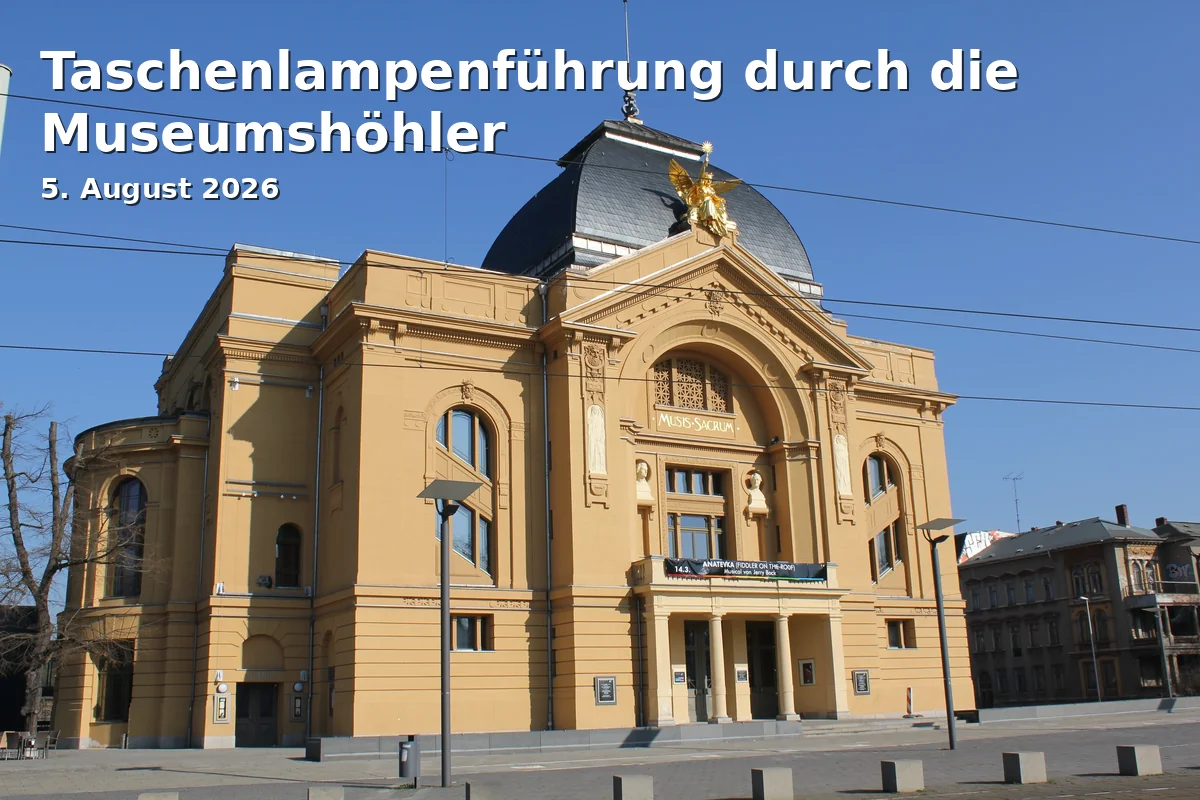
For additional dynamics, the flashlight tour through the Museumshöhler listed on the city’s event page provides a good example of how the Museumshöhler Gera can also be played with special formats seasonally or for specific occasions. According to the event page, one should bring a flashlight, wear sturdy shoes, and also have a jacket on warm days. The offer is suitable for children from 5 years old. This shows that the cellars can indeed be family-friendly as long as the framework conditions are observed. Those searching for Museumshöhler Gera photos or images often get a good idea of how atmospheric the underground experience can be: not bright and smooth, but intentionally reduced, exciting, and close to the historical substance. For tour planning, this means practically: suitable clothing, prior registration, and checking current dates make the difference between a good and a very good visit. ([gera.de](https://www.gera.de/tourismus-freizeit-kultur/museen/stadtmuseum/veranstaltungen))
Access, location, and parking in the old town
The exact location is crucial for searching for Museumshöhler Gera access and Museumshöhler Gera address. The entrance is located at the back of the Natural History Museum in the Schreibersches Haus, Nicolaiberg 3, 07545 Gera. The city describes the location as above the marketplace in the old town between Steinweg and Salvatorkirche. Thus, the access is in a very compact historical urban area that can be easily explored on foot. Therefore, those arriving by car should not first look for a specific cellar parking space directly in front of the door but should consider the city center as a whole. The Museumshöhler is a destination that fits excellently into a city tour through the Gera old town. This location also makes it interesting for all those who like to combine their cultural stops with a walk through the historical center. ([gera.de](https://www.gera.de/tourismus-freizeit-kultur/museen/museumshoehler/besucherservice))
For parking, the official city of Gera refers to several central parking garages and parking spaces in the city center. Among them are the parking garage Markt/Rathaus, the parking garage Zentrum, the parking garage City, the parking garage Gera-Arcaden, and the parking lot Am Markt. Because the Museumshöhler is located directly above the marketplace, these locations are particularly convenient for visitors. The city generally recommends using parking options in the center and switching to public transport if a location is heavily frequented. For Museumshöhler Gera parking, this means in practice: choose a central spot early and walk the rest comfortably. Those who like the old town benefit from this short remaining distance, as the walk itself becomes part of the excursion. Especially the proximity to the marketplace, town hall, and the surrounding alleys makes parking in the city center a sensible and usually stress-free solution. ([gera.de](https://www.gera.de/leben-in-gera/mobilitaet-verkehr-rad/parkplaetze?utm_source=openai))
The direct access is also clearly regulated. Visitors reach the entrance via the back of the Natural History Museum in the Schreibersches Haus, not through a large front facade, but through a rather hidden and thus typical access to an underground facility. This fits well with the character of the Museumshöhler, as the discovery begins with the search and finding. Therefore, those visiting the Museumshöhler Gera are well advised to arrive a little earlier in the old town, to perceive the surroundings on foot, and to head to the address Nicolaiberg 3 calmly. In the immediate vicinity are further sights of the historic city center, so that a visit does not appear isolated but embedded. This is exactly what makes the Museumshöhler an interesting Google Maps destination: One is not just looking for a point on the map but for access to an entire urban narrative space. ([gera.de](https://www.gera.de/tourismus-freizeit-kultur/museen/museumshoehler/besucherservice))
History of the Gera Höhler: Beer storage, shelters, and monument
The history of the Museumshöhler Gera begins with a very concrete urban need. In the 17th century, according to the official city page, beer brewing in Gera was permitted at an annual scale of 1.4 million liters. As in other cities, the citizens of the city, provided they were homeowners, had the right to brew. However, there were no suitable rock cellars for storage in the area, so the resourceful citizens literally went underground. Thus, the Gera beer storage facilities, known as Höhler, were predominantly created in the 16th and 17th centuries. More than 200 of these Höhler were established over the centuries, lying crosswise next to and above each other. The consistent temperatures of 12 to 13 degrees ensured that beer could be well stored even in warm months. This sober function is also the origin of a currently very atmospheric sight. ([gera.de](https://www.gera.de/tourismus-freizeit-kultur/museen/museumshoehler))
With the founding of the German Empire in 1871, the old private brewing rights of the citizens expired, and thus the original function of the Höhler lost significance. Some were still used as storage rooms, others were filled in. In 1935, the first exact measurement and recording of the facilities took place. After that, the former beer cellars took on a new, more serious role: in the event of a war, they were to serve the people of Gera as underground shelters during air raids. The official city thus remembers a place that stores not only beer history but also city and crisis history. For search queries Museumshöhler Gera history or Höhlermuseum Gera, this transformation is central. From a practical storage architecture, it became a cultural-historical monument that makes different phases of use visible. On the city page, the facility is explicitly described as a unique cultural-historical monument that attracts numerous guests every year and opens deep insights into the history of the city. ([gera.de](https://www.gera.de/meldung/temporaere-schliessung-der-museumshoehler-im-januar?utm_source=openai))
In the 1980s, the extraordinary buildings came back into public consciousness. Between 1986 and 1989, ten Höhler were connected to each other through wall breaches and have since been accessible as part of tours. The city emphasizes not only the historical diversity of use as beer storage, coal cellar, waste dump, or air raid shelter but also the small geological surprises that have formed inside. For example, the first naturally grown stalactites can be discovered there. This makes the Museumshöhler more than just a historical station: they connect everyday architecture, urban development, and geological curiosities. Those who walk through here do not just see old walls but read a very local form of European urban history. Precisely for this reason, it makes sense to view the Höhler not only as an attraction but as a testament to urban resilience and repurposing. ([gera.de](https://www.gera.de/tourismus-freizeit-kultur/museen/museumshoehler))
Photos, atmosphere, and practical visit tips
Those searching for Museumshöhler Gera photos or images of Museumshöhler Gera usually want to feel how the place works in advance. The answer to that is simple: the facility thrives on contrasts. Even the entrance in the Schreibersches Haus makes it clear that above ground is a historic citizen's house and below is a hidden world. Under the old town follows the actual experience: narrow passages, cool air that remains constant deep below street level, and a visible layering of brewing culture, storage function, and later use. It is precisely this mixture that often makes the Museumshöhler appear mysterious in photos without being artificially staged. The beauty lies not in splendor but in authenticity. This is particularly interesting for social media and image searches because the facility does not look like a typical showcase structure but like an underground memory trace of the city. ([gera.de](https://www.gera.de/tourismus-freizeit-kultur/museen/museumshoehler))
Another plus for many visitors is the immediate connection to the Natural History Museum. The official site expressly recommends the neighboring Höhler of the Natural History Museum with the exhibition The Multiplication Table of Minerals. Around 350 minerals from all over the world are displayed there. So, anyone searching for Museumshöhler Gera images or impressions can complement their visit with a natural history counterpart and thus experience two very different underground worlds in one place: the man-made beer cellars and the mineralogical presentation in the neighboring area. This combination makes the location strong for families, school classes, and day visitors who do not want to settle for just one perspective. Moreover, it clarifies that the Museumshöhler do not stand alone but are embedded in a curated museum environment. This significantly increases the utility of the visit and makes planning for a short but intensive cultural route particularly attractive. ([gera.de](https://www.gera.de/tourismus-freizeit-kultur/museen/museumshoehler))
In terms of practical tips, it is especially important to take the spatial conditions seriously. The city points out that the Museumshöhler can only be visited as part of guided tours, that it is cool there, and that the narrow spaces as well as uneven and slippery paths are not recommended for persons with mobility impairments. Therefore, sturdy shoes and a jacket in warm weather are the best preparation. For families, the flashlight tour is a particularly appealing access point, as it addresses children from 5 years old and transforms the facility even more into a discovery experience. At the same time, the structure remains small and manageable: public tours are limited to a maximum of 20 people, groups typically to 10 people, and larger groups should book a private tour. Those who heed these tips will not experience the Museumshöhler as a complicated special case but as a well-organized cultural site with real recognition value. ([gera.de](https://www.gera.de/tourismus-freizeit-kultur/museen/museumshoehler/besucherservice))
Sources:
Mehr anzeigenWeniger anzeigen
Museumshöhler Gera | Tickets & Tours
The Museumshöhler Gera is not a classic exhibition with large halls, but an underground tour through the brewing and beer history of the city. Beneath the old town lies a historic system of cellars, predominantly established in the 16th and 17th centuries. These passages arose from a very practical need: Gera homeowners had the right to brew beer, and because suitable rock cellars were lacking in the area, they moved the storage underground. Today, it is precisely these cellars that create the unique fascination of the place. Visitors experience a labyrinth that reaches up to ten meters deep, where consistent temperatures of 12 to 13 degrees prevail, and which was opened for tours in the 1980s. The entrance is located at the back of the Natural History Museum in the Schreibersches Haus at Nicolaiberg 3, right in the historical old town above the marketplace. So, those searching for Museumshöhler Gera are not just looking for a place, but a vibrant form of city history that is continued beneath the surface. ([gera.de](https://www.gera.de/tourismus-freizeit-kultur/museen/museumshoehler))
Tickets for Museumshöhler Gera and current admission prices
When searching for tickets for Museumshöhler Gera, it is important to know that the city organizes the facility as a guided object and not as a freely accessible museum. The official visitor service page states that the price for a single ticket is 6.00 euros. Reduced admission costs 4.00 euros, among others for trainees and students over 19 years, severely disabled persons with valid ID, seniors with pension ID, as well as holders of the Thuringian Volunteer Card and the Geraer Simson Card. This makes the pricing structure clear and straightforward for an uncomplicated visit. It is also particularly helpful that children and teenagers up to 18 years have free admission. Also, students as part of their education, certain cooperation partners of the museums, and other defined groups are included among the exempt visitors. For anyone planning a private or occasion-related use, the city additionally states a flat rate of 40.00 euros for registered formats such as lectures, anniversaries, or children's birthdays. ([gera.de](https://www.gera.de/tourismus-freizeit-kultur/museen/museumshoehler/besucherservice))
So, those looking for Museumshöhler Gera tickets are practically searching for the right type of tour rather than a simple online shop purchase. The official site points out that combination tickets may be offered for defined periods and exhibition projects if multiple institutions are to be visited together. Additionally, special admission prices may apply for special exhibitions and events in the museums, including the Gera Museum Night. This flexible structure is interesting for visitors who want to combine their stay in Gera with several cultural stops. It is also very important to note the information regarding groups and larger parties: Public tours are primarily aimed at individual visitors, while larger groups should book a private tour through Gera Information. This keeps the tour in the narrow passages manageable, personal, and well-controlled. Therefore, those who plan early secure not only admission but especially the appropriate form of access. ([gera.de](https://www.gera.de/tourismus-freizeit-kultur/museen/museumshoehler/besucherservice))
For SEO searches regarding tickets, it is also worthwhile to look at the actual visitor logic of the Museumshöhler. It is not a place that can be entered spontaneously and arbitrarily, but a monument that is accessed through guided tours. Visitor management ensures that the historic passages are preserved and the atmosphere is maintained. At the same time, the experience remains consciously close and personal. The price information, the exemptions, and the options for special formats make the offer transparent. So, anyone planning a family outing, a club trip, or a small private cultural tour can orient themselves quite well based on the official information. Especially because the Museumshöhler Gera is located in the old town and can only be experienced as part of guided tours, a clear ticket and booking situation is a real advantage. Planning becomes easier, expectations become more realistic, and the visit gains quality even before the actual descent. ([gera.de](https://www.gera.de/tourismus-freizeit-kultur/museen/museumshoehler/besucherservice))
Opening hours, tours, and pre-registration
The public tours in the Museumshöhler Gera take place according to the official visitor service at fixed weekly times: Thursday and Friday at 11:30 AM and Saturday and Sunday at 2:00 PM. These times are particularly important for search queries regarding Museumshöhler Gera opening hours, as it is not a classic day museum with continuous admission times. Rather, the visit is closely tied to the tour format. Pre-registration is done by phone at 0365/52003 through the Natural History Museum during its opening hours from Tuesday to Sunday and on public holidays from 11:00 AM to 5:00 PM. This is very helpful for planning, as it allows one to clarify early whether a desired date is still available. At the same time, it shows how closely the Museumshöhler is organizationally linked to the Natural History Museum. ([gera.de](https://www.gera.de/tourismus-freizeit-kultur/museen/museumshoehler))
The number of participants is also clearly regulated. The city limits public tours to a maximum of 20 people. It is primarily aimed at individual visitors; groups can participate in public tours with up to 10 people. For larger groups, the city explicitly recommends a private tour through Gera Information. This regulation makes sense, as the cellars are narrow, sometimes uneven, and atmospherically very closed. A smaller group ensures more tranquility, better comprehensibility, and less strain on the historical substance. So, anyone looking for Museumshöhler Gera tours or Museumshöhler Gera private tours should not decide on the day of the visit but rather choose a suitable option early. This also allows families, friend circles, school groups, or travel groups to be better planned. The official structure is not only an organizational solution but part of the visitor experience, as it keeps the tour personal, focused, and content-rich. ([gera.de](https://www.gera.de/tourismus-freizeit-kultur/museen/museumshoehler/besucherservice))
For additional dynamics, the flashlight tour through the Museumshöhler listed on the city’s event page provides a good example of how the Museumshöhler Gera can also be played with special formats seasonally or for specific occasions. According to the event page, one should bring a flashlight, wear sturdy shoes, and also have a jacket on warm days. The offer is suitable for children from 5 years old. This shows that the cellars can indeed be family-friendly as long as the framework conditions are observed. Those searching for Museumshöhler Gera photos or images often get a good idea of how atmospheric the underground experience can be: not bright and smooth, but intentionally reduced, exciting, and close to the historical substance. For tour planning, this means practically: suitable clothing, prior registration, and checking current dates make the difference between a good and a very good visit. ([gera.de](https://www.gera.de/tourismus-freizeit-kultur/museen/stadtmuseum/veranstaltungen))
Access, location, and parking in the old town
The exact location is crucial for searching for Museumshöhler Gera access and Museumshöhler Gera address. The entrance is located at the back of the Natural History Museum in the Schreibersches Haus, Nicolaiberg 3, 07545 Gera. The city describes the location as above the marketplace in the old town between Steinweg and Salvatorkirche. Thus, the access is in a very compact historical urban area that can be easily explored on foot. Therefore, those arriving by car should not first look for a specific cellar parking space directly in front of the door but should consider the city center as a whole. The Museumshöhler is a destination that fits excellently into a city tour through the Gera old town. This location also makes it interesting for all those who like to combine their cultural stops with a walk through the historical center. ([gera.de](https://www.gera.de/tourismus-freizeit-kultur/museen/museumshoehler/besucherservice))
For parking, the official city of Gera refers to several central parking garages and parking spaces in the city center. Among them are the parking garage Markt/Rathaus, the parking garage Zentrum, the parking garage City, the parking garage Gera-Arcaden, and the parking lot Am Markt. Because the Museumshöhler is located directly above the marketplace, these locations are particularly convenient for visitors. The city generally recommends using parking options in the center and switching to public transport if a location is heavily frequented. For Museumshöhler Gera parking, this means in practice: choose a central spot early and walk the rest comfortably. Those who like the old town benefit from this short remaining distance, as the walk itself becomes part of the excursion. Especially the proximity to the marketplace, town hall, and the surrounding alleys makes parking in the city center a sensible and usually stress-free solution. ([gera.de](https://www.gera.de/leben-in-gera/mobilitaet-verkehr-rad/parkplaetze?utm_source=openai))
The direct access is also clearly regulated. Visitors reach the entrance via the back of the Natural History Museum in the Schreibersches Haus, not through a large front facade, but through a rather hidden and thus typical access to an underground facility. This fits well with the character of the Museumshöhler, as the discovery begins with the search and finding. Therefore, those visiting the Museumshöhler Gera are well advised to arrive a little earlier in the old town, to perceive the surroundings on foot, and to head to the address Nicolaiberg 3 calmly. In the immediate vicinity are further sights of the historic city center, so that a visit does not appear isolated but embedded. This is exactly what makes the Museumshöhler an interesting Google Maps destination: One is not just looking for a point on the map but for access to an entire urban narrative space. ([gera.de](https://www.gera.de/tourismus-freizeit-kultur/museen/museumshoehler/besucherservice))
History of the Gera Höhler: Beer storage, shelters, and monument
The history of the Museumshöhler Gera begins with a very concrete urban need. In the 17th century, according to the official city page, beer brewing in Gera was permitted at an annual scale of 1.4 million liters. As in other cities, the citizens of the city, provided they were homeowners, had the right to brew. However, there were no suitable rock cellars for storage in the area, so the resourceful citizens literally went underground. Thus, the Gera beer storage facilities, known as Höhler, were predominantly created in the 16th and 17th centuries. More than 200 of these Höhler were established over the centuries, lying crosswise next to and above each other. The consistent temperatures of 12 to 13 degrees ensured that beer could be well stored even in warm months. This sober function is also the origin of a currently very atmospheric sight. ([gera.de](https://www.gera.de/tourismus-freizeit-kultur/museen/museumshoehler))
With the founding of the German Empire in 1871, the old private brewing rights of the citizens expired, and thus the original function of the Höhler lost significance. Some were still used as storage rooms, others were filled in. In 1935, the first exact measurement and recording of the facilities took place. After that, the former beer cellars took on a new, more serious role: in the event of a war, they were to serve the people of Gera as underground shelters during air raids. The official city thus remembers a place that stores not only beer history but also city and crisis history. For search queries Museumshöhler Gera history or Höhlermuseum Gera, this transformation is central. From a practical storage architecture, it became a cultural-historical monument that makes different phases of use visible. On the city page, the facility is explicitly described as a unique cultural-historical monument that attracts numerous guests every year and opens deep insights into the history of the city. ([gera.de](https://www.gera.de/meldung/temporaere-schliessung-der-museumshoehler-im-januar?utm_source=openai))
In the 1980s, the extraordinary buildings came back into public consciousness. Between 1986 and 1989, ten Höhler were connected to each other through wall breaches and have since been accessible as part of tours. The city emphasizes not only the historical diversity of use as beer storage, coal cellar, waste dump, or air raid shelter but also the small geological surprises that have formed inside. For example, the first naturally grown stalactites can be discovered there. This makes the Museumshöhler more than just a historical station: they connect everyday architecture, urban development, and geological curiosities. Those who walk through here do not just see old walls but read a very local form of European urban history. Precisely for this reason, it makes sense to view the Höhler not only as an attraction but as a testament to urban resilience and repurposing. ([gera.de](https://www.gera.de/tourismus-freizeit-kultur/museen/museumshoehler))
Photos, atmosphere, and practical visit tips
Those searching for Museumshöhler Gera photos or images of Museumshöhler Gera usually want to feel how the place works in advance. The answer to that is simple: the facility thrives on contrasts. Even the entrance in the Schreibersches Haus makes it clear that above ground is a historic citizen's house and below is a hidden world. Under the old town follows the actual experience: narrow passages, cool air that remains constant deep below street level, and a visible layering of brewing culture, storage function, and later use. It is precisely this mixture that often makes the Museumshöhler appear mysterious in photos without being artificially staged. The beauty lies not in splendor but in authenticity. This is particularly interesting for social media and image searches because the facility does not look like a typical showcase structure but like an underground memory trace of the city. ([gera.de](https://www.gera.de/tourismus-freizeit-kultur/museen/museumshoehler))
Another plus for many visitors is the immediate connection to the Natural History Museum. The official site expressly recommends the neighboring Höhler of the Natural History Museum with the exhibition The Multiplication Table of Minerals. Around 350 minerals from all over the world are displayed there. So, anyone searching for Museumshöhler Gera images or impressions can complement their visit with a natural history counterpart and thus experience two very different underground worlds in one place: the man-made beer cellars and the mineralogical presentation in the neighboring area. This combination makes the location strong for families, school classes, and day visitors who do not want to settle for just one perspective. Moreover, it clarifies that the Museumshöhler do not stand alone but are embedded in a curated museum environment. This significantly increases the utility of the visit and makes planning for a short but intensive cultural route particularly attractive. ([gera.de](https://www.gera.de/tourismus-freizeit-kultur/museen/museumshoehler))
In terms of practical tips, it is especially important to take the spatial conditions seriously. The city points out that the Museumshöhler can only be visited as part of guided tours, that it is cool there, and that the narrow spaces as well as uneven and slippery paths are not recommended for persons with mobility impairments. Therefore, sturdy shoes and a jacket in warm weather are the best preparation. For families, the flashlight tour is a particularly appealing access point, as it addresses children from 5 years old and transforms the facility even more into a discovery experience. At the same time, the structure remains small and manageable: public tours are limited to a maximum of 20 people, groups typically to 10 people, and larger groups should book a private tour. Those who heed these tips will not experience the Museumshöhler as a complicated special case but as a well-organized cultural site with real recognition value. ([gera.de](https://www.gera.de/tourismus-freizeit-kultur/museen/museumshoehler/besucherservice))
Sources:
Museumshöhler Gera | Tickets & Tours
The Museumshöhler Gera is not a classic exhibition with large halls, but an underground tour through the brewing and beer history of the city. Beneath the old town lies a historic system of cellars, predominantly established in the 16th and 17th centuries. These passages arose from a very practical need: Gera homeowners had the right to brew beer, and because suitable rock cellars were lacking in the area, they moved the storage underground. Today, it is precisely these cellars that create the unique fascination of the place. Visitors experience a labyrinth that reaches up to ten meters deep, where consistent temperatures of 12 to 13 degrees prevail, and which was opened for tours in the 1980s. The entrance is located at the back of the Natural History Museum in the Schreibersches Haus at Nicolaiberg 3, right in the historical old town above the marketplace. So, those searching for Museumshöhler Gera are not just looking for a place, but a vibrant form of city history that is continued beneath the surface. ([gera.de](https://www.gera.de/tourismus-freizeit-kultur/museen/museumshoehler))
Tickets for Museumshöhler Gera and current admission prices
When searching for tickets for Museumshöhler Gera, it is important to know that the city organizes the facility as a guided object and not as a freely accessible museum. The official visitor service page states that the price for a single ticket is 6.00 euros. Reduced admission costs 4.00 euros, among others for trainees and students over 19 years, severely disabled persons with valid ID, seniors with pension ID, as well as holders of the Thuringian Volunteer Card and the Geraer Simson Card. This makes the pricing structure clear and straightforward for an uncomplicated visit. It is also particularly helpful that children and teenagers up to 18 years have free admission. Also, students as part of their education, certain cooperation partners of the museums, and other defined groups are included among the exempt visitors. For anyone planning a private or occasion-related use, the city additionally states a flat rate of 40.00 euros for registered formats such as lectures, anniversaries, or children's birthdays. ([gera.de](https://www.gera.de/tourismus-freizeit-kultur/museen/museumshoehler/besucherservice))
So, those looking for Museumshöhler Gera tickets are practically searching for the right type of tour rather than a simple online shop purchase. The official site points out that combination tickets may be offered for defined periods and exhibition projects if multiple institutions are to be visited together. Additionally, special admission prices may apply for special exhibitions and events in the museums, including the Gera Museum Night. This flexible structure is interesting for visitors who want to combine their stay in Gera with several cultural stops. It is also very important to note the information regarding groups and larger parties: Public tours are primarily aimed at individual visitors, while larger groups should book a private tour through Gera Information. This keeps the tour in the narrow passages manageable, personal, and well-controlled. Therefore, those who plan early secure not only admission but especially the appropriate form of access. ([gera.de](https://www.gera.de/tourismus-freizeit-kultur/museen/museumshoehler/besucherservice))
For SEO searches regarding tickets, it is also worthwhile to look at the actual visitor logic of the Museumshöhler. It is not a place that can be entered spontaneously and arbitrarily, but a monument that is accessed through guided tours. Visitor management ensures that the historic passages are preserved and the atmosphere is maintained. At the same time, the experience remains consciously close and personal. The price information, the exemptions, and the options for special formats make the offer transparent. So, anyone planning a family outing, a club trip, or a small private cultural tour can orient themselves quite well based on the official information. Especially because the Museumshöhler Gera is located in the old town and can only be experienced as part of guided tours, a clear ticket and booking situation is a real advantage. Planning becomes easier, expectations become more realistic, and the visit gains quality even before the actual descent. ([gera.de](https://www.gera.de/tourismus-freizeit-kultur/museen/museumshoehler/besucherservice))
Opening hours, tours, and pre-registration
The public tours in the Museumshöhler Gera take place according to the official visitor service at fixed weekly times: Thursday and Friday at 11:30 AM and Saturday and Sunday at 2:00 PM. These times are particularly important for search queries regarding Museumshöhler Gera opening hours, as it is not a classic day museum with continuous admission times. Rather, the visit is closely tied to the tour format. Pre-registration is done by phone at 0365/52003 through the Natural History Museum during its opening hours from Tuesday to Sunday and on public holidays from 11:00 AM to 5:00 PM. This is very helpful for planning, as it allows one to clarify early whether a desired date is still available. At the same time, it shows how closely the Museumshöhler is organizationally linked to the Natural History Museum. ([gera.de](https://www.gera.de/tourismus-freizeit-kultur/museen/museumshoehler))
The number of participants is also clearly regulated. The city limits public tours to a maximum of 20 people. It is primarily aimed at individual visitors; groups can participate in public tours with up to 10 people. For larger groups, the city explicitly recommends a private tour through Gera Information. This regulation makes sense, as the cellars are narrow, sometimes uneven, and atmospherically very closed. A smaller group ensures more tranquility, better comprehensibility, and less strain on the historical substance. So, anyone looking for Museumshöhler Gera tours or Museumshöhler Gera private tours should not decide on the day of the visit but rather choose a suitable option early. This also allows families, friend circles, school groups, or travel groups to be better planned. The official structure is not only an organizational solution but part of the visitor experience, as it keeps the tour personal, focused, and content-rich. ([gera.de](https://www.gera.de/tourismus-freizeit-kultur/museen/museumshoehler/besucherservice))
For additional dynamics, the flashlight tour through the Museumshöhler listed on the city’s event page provides a good example of how the Museumshöhler Gera can also be played with special formats seasonally or for specific occasions. According to the event page, one should bring a flashlight, wear sturdy shoes, and also have a jacket on warm days. The offer is suitable for children from 5 years old. This shows that the cellars can indeed be family-friendly as long as the framework conditions are observed. Those searching for Museumshöhler Gera photos or images often get a good idea of how atmospheric the underground experience can be: not bright and smooth, but intentionally reduced, exciting, and close to the historical substance. For tour planning, this means practically: suitable clothing, prior registration, and checking current dates make the difference between a good and a very good visit. ([gera.de](https://www.gera.de/tourismus-freizeit-kultur/museen/stadtmuseum/veranstaltungen))
Access, location, and parking in the old town
The exact location is crucial for searching for Museumshöhler Gera access and Museumshöhler Gera address. The entrance is located at the back of the Natural History Museum in the Schreibersches Haus, Nicolaiberg 3, 07545 Gera. The city describes the location as above the marketplace in the old town between Steinweg and Salvatorkirche. Thus, the access is in a very compact historical urban area that can be easily explored on foot. Therefore, those arriving by car should not first look for a specific cellar parking space directly in front of the door but should consider the city center as a whole. The Museumshöhler is a destination that fits excellently into a city tour through the Gera old town. This location also makes it interesting for all those who like to combine their cultural stops with a walk through the historical center. ([gera.de](https://www.gera.de/tourismus-freizeit-kultur/museen/museumshoehler/besucherservice))
For parking, the official city of Gera refers to several central parking garages and parking spaces in the city center. Among them are the parking garage Markt/Rathaus, the parking garage Zentrum, the parking garage City, the parking garage Gera-Arcaden, and the parking lot Am Markt. Because the Museumshöhler is located directly above the marketplace, these locations are particularly convenient for visitors. The city generally recommends using parking options in the center and switching to public transport if a location is heavily frequented. For Museumshöhler Gera parking, this means in practice: choose a central spot early and walk the rest comfortably. Those who like the old town benefit from this short remaining distance, as the walk itself becomes part of the excursion. Especially the proximity to the marketplace, town hall, and the surrounding alleys makes parking in the city center a sensible and usually stress-free solution. ([gera.de](https://www.gera.de/leben-in-gera/mobilitaet-verkehr-rad/parkplaetze?utm_source=openai))
The direct access is also clearly regulated. Visitors reach the entrance via the back of the Natural History Museum in the Schreibersches Haus, not through a large front facade, but through a rather hidden and thus typical access to an underground facility. This fits well with the character of the Museumshöhler, as the discovery begins with the search and finding. Therefore, those visiting the Museumshöhler Gera are well advised to arrive a little earlier in the old town, to perceive the surroundings on foot, and to head to the address Nicolaiberg 3 calmly. In the immediate vicinity are further sights of the historic city center, so that a visit does not appear isolated but embedded. This is exactly what makes the Museumshöhler an interesting Google Maps destination: One is not just looking for a point on the map but for access to an entire urban narrative space. ([gera.de](https://www.gera.de/tourismus-freizeit-kultur/museen/museumshoehler/besucherservice))
History of the Gera Höhler: Beer storage, shelters, and monument
The history of the Museumshöhler Gera begins with a very concrete urban need. In the 17th century, according to the official city page, beer brewing in Gera was permitted at an annual scale of 1.4 million liters. As in other cities, the citizens of the city, provided they were homeowners, had the right to brew. However, there were no suitable rock cellars for storage in the area, so the resourceful citizens literally went underground. Thus, the Gera beer storage facilities, known as Höhler, were predominantly created in the 16th and 17th centuries. More than 200 of these Höhler were established over the centuries, lying crosswise next to and above each other. The consistent temperatures of 12 to 13 degrees ensured that beer could be well stored even in warm months. This sober function is also the origin of a currently very atmospheric sight. ([gera.de](https://www.gera.de/tourismus-freizeit-kultur/museen/museumshoehler))
With the founding of the German Empire in 1871, the old private brewing rights of the citizens expired, and thus the original function of the Höhler lost significance. Some were still used as storage rooms, others were filled in. In 1935, the first exact measurement and recording of the facilities took place. After that, the former beer cellars took on a new, more serious role: in the event of a war, they were to serve the people of Gera as underground shelters during air raids. The official city thus remembers a place that stores not only beer history but also city and crisis history. For search queries Museumshöhler Gera history or Höhlermuseum Gera, this transformation is central. From a practical storage architecture, it became a cultural-historical monument that makes different phases of use visible. On the city page, the facility is explicitly described as a unique cultural-historical monument that attracts numerous guests every year and opens deep insights into the history of the city. ([gera.de](https://www.gera.de/meldung/temporaere-schliessung-der-museumshoehler-im-januar?utm_source=openai))
In the 1980s, the extraordinary buildings came back into public consciousness. Between 1986 and 1989, ten Höhler were connected to each other through wall breaches and have since been accessible as part of tours. The city emphasizes not only the historical diversity of use as beer storage, coal cellar, waste dump, or air raid shelter but also the small geological surprises that have formed inside. For example, the first naturally grown stalactites can be discovered there. This makes the Museumshöhler more than just a historical station: they connect everyday architecture, urban development, and geological curiosities. Those who walk through here do not just see old walls but read a very local form of European urban history. Precisely for this reason, it makes sense to view the Höhler not only as an attraction but as a testament to urban resilience and repurposing. ([gera.de](https://www.gera.de/tourismus-freizeit-kultur/museen/museumshoehler))
Photos, atmosphere, and practical visit tips
Those searching for Museumshöhler Gera photos or images of Museumshöhler Gera usually want to feel how the place works in advance. The answer to that is simple: the facility thrives on contrasts. Even the entrance in the Schreibersches Haus makes it clear that above ground is a historic citizen's house and below is a hidden world. Under the old town follows the actual experience: narrow passages, cool air that remains constant deep below street level, and a visible layering of brewing culture, storage function, and later use. It is precisely this mixture that often makes the Museumshöhler appear mysterious in photos without being artificially staged. The beauty lies not in splendor but in authenticity. This is particularly interesting for social media and image searches because the facility does not look like a typical showcase structure but like an underground memory trace of the city. ([gera.de](https://www.gera.de/tourismus-freizeit-kultur/museen/museumshoehler))
Another plus for many visitors is the immediate connection to the Natural History Museum. The official site expressly recommends the neighboring Höhler of the Natural History Museum with the exhibition The Multiplication Table of Minerals. Around 350 minerals from all over the world are displayed there. So, anyone searching for Museumshöhler Gera images or impressions can complement their visit with a natural history counterpart and thus experience two very different underground worlds in one place: the man-made beer cellars and the mineralogical presentation in the neighboring area. This combination makes the location strong for families, school classes, and day visitors who do not want to settle for just one perspective. Moreover, it clarifies that the Museumshöhler do not stand alone but are embedded in a curated museum environment. This significantly increases the utility of the visit and makes planning for a short but intensive cultural route particularly attractive. ([gera.de](https://www.gera.de/tourismus-freizeit-kultur/museen/museumshoehler))
In terms of practical tips, it is especially important to take the spatial conditions seriously. The city points out that the Museumshöhler can only be visited as part of guided tours, that it is cool there, and that the narrow spaces as well as uneven and slippery paths are not recommended for persons with mobility impairments. Therefore, sturdy shoes and a jacket in warm weather are the best preparation. For families, the flashlight tour is a particularly appealing access point, as it addresses children from 5 years old and transforms the facility even more into a discovery experience. At the same time, the structure remains small and manageable: public tours are limited to a maximum of 20 people, groups typically to 10 people, and larger groups should book a private tour. Those who heed these tips will not experience the Museumshöhler as a complicated special case but as a well-organized cultural site with real recognition value. ([gera.de](https://www.gera.de/tourismus-freizeit-kultur/museen/museumshoehler/besucherservice))
Sources:
Frequently Asked Questions
Reviews
Steffen
10. June 2026
The Höhler are as much a part of Gera as the Fettbemme. The tour through the historical Höhler is especially recommended, as it delves into the historical significance for the city and our beer. The tour itself is not only very entertaining but also particularly refreshing on hot days (it's consistently cool in the Höhler). The tours take place several times a week and should be reserved in advance. One star off because you can reserve tickets in advance, but you can only pick them up on the day of your visit. If I pay for the tickets directly, it shouldn't really matter when I pick them up?
Neuhaus am Rennweg
1. October 2025
The Höhler (cave + cellar) in Gera are a must-see! You can find these ancient cave systems deep under the city at various locations, where a lot was stored back in the day, especially beer barrels from local private brewers that were cooled in the summer. These somewhat eerie cellars have now been rediscovered and transformed into a museum. There are also some individual art exhibitions there. The entrance fee is currently €5. The price is quite reasonable, even though the current exhibition was rather small and limited.
Tony Wunderlich
23. April 2026
With the fire brigade association, we visited the underground of Gera. Our entire group was divided into three smaller groups. The tour lasts about 1 hour, but that time flies by very quickly. Our museum guide led us through the history of the Höhler in a funny and interesting way. A special highlight would be the Gera stalactite cave. Highly recommended, especially on rainy or very warm days, as it is pleasantly cool and mostly dry down there.
Micha Wackel
2. November 2025
We attended the public Höhler tour led by Mr. Uwe Lehmann in the Höhler. Duration of the tour is 45 minutes. Great value for money. Very entertaining and very amusing with Mr. Lehmann. Highly recommended.
Joachim Rapp
17. April 2024
A must-see! Very interesting and explained in a friendly manner. City history of Gera, the cave cellars called Höhler, and the whole topic of brewing and storing beer... Very entertaining. Just great. Entrance fee €6.