
Gera
Orangeriepl 1, 07548 Gera, Deutschland
Orangerie Gera | Opening Hours & Admission Prices
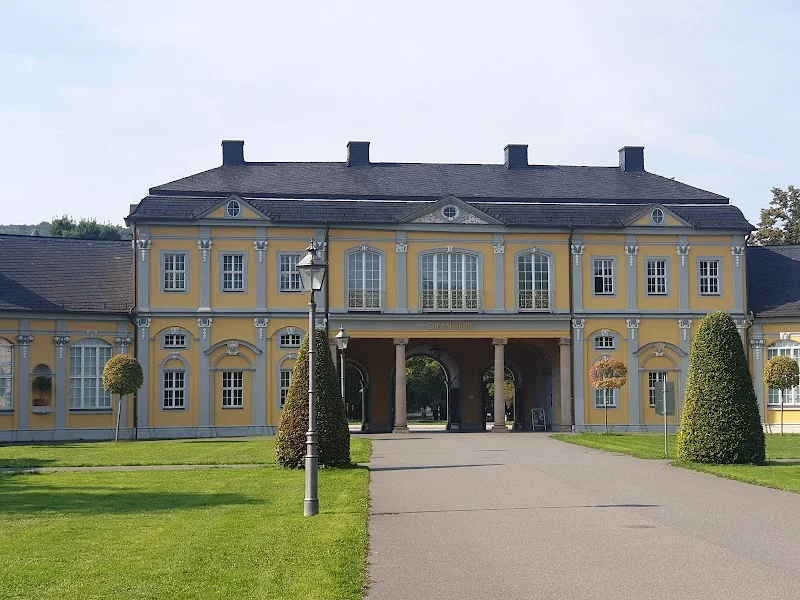
The Orangerie Gera is much more than just a beautiful building in the park: it is a place where baroque architecture, city history, and contemporary art are closely connected. Visitors to the location first experience the ensemble at Küchengarten with its historical greenery, pathways, and the special location between the city and the former residence. At the same time, the Orangerie is now home to the Gera Art Collection, making it one of the most important cultural focal points in the city. The connection to Otto Dix is particularly strong, as his work is presented here in a new permanent exhibition. The Orangerie is interesting for visitors because a museum visit, a walk in the park, and a look at the urban development of Gera can be easily combined. The official city website describes the building as a late baroque ensemble with museum use and clear visitor information. This mix of art, history, and practical accessibility makes the Orangerie Gera a location suitable for both targeted museum visits and a relaxed cultural stroll. ([gera.de](https://www.gera.de/tourismus-freizeit-kultur/museen/kunstsammlung-gera-/-orangerie))
Otto Dix and the Current Permanent Exhibition
The most important search impulse around the Orangerie Gera clearly leads to the current Otto Dix presentation. Since October 3, 2024, the art collection in the north and south wings of the Orangerie has been showing the new permanent exhibition “Otto Dix – Trust Your Eyes.” The city of Gera describes the exhibition as one that spans 500 square meters, showcasing around 50 paintings as well as 35 watercolors and drawings from all phases of his work. This is complemented by interactive media stations and a multimedia room, making the visit not only feel traditionally museum-like but also consciously designed as a modern approach to the work of one of the most significant German painters of the 20th century. In direct connection with the nearby Otto Dix House, a very coherent overall picture emerges: Here is the childhood and early work, there is the broad exhibition of works and the later development. For visitors, this means that the Orangerie should not be viewed in isolation but as a central component of the entire Otto Dix narrative in Gera. The exhibition is thus suitable for both art enthusiasts and guests seeking an initial introduction to the artist and a comprehensible overview of his work. ([gera.de](https://www.gera.de/tourismus-freizeit-kultur/museen/kunstsammlung-gera-/-orangerie/otto-dix-trau-deinen-augen))
Even outside of the Otto Dix exhibition, it is worthwhile to look at the collection structure of the Orangerie. According to the city of Gera, the central building is dedicated to special exhibitions that draw from its own collection and set thematic focuses. This is important for repeat visits because it means that the Orangerie is not reduced to a single theme but functions as a changing exhibition venue with regularly new perspectives. The Gera Art Collection itself comprises nearly 15,000 objects, ranging from the Middle Ages to the present. It preserves, among other things, important groups of works from the Gera painter families Reinhold and Fischer, the artists around Otto Dix, and the estate of the Bauhaus student Kurt Schmidt. Thus, a visit to the Orangerie gains additional depth: one does not just see a single room with pictures, but a collection that links regional art tradition, modernity, and historical development. Particularly for SEO-relevant topics such as “exhibition,” “collection,” “Otto Dix,” and “Gera Art Collection,” the Orangerie is a very strong target because it covers multiple search intentions simultaneously. ([gera.de](https://www.gera.de/tourismus-freizeit-kultur/museen/kunstsammlung-gera-/-orangerie/sammlung))
Opening Hours, Tickets, and Admission Prices
Those planning a visit typically first look for practical information. The official visiting hours for the Orangerie Gera are clearly defined: Tuesday to Sunday, the building is open from 11:00 AM to 5:00 PM, and it is closed on Mondays. The visitor service page of the city also lists the valid admission prices starting January 1, 2025. A single ticket costs 10.00 euros, reduced 6.00 euros. Particularly interesting for families, culture fans, or guests who also plan to visit the Otto Dix House is the combination ticket for Orangerie/Dix House for 12.00 euros or 8.00 euros reduced. For groups of ten or more, the price is 6.00 euros per person. Additionally, there is an annual admission card for all museums in the city of Gera, which costs 45.00 euros and is valid for 12 months. This information is crucial for planning because it directly shows how a museum visit can be organized efficiently and cost-effectively. Especially when combining several cultural stations in Gera, the combination ticket offers real added value. ([gera.de](https://www.gera.de/tourismus-freizeit-kultur/museen/kunstsammlung-gera-/-orangerie/besucherservice))
The city also provides helpful information for special cases and larger visits. Public tours are charged with a small surcharge on the admission price, guided tours by appointment have a fixed additional price, and for certain registered events, a flat fee may apply. Therefore, if you come with a group, a school class, or as part of a cultural program, you should coordinate the planning with the Orangerie early. Free admission is also provided for several visitor groups, including children and young people up to 18 years, as well as other persons mentioned in the visitor service overview. For the SEO logic of the page, terms like “tickets,” “admission prices,” “opening hours,” and “group ticket” are particularly important because they directly correspond to typical user questions. It is also practical that the visitor information not only advertises generally but also provides real numbers and specific time slots. This builds trust and reduces uncertainty before the visit. Therefore, those visiting the Orangerie Gera can plan their museum stay very well in advance and tailor it to their own needs. ([gera.de](https://www.gera.de/tourismus-freizeit-kultur/museen/kunstsammlung-gera-/-orangerie/besucherservice))
Directions, Public Transport, and Parking at Orangerie Gera
Regarding directions, the Orangerie Gera is very well connected to public transport. The official site mentions tram line 1 with the stop Küchengartenallee as a means of transport to the art collection / Orangerie. The visitor information additionally mentions the stop “Otto Dix,” which is accessible by low-floor trams and offers a guidance system for the visually impaired. This is very helpful for visitors as it makes arriving possible comfortably even without a car. The location in Küchengarten further facilitates orientation: the area lies between the White Elster, Küchengartenallee, and Theaterstraße, forming a clear connection between the city center and the historical residence landscape. Therefore, those orienting themselves by the location of the park can quickly find the building and can combine the museum visit with a walk through the garden area. This is particularly important for out-of-town guests, as the Orangerie does not appear to be an isolated object but rather as part of an easily understandable urban space. ([gera.de](https://www.gera.de/tourismus-freizeit-kultur/museen/kunstsammlung-gera-/-orangerie))
For those arriving by car, the official visitor information provides a clear statement at least for people with disabilities: There are disabled parking spaces at the Hofwiesenpark parking lot. The city also mentions mobile ramps at the north and south wings of the Orangerie for barrier-free access. The note about the bell before the gate passage, in case assistance is needed, is also practical. These details show that the Orangerie is designed not only as a cultural site but also as a visitor-friendly address. For the general parking strategy, it is best to keep an eye on the current traffic situation in the city center and to use the official city guidelines in case of special needs. This combination of public transport, parking, and barrier-free access is relevant for search queries related to “directions,” “parking,” and “barrier-free.” The Orangerie Gera is thus a location that is well-planned for both day visitors and those with specific mobility needs. ([gera.de](https://www.gera.de/tourismus-freizeit-kultur/museen/kunstsammlung-gera-/-orangerie/besucherservice))
Küchengarten, Architecture, and History
The history of the Orangerie Gera dates back far in the development of the city. The Küchengarten was first mentioned in 1631 and initially served as a utility and supply garden for the court of the Osterstein Castle. In its place, after the fire of the greenhouse from 1729 to 1732, under Count Heinrich XVIII. Reuß-Gera and according to the plans of the state master builder Gottfried Heinrich Krohne, the new Orangerie was built. The facility is described as a late baroque two-wing structure with four pavilions and two semicircular connecting wings. The representative central building was constructed between 1746 and 1748 and features a three-part, round-arched gate passage with the Reuß coat of arms at its center. This architectural basic form is still visible today and makes the Orangerie a significant example of baroque garden and representative architecture in Thuringia. This is important for visitors because the Orangerie is not only an exhibition site but also a historical monument with a clear spatial and design language. ([gera.de](https://www.gera.de/tourismus-freizeit-kultur/stadt-erleben/stadtgesichter/audiowalk-spurensuche/station-5-orangerie-gera))
Over time, the building has been used very differently: as a hospital, stable, gym, tavern, and military site. Between 1878 and 1919, it was available to the Gera Art Association for exhibitions. Since 1947, the building has been used permanently as a museum, and since 1972, it has been the home of the Gera Art Collection. The city also describes a comprehensive restoration from 1954 to 1957 and a major renovation between 2004 and 2007, during which modern climate control technology was also installed. Damage from the 2013 floods was later rectified. The Küchengarten itself was reconstructed according to historical plans during the Federal Garden Show 2007, and the fountain system was also renovated. Today, the facility invites visitors to linger with fountains, old trees, a nearly 100-year-old magnolia, and flowerbeds with roses and spring plants. This is central to the character of the Orangerie visit: here, monument preservation meets lively use, and this combination makes the place so attractive for culture and city visitors. ([gera.de](https://www.gera.de/kuechengarten-orangerie))
Guided Tours, Education, and Special Exhibitions
The Orangerie Gera is not only a place for independent tours but also a site with a strong educational offering. According to the city website, there are public visitor tours without prior registration as well as public thematic tours in the current special exhibition or in the collection exhibitions. Both formats last 60 minutes each and can be easily integrated into a daily schedule. Additionally, the art collection offers the series “Encounter Art – Art Discussion for Seniors,” which takes place every third Tuesday of the month at 2 PM. For private tours, booking via email or phone is possible, up to 14 days before the date. There are also clear offerings for schools: from introductions for educators to tours for kindergartens and school classes. The duration varies between 45 and 60 minutes depending on the target group. This makes the Orangerie a place that not only shows art but also actively conveys it. This is an important SEO topic because many search queries target not only the building itself but also “tours,” “program,” “offers,” and “special exhibition.” ([gera.de](https://www.gera.de/tourismus-freizeit-kultur/museen/kunstsammlung-gera-/-orangerie/vermittlung-/-angebote))
The offerings for children and young people are also well differentiated. The city mentions specific formats for preschool children, offerings for ages 6 and up, and programs from grade 5. This makes it clear that the Orangerie is not only interesting for art experts or tourists but also for families, school groups, and educational projects. Thematically, this fits very well with the character of the collection, as Otto Dix and the regional art history provide many points of connection for education, discussion, and creative approaches. Therefore, those planning a visit can choose very consciously: short museum stop, guided tour, thematic deepening, or educational format. Additionally, the Orangerie, as part of the Gera Art Collection, is situated within a larger cultural network that also includes the Otto Dix House and other municipal museums. This combination significantly increases the benefit of a visit. For visitors who like to plan, it is especially important that tours, group offerings, and special exhibitions can be clearly found on the official site and do not have to be improvised on-site. ([gera.de](https://www.gera.de/tourismus-freizeit-kultur/museen/kunstsammlung-gera-/-orangerie/vermittlung-/-angebote))
Collection, Accessibility, and Visit Planning
The Gera Art Collection, which is housed in the Orangerie, possesses an exceptionally broad collection with nearly 15,000 objects. This includes paintings, prints, drawings, and sculptures from the Middle Ages to the present. This collection strength becomes particularly visible in the changing thematic exhibitions of the Orangerie, which repeatedly showcase new constellations of well-known and lesser-known works. The city describes the collection as an important custodian of East Thuringian art traditions and refers to groups of works from the Gera painter families Reinhold and Fischer, the Gera artist circle around Otto Dix, and the estate of the Bauhaus student Kurt Schmidt. Thus, the Orangerie is not only a place for a single masterpiece but a platform for art history on a larger scale. Therefore, those searching for “Gera Art Collection” or “Orangerie Gera Exhibition” will find a place that goes beyond mere presentation and possesses a real profile between regional history, modernity, and museum presence. This makes the location particularly attractive for culture-interested visitors. ([gera.de](https://www.gera.de/tourismus-freizeit-kultur/museen/kunstsammlung-gera-/-orangerie/sammlung))
For concrete visit planning, the notes on accessibility are also important. The city mentions mobile ramps for the north and south wings, refers to low-floor trams with a guidance system for the visually impaired, and provides precise contact information for support on-site for people with disabilities. This is a strong indication that the Orangerie Gera is not only historically interesting but also practically accessible. It makes sense to combine the museum visit with a short stay in the Küchengarten, as the park is inseparably linked to the overall experience. The pathways, fountain system, old tree stock, and the open location between city and landscape give the place a special tranquility. Therefore, those who want to make the most of their visit should ideally plan enough time for the museum, the architecture, and the outdoor area. Especially on days with special exhibitions or guided tour appointments, it is worthwhile to keep an eye on the opening hours from Tuesday to Sunday between 11:00 AM and 5:00 PM and to consciously plan the combination of art, greenery, and historical atmosphere. This mix makes the Orangerie Gera a very strong destination for cultural travelers, families, and anyone looking for a place with a real profile in Gera. ([gera.de](https://www.gera.de/tourismus-freizeit-kultur/museen/kunstsammlung-gera-/-orangerie/besucherservice))
Sources:
- City of Gera – Gera Art Collection / Orangerie ([gera.de](https://www.gera.de/tourismus-freizeit-kultur/museen/kunstsammlung-gera-/-orangerie))
- City of Gera – Otto Dix: Trust Your Eyes ([gera.de](https://www.gera.de/tourismus-freizeit-kultur/museen/kunstsammlung-gera-/-orangerie/otto-dix-trau-deinen-augen))
- City of Gera – Visitor Service ([gera.de](https://www.gera.de/tourismus-freizeit-kultur/museen/kunstsammlung-gera-/-orangerie/besucherservice))
- City of Gera – Küchengarten & Orangerie ([gera.de](https://www.gera.de/kuechengarten-orangerie))
- City of Gera – Museum Educational Offers ([gera.de](https://www.gera.de/tourismus-freizeit-kultur/museen/kunstsammlung-gera-/-orangerie/vermittlung-/-angebote))
Show moreShow less
Orangerie Gera | Opening Hours & Admission Prices
The Orangerie Gera is much more than just a beautiful building in the park: it is a place where baroque architecture, city history, and contemporary art are closely connected. Visitors to the location first experience the ensemble at Küchengarten with its historical greenery, pathways, and the special location between the city and the former residence. At the same time, the Orangerie is now home to the Gera Art Collection, making it one of the most important cultural focal points in the city. The connection to Otto Dix is particularly strong, as his work is presented here in a new permanent exhibition. The Orangerie is interesting for visitors because a museum visit, a walk in the park, and a look at the urban development of Gera can be easily combined. The official city website describes the building as a late baroque ensemble with museum use and clear visitor information. This mix of art, history, and practical accessibility makes the Orangerie Gera a location suitable for both targeted museum visits and a relaxed cultural stroll. ([gera.de](https://www.gera.de/tourismus-freizeit-kultur/museen/kunstsammlung-gera-/-orangerie))
Otto Dix and the Current Permanent Exhibition
The most important search impulse around the Orangerie Gera clearly leads to the current Otto Dix presentation. Since October 3, 2024, the art collection in the north and south wings of the Orangerie has been showing the new permanent exhibition “Otto Dix – Trust Your Eyes.” The city of Gera describes the exhibition as one that spans 500 square meters, showcasing around 50 paintings as well as 35 watercolors and drawings from all phases of his work. This is complemented by interactive media stations and a multimedia room, making the visit not only feel traditionally museum-like but also consciously designed as a modern approach to the work of one of the most significant German painters of the 20th century. In direct connection with the nearby Otto Dix House, a very coherent overall picture emerges: Here is the childhood and early work, there is the broad exhibition of works and the later development. For visitors, this means that the Orangerie should not be viewed in isolation but as a central component of the entire Otto Dix narrative in Gera. The exhibition is thus suitable for both art enthusiasts and guests seeking an initial introduction to the artist and a comprehensible overview of his work. ([gera.de](https://www.gera.de/tourismus-freizeit-kultur/museen/kunstsammlung-gera-/-orangerie/otto-dix-trau-deinen-augen))
Even outside of the Otto Dix exhibition, it is worthwhile to look at the collection structure of the Orangerie. According to the city of Gera, the central building is dedicated to special exhibitions that draw from its own collection and set thematic focuses. This is important for repeat visits because it means that the Orangerie is not reduced to a single theme but functions as a changing exhibition venue with regularly new perspectives. The Gera Art Collection itself comprises nearly 15,000 objects, ranging from the Middle Ages to the present. It preserves, among other things, important groups of works from the Gera painter families Reinhold and Fischer, the artists around Otto Dix, and the estate of the Bauhaus student Kurt Schmidt. Thus, a visit to the Orangerie gains additional depth: one does not just see a single room with pictures, but a collection that links regional art tradition, modernity, and historical development. Particularly for SEO-relevant topics such as “exhibition,” “collection,” “Otto Dix,” and “Gera Art Collection,” the Orangerie is a very strong target because it covers multiple search intentions simultaneously. ([gera.de](https://www.gera.de/tourismus-freizeit-kultur/museen/kunstsammlung-gera-/-orangerie/sammlung))
Opening Hours, Tickets, and Admission Prices
Those planning a visit typically first look for practical information. The official visiting hours for the Orangerie Gera are clearly defined: Tuesday to Sunday, the building is open from 11:00 AM to 5:00 PM, and it is closed on Mondays. The visitor service page of the city also lists the valid admission prices starting January 1, 2025. A single ticket costs 10.00 euros, reduced 6.00 euros. Particularly interesting for families, culture fans, or guests who also plan to visit the Otto Dix House is the combination ticket for Orangerie/Dix House for 12.00 euros or 8.00 euros reduced. For groups of ten or more, the price is 6.00 euros per person. Additionally, there is an annual admission card for all museums in the city of Gera, which costs 45.00 euros and is valid for 12 months. This information is crucial for planning because it directly shows how a museum visit can be organized efficiently and cost-effectively. Especially when combining several cultural stations in Gera, the combination ticket offers real added value. ([gera.de](https://www.gera.de/tourismus-freizeit-kultur/museen/kunstsammlung-gera-/-orangerie/besucherservice))
The city also provides helpful information for special cases and larger visits. Public tours are charged with a small surcharge on the admission price, guided tours by appointment have a fixed additional price, and for certain registered events, a flat fee may apply. Therefore, if you come with a group, a school class, or as part of a cultural program, you should coordinate the planning with the Orangerie early. Free admission is also provided for several visitor groups, including children and young people up to 18 years, as well as other persons mentioned in the visitor service overview. For the SEO logic of the page, terms like “tickets,” “admission prices,” “opening hours,” and “group ticket” are particularly important because they directly correspond to typical user questions. It is also practical that the visitor information not only advertises generally but also provides real numbers and specific time slots. This builds trust and reduces uncertainty before the visit. Therefore, those visiting the Orangerie Gera can plan their museum stay very well in advance and tailor it to their own needs. ([gera.de](https://www.gera.de/tourismus-freizeit-kultur/museen/kunstsammlung-gera-/-orangerie/besucherservice))
Directions, Public Transport, and Parking at Orangerie Gera
Regarding directions, the Orangerie Gera is very well connected to public transport. The official site mentions tram line 1 with the stop Küchengartenallee as a means of transport to the art collection / Orangerie. The visitor information additionally mentions the stop “Otto Dix,” which is accessible by low-floor trams and offers a guidance system for the visually impaired. This is very helpful for visitors as it makes arriving possible comfortably even without a car. The location in Küchengarten further facilitates orientation: the area lies between the White Elster, Küchengartenallee, and Theaterstraße, forming a clear connection between the city center and the historical residence landscape. Therefore, those orienting themselves by the location of the park can quickly find the building and can combine the museum visit with a walk through the garden area. This is particularly important for out-of-town guests, as the Orangerie does not appear to be an isolated object but rather as part of an easily understandable urban space. ([gera.de](https://www.gera.de/tourismus-freizeit-kultur/museen/kunstsammlung-gera-/-orangerie))
For those arriving by car, the official visitor information provides a clear statement at least for people with disabilities: There are disabled parking spaces at the Hofwiesenpark parking lot. The city also mentions mobile ramps at the north and south wings of the Orangerie for barrier-free access. The note about the bell before the gate passage, in case assistance is needed, is also practical. These details show that the Orangerie is designed not only as a cultural site but also as a visitor-friendly address. For the general parking strategy, it is best to keep an eye on the current traffic situation in the city center and to use the official city guidelines in case of special needs. This combination of public transport, parking, and barrier-free access is relevant for search queries related to “directions,” “parking,” and “barrier-free.” The Orangerie Gera is thus a location that is well-planned for both day visitors and those with specific mobility needs. ([gera.de](https://www.gera.de/tourismus-freizeit-kultur/museen/kunstsammlung-gera-/-orangerie/besucherservice))
Küchengarten, Architecture, and History
The history of the Orangerie Gera dates back far in the development of the city. The Küchengarten was first mentioned in 1631 and initially served as a utility and supply garden for the court of the Osterstein Castle. In its place, after the fire of the greenhouse from 1729 to 1732, under Count Heinrich XVIII. Reuß-Gera and according to the plans of the state master builder Gottfried Heinrich Krohne, the new Orangerie was built. The facility is described as a late baroque two-wing structure with four pavilions and two semicircular connecting wings. The representative central building was constructed between 1746 and 1748 and features a three-part, round-arched gate passage with the Reuß coat of arms at its center. This architectural basic form is still visible today and makes the Orangerie a significant example of baroque garden and representative architecture in Thuringia. This is important for visitors because the Orangerie is not only an exhibition site but also a historical monument with a clear spatial and design language. ([gera.de](https://www.gera.de/tourismus-freizeit-kultur/stadt-erleben/stadtgesichter/audiowalk-spurensuche/station-5-orangerie-gera))
Over time, the building has been used very differently: as a hospital, stable, gym, tavern, and military site. Between 1878 and 1919, it was available to the Gera Art Association for exhibitions. Since 1947, the building has been used permanently as a museum, and since 1972, it has been the home of the Gera Art Collection. The city also describes a comprehensive restoration from 1954 to 1957 and a major renovation between 2004 and 2007, during which modern climate control technology was also installed. Damage from the 2013 floods was later rectified. The Küchengarten itself was reconstructed according to historical plans during the Federal Garden Show 2007, and the fountain system was also renovated. Today, the facility invites visitors to linger with fountains, old trees, a nearly 100-year-old magnolia, and flowerbeds with roses and spring plants. This is central to the character of the Orangerie visit: here, monument preservation meets lively use, and this combination makes the place so attractive for culture and city visitors. ([gera.de](https://www.gera.de/kuechengarten-orangerie))
Guided Tours, Education, and Special Exhibitions
The Orangerie Gera is not only a place for independent tours but also a site with a strong educational offering. According to the city website, there are public visitor tours without prior registration as well as public thematic tours in the current special exhibition or in the collection exhibitions. Both formats last 60 minutes each and can be easily integrated into a daily schedule. Additionally, the art collection offers the series “Encounter Art – Art Discussion for Seniors,” which takes place every third Tuesday of the month at 2 PM. For private tours, booking via email or phone is possible, up to 14 days before the date. There are also clear offerings for schools: from introductions for educators to tours for kindergartens and school classes. The duration varies between 45 and 60 minutes depending on the target group. This makes the Orangerie a place that not only shows art but also actively conveys it. This is an important SEO topic because many search queries target not only the building itself but also “tours,” “program,” “offers,” and “special exhibition.” ([gera.de](https://www.gera.de/tourismus-freizeit-kultur/museen/kunstsammlung-gera-/-orangerie/vermittlung-/-angebote))
The offerings for children and young people are also well differentiated. The city mentions specific formats for preschool children, offerings for ages 6 and up, and programs from grade 5. This makes it clear that the Orangerie is not only interesting for art experts or tourists but also for families, school groups, and educational projects. Thematically, this fits very well with the character of the collection, as Otto Dix and the regional art history provide many points of connection for education, discussion, and creative approaches. Therefore, those planning a visit can choose very consciously: short museum stop, guided tour, thematic deepening, or educational format. Additionally, the Orangerie, as part of the Gera Art Collection, is situated within a larger cultural network that also includes the Otto Dix House and other municipal museums. This combination significantly increases the benefit of a visit. For visitors who like to plan, it is especially important that tours, group offerings, and special exhibitions can be clearly found on the official site and do not have to be improvised on-site. ([gera.de](https://www.gera.de/tourismus-freizeit-kultur/museen/kunstsammlung-gera-/-orangerie/vermittlung-/-angebote))
Collection, Accessibility, and Visit Planning
The Gera Art Collection, which is housed in the Orangerie, possesses an exceptionally broad collection with nearly 15,000 objects. This includes paintings, prints, drawings, and sculptures from the Middle Ages to the present. This collection strength becomes particularly visible in the changing thematic exhibitions of the Orangerie, which repeatedly showcase new constellations of well-known and lesser-known works. The city describes the collection as an important custodian of East Thuringian art traditions and refers to groups of works from the Gera painter families Reinhold and Fischer, the Gera artist circle around Otto Dix, and the estate of the Bauhaus student Kurt Schmidt. Thus, the Orangerie is not only a place for a single masterpiece but a platform for art history on a larger scale. Therefore, those searching for “Gera Art Collection” or “Orangerie Gera Exhibition” will find a place that goes beyond mere presentation and possesses a real profile between regional history, modernity, and museum presence. This makes the location particularly attractive for culture-interested visitors. ([gera.de](https://www.gera.de/tourismus-freizeit-kultur/museen/kunstsammlung-gera-/-orangerie/sammlung))
For concrete visit planning, the notes on accessibility are also important. The city mentions mobile ramps for the north and south wings, refers to low-floor trams with a guidance system for the visually impaired, and provides precise contact information for support on-site for people with disabilities. This is a strong indication that the Orangerie Gera is not only historically interesting but also practically accessible. It makes sense to combine the museum visit with a short stay in the Küchengarten, as the park is inseparably linked to the overall experience. The pathways, fountain system, old tree stock, and the open location between city and landscape give the place a special tranquility. Therefore, those who want to make the most of their visit should ideally plan enough time for the museum, the architecture, and the outdoor area. Especially on days with special exhibitions or guided tour appointments, it is worthwhile to keep an eye on the opening hours from Tuesday to Sunday between 11:00 AM and 5:00 PM and to consciously plan the combination of art, greenery, and historical atmosphere. This mix makes the Orangerie Gera a very strong destination for cultural travelers, families, and anyone looking for a place with a real profile in Gera. ([gera.de](https://www.gera.de/tourismus-freizeit-kultur/museen/kunstsammlung-gera-/-orangerie/besucherservice))
Sources:
- City of Gera – Gera Art Collection / Orangerie ([gera.de](https://www.gera.de/tourismus-freizeit-kultur/museen/kunstsammlung-gera-/-orangerie))
- City of Gera – Otto Dix: Trust Your Eyes ([gera.de](https://www.gera.de/tourismus-freizeit-kultur/museen/kunstsammlung-gera-/-orangerie/otto-dix-trau-deinen-augen))
- City of Gera – Visitor Service ([gera.de](https://www.gera.de/tourismus-freizeit-kultur/museen/kunstsammlung-gera-/-orangerie/besucherservice))
- City of Gera – Küchengarten & Orangerie ([gera.de](https://www.gera.de/kuechengarten-orangerie))
- City of Gera – Museum Educational Offers ([gera.de](https://www.gera.de/tourismus-freizeit-kultur/museen/kunstsammlung-gera-/-orangerie/vermittlung-/-angebote))
Orangerie Gera | Opening Hours & Admission Prices
The Orangerie Gera is much more than just a beautiful building in the park: it is a place where baroque architecture, city history, and contemporary art are closely connected. Visitors to the location first experience the ensemble at Küchengarten with its historical greenery, pathways, and the special location between the city and the former residence. At the same time, the Orangerie is now home to the Gera Art Collection, making it one of the most important cultural focal points in the city. The connection to Otto Dix is particularly strong, as his work is presented here in a new permanent exhibition. The Orangerie is interesting for visitors because a museum visit, a walk in the park, and a look at the urban development of Gera can be easily combined. The official city website describes the building as a late baroque ensemble with museum use and clear visitor information. This mix of art, history, and practical accessibility makes the Orangerie Gera a location suitable for both targeted museum visits and a relaxed cultural stroll. ([gera.de](https://www.gera.de/tourismus-freizeit-kultur/museen/kunstsammlung-gera-/-orangerie))
Otto Dix and the Current Permanent Exhibition
The most important search impulse around the Orangerie Gera clearly leads to the current Otto Dix presentation. Since October 3, 2024, the art collection in the north and south wings of the Orangerie has been showing the new permanent exhibition “Otto Dix – Trust Your Eyes.” The city of Gera describes the exhibition as one that spans 500 square meters, showcasing around 50 paintings as well as 35 watercolors and drawings from all phases of his work. This is complemented by interactive media stations and a multimedia room, making the visit not only feel traditionally museum-like but also consciously designed as a modern approach to the work of one of the most significant German painters of the 20th century. In direct connection with the nearby Otto Dix House, a very coherent overall picture emerges: Here is the childhood and early work, there is the broad exhibition of works and the later development. For visitors, this means that the Orangerie should not be viewed in isolation but as a central component of the entire Otto Dix narrative in Gera. The exhibition is thus suitable for both art enthusiasts and guests seeking an initial introduction to the artist and a comprehensible overview of his work. ([gera.de](https://www.gera.de/tourismus-freizeit-kultur/museen/kunstsammlung-gera-/-orangerie/otto-dix-trau-deinen-augen))
Even outside of the Otto Dix exhibition, it is worthwhile to look at the collection structure of the Orangerie. According to the city of Gera, the central building is dedicated to special exhibitions that draw from its own collection and set thematic focuses. This is important for repeat visits because it means that the Orangerie is not reduced to a single theme but functions as a changing exhibition venue with regularly new perspectives. The Gera Art Collection itself comprises nearly 15,000 objects, ranging from the Middle Ages to the present. It preserves, among other things, important groups of works from the Gera painter families Reinhold and Fischer, the artists around Otto Dix, and the estate of the Bauhaus student Kurt Schmidt. Thus, a visit to the Orangerie gains additional depth: one does not just see a single room with pictures, but a collection that links regional art tradition, modernity, and historical development. Particularly for SEO-relevant topics such as “exhibition,” “collection,” “Otto Dix,” and “Gera Art Collection,” the Orangerie is a very strong target because it covers multiple search intentions simultaneously. ([gera.de](https://www.gera.de/tourismus-freizeit-kultur/museen/kunstsammlung-gera-/-orangerie/sammlung))
Opening Hours, Tickets, and Admission Prices
Those planning a visit typically first look for practical information. The official visiting hours for the Orangerie Gera are clearly defined: Tuesday to Sunday, the building is open from 11:00 AM to 5:00 PM, and it is closed on Mondays. The visitor service page of the city also lists the valid admission prices starting January 1, 2025. A single ticket costs 10.00 euros, reduced 6.00 euros. Particularly interesting for families, culture fans, or guests who also plan to visit the Otto Dix House is the combination ticket for Orangerie/Dix House for 12.00 euros or 8.00 euros reduced. For groups of ten or more, the price is 6.00 euros per person. Additionally, there is an annual admission card for all museums in the city of Gera, which costs 45.00 euros and is valid for 12 months. This information is crucial for planning because it directly shows how a museum visit can be organized efficiently and cost-effectively. Especially when combining several cultural stations in Gera, the combination ticket offers real added value. ([gera.de](https://www.gera.de/tourismus-freizeit-kultur/museen/kunstsammlung-gera-/-orangerie/besucherservice))
The city also provides helpful information for special cases and larger visits. Public tours are charged with a small surcharge on the admission price, guided tours by appointment have a fixed additional price, and for certain registered events, a flat fee may apply. Therefore, if you come with a group, a school class, or as part of a cultural program, you should coordinate the planning with the Orangerie early. Free admission is also provided for several visitor groups, including children and young people up to 18 years, as well as other persons mentioned in the visitor service overview. For the SEO logic of the page, terms like “tickets,” “admission prices,” “opening hours,” and “group ticket” are particularly important because they directly correspond to typical user questions. It is also practical that the visitor information not only advertises generally but also provides real numbers and specific time slots. This builds trust and reduces uncertainty before the visit. Therefore, those visiting the Orangerie Gera can plan their museum stay very well in advance and tailor it to their own needs. ([gera.de](https://www.gera.de/tourismus-freizeit-kultur/museen/kunstsammlung-gera-/-orangerie/besucherservice))
Directions, Public Transport, and Parking at Orangerie Gera
Regarding directions, the Orangerie Gera is very well connected to public transport. The official site mentions tram line 1 with the stop Küchengartenallee as a means of transport to the art collection / Orangerie. The visitor information additionally mentions the stop “Otto Dix,” which is accessible by low-floor trams and offers a guidance system for the visually impaired. This is very helpful for visitors as it makes arriving possible comfortably even without a car. The location in Küchengarten further facilitates orientation: the area lies between the White Elster, Küchengartenallee, and Theaterstraße, forming a clear connection between the city center and the historical residence landscape. Therefore, those orienting themselves by the location of the park can quickly find the building and can combine the museum visit with a walk through the garden area. This is particularly important for out-of-town guests, as the Orangerie does not appear to be an isolated object but rather as part of an easily understandable urban space. ([gera.de](https://www.gera.de/tourismus-freizeit-kultur/museen/kunstsammlung-gera-/-orangerie))
For those arriving by car, the official visitor information provides a clear statement at least for people with disabilities: There are disabled parking spaces at the Hofwiesenpark parking lot. The city also mentions mobile ramps at the north and south wings of the Orangerie for barrier-free access. The note about the bell before the gate passage, in case assistance is needed, is also practical. These details show that the Orangerie is designed not only as a cultural site but also as a visitor-friendly address. For the general parking strategy, it is best to keep an eye on the current traffic situation in the city center and to use the official city guidelines in case of special needs. This combination of public transport, parking, and barrier-free access is relevant for search queries related to “directions,” “parking,” and “barrier-free.” The Orangerie Gera is thus a location that is well-planned for both day visitors and those with specific mobility needs. ([gera.de](https://www.gera.de/tourismus-freizeit-kultur/museen/kunstsammlung-gera-/-orangerie/besucherservice))
Küchengarten, Architecture, and History
The history of the Orangerie Gera dates back far in the development of the city. The Küchengarten was first mentioned in 1631 and initially served as a utility and supply garden for the court of the Osterstein Castle. In its place, after the fire of the greenhouse from 1729 to 1732, under Count Heinrich XVIII. Reuß-Gera and according to the plans of the state master builder Gottfried Heinrich Krohne, the new Orangerie was built. The facility is described as a late baroque two-wing structure with four pavilions and two semicircular connecting wings. The representative central building was constructed between 1746 and 1748 and features a three-part, round-arched gate passage with the Reuß coat of arms at its center. This architectural basic form is still visible today and makes the Orangerie a significant example of baroque garden and representative architecture in Thuringia. This is important for visitors because the Orangerie is not only an exhibition site but also a historical monument with a clear spatial and design language. ([gera.de](https://www.gera.de/tourismus-freizeit-kultur/stadt-erleben/stadtgesichter/audiowalk-spurensuche/station-5-orangerie-gera))
Over time, the building has been used very differently: as a hospital, stable, gym, tavern, and military site. Between 1878 and 1919, it was available to the Gera Art Association for exhibitions. Since 1947, the building has been used permanently as a museum, and since 1972, it has been the home of the Gera Art Collection. The city also describes a comprehensive restoration from 1954 to 1957 and a major renovation between 2004 and 2007, during which modern climate control technology was also installed. Damage from the 2013 floods was later rectified. The Küchengarten itself was reconstructed according to historical plans during the Federal Garden Show 2007, and the fountain system was also renovated. Today, the facility invites visitors to linger with fountains, old trees, a nearly 100-year-old magnolia, and flowerbeds with roses and spring plants. This is central to the character of the Orangerie visit: here, monument preservation meets lively use, and this combination makes the place so attractive for culture and city visitors. ([gera.de](https://www.gera.de/kuechengarten-orangerie))
Guided Tours, Education, and Special Exhibitions
The Orangerie Gera is not only a place for independent tours but also a site with a strong educational offering. According to the city website, there are public visitor tours without prior registration as well as public thematic tours in the current special exhibition or in the collection exhibitions. Both formats last 60 minutes each and can be easily integrated into a daily schedule. Additionally, the art collection offers the series “Encounter Art – Art Discussion for Seniors,” which takes place every third Tuesday of the month at 2 PM. For private tours, booking via email or phone is possible, up to 14 days before the date. There are also clear offerings for schools: from introductions for educators to tours for kindergartens and school classes. The duration varies between 45 and 60 minutes depending on the target group. This makes the Orangerie a place that not only shows art but also actively conveys it. This is an important SEO topic because many search queries target not only the building itself but also “tours,” “program,” “offers,” and “special exhibition.” ([gera.de](https://www.gera.de/tourismus-freizeit-kultur/museen/kunstsammlung-gera-/-orangerie/vermittlung-/-angebote))
The offerings for children and young people are also well differentiated. The city mentions specific formats for preschool children, offerings for ages 6 and up, and programs from grade 5. This makes it clear that the Orangerie is not only interesting for art experts or tourists but also for families, school groups, and educational projects. Thematically, this fits very well with the character of the collection, as Otto Dix and the regional art history provide many points of connection for education, discussion, and creative approaches. Therefore, those planning a visit can choose very consciously: short museum stop, guided tour, thematic deepening, or educational format. Additionally, the Orangerie, as part of the Gera Art Collection, is situated within a larger cultural network that also includes the Otto Dix House and other municipal museums. This combination significantly increases the benefit of a visit. For visitors who like to plan, it is especially important that tours, group offerings, and special exhibitions can be clearly found on the official site and do not have to be improvised on-site. ([gera.de](https://www.gera.de/tourismus-freizeit-kultur/museen/kunstsammlung-gera-/-orangerie/vermittlung-/-angebote))
Collection, Accessibility, and Visit Planning
The Gera Art Collection, which is housed in the Orangerie, possesses an exceptionally broad collection with nearly 15,000 objects. This includes paintings, prints, drawings, and sculptures from the Middle Ages to the present. This collection strength becomes particularly visible in the changing thematic exhibitions of the Orangerie, which repeatedly showcase new constellations of well-known and lesser-known works. The city describes the collection as an important custodian of East Thuringian art traditions and refers to groups of works from the Gera painter families Reinhold and Fischer, the Gera artist circle around Otto Dix, and the estate of the Bauhaus student Kurt Schmidt. Thus, the Orangerie is not only a place for a single masterpiece but a platform for art history on a larger scale. Therefore, those searching for “Gera Art Collection” or “Orangerie Gera Exhibition” will find a place that goes beyond mere presentation and possesses a real profile between regional history, modernity, and museum presence. This makes the location particularly attractive for culture-interested visitors. ([gera.de](https://www.gera.de/tourismus-freizeit-kultur/museen/kunstsammlung-gera-/-orangerie/sammlung))
For concrete visit planning, the notes on accessibility are also important. The city mentions mobile ramps for the north and south wings, refers to low-floor trams with a guidance system for the visually impaired, and provides precise contact information for support on-site for people with disabilities. This is a strong indication that the Orangerie Gera is not only historically interesting but also practically accessible. It makes sense to combine the museum visit with a short stay in the Küchengarten, as the park is inseparably linked to the overall experience. The pathways, fountain system, old tree stock, and the open location between city and landscape give the place a special tranquility. Therefore, those who want to make the most of their visit should ideally plan enough time for the museum, the architecture, and the outdoor area. Especially on days with special exhibitions or guided tour appointments, it is worthwhile to keep an eye on the opening hours from Tuesday to Sunday between 11:00 AM and 5:00 PM and to consciously plan the combination of art, greenery, and historical atmosphere. This mix makes the Orangerie Gera a very strong destination for cultural travelers, families, and anyone looking for a place with a real profile in Gera. ([gera.de](https://www.gera.de/tourismus-freizeit-kultur/museen/kunstsammlung-gera-/-orangerie/besucherservice))
Sources:
- City of Gera – Gera Art Collection / Orangerie ([gera.de](https://www.gera.de/tourismus-freizeit-kultur/museen/kunstsammlung-gera-/-orangerie))
- City of Gera – Otto Dix: Trust Your Eyes ([gera.de](https://www.gera.de/tourismus-freizeit-kultur/museen/kunstsammlung-gera-/-orangerie/otto-dix-trau-deinen-augen))
- City of Gera – Visitor Service ([gera.de](https://www.gera.de/tourismus-freizeit-kultur/museen/kunstsammlung-gera-/-orangerie/besucherservice))
- City of Gera – Küchengarten & Orangerie ([gera.de](https://www.gera.de/kuechengarten-orangerie))
- City of Gera – Museum Educational Offers ([gera.de](https://www.gera.de/tourismus-freizeit-kultur/museen/kunstsammlung-gera-/-orangerie/vermittlung-/-angebote))
Upcoming Events
No events found
Frequently Asked Questions
Reviews
Arif Erdem Altınsoy
25. April 2022
Awesome
Tommy
22. September 2025
This great building, affectionately called 'Bratwurst' in the local dialect due to its shape, is located in the middle of Gera, not far from the Buga Park or on the other side of the theater, and houses a comprehensive collection of works by the painter Otto Dix, who is also the namesake of the city of Gera. Framed by the so-called Küchengarten, a green park with a fountain, the ensemble invites you to linger and indulge in art.
Weltenbummler1980
11. September 2025
Very beautiful orangery. The grounds are well-maintained and invite you to linger. A fountain provides relaxation, and there are seating areas everywhere. The courtyard is pleasantly walkable with its nicely laid paths. The orangery is an eye-catcher both outside and inside. Highly recommended.
Gerlinde Stanzel
7. September 2025
A really beautiful romantic place. Nicely designed green area and a lovely fountain located in the middle, with plenty of benches to relax.
Uwe R. (Vielreisender)
16. August 2025
Very beautiful place. A gem in Gera. Comprehensive exhibition on Otto Dix. Very appealing with rich information about the artist's life and work. Plus, a great architectural ensemble. The combo ticket with the Otto Dix House is worth it.