
Gera
Burgstraße 2, 07545 Gera, Deutschland
Rutheneum since 1608 | Photos & History
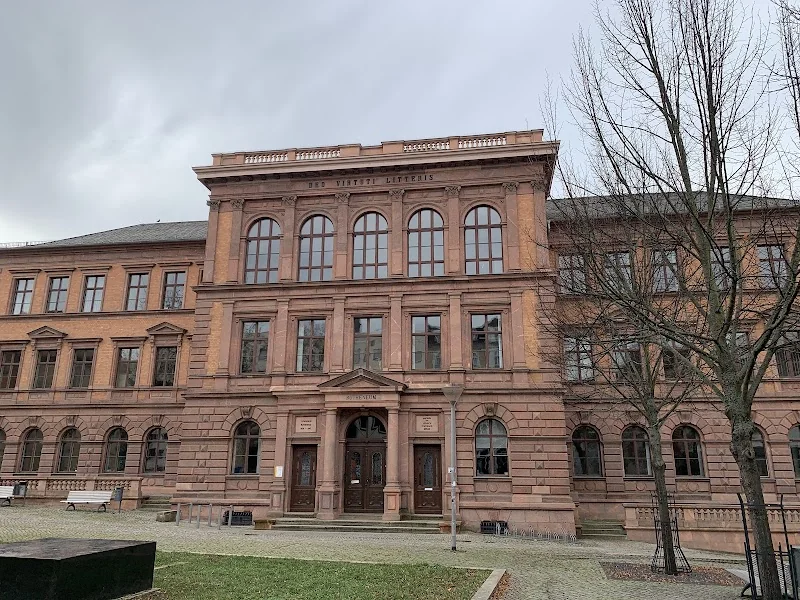
The Rutheneum since 1608 in Gera is much more than an ordinary high school: The school sees itself as a traditional educational institution with a strong music profile, its own campus at Burgstraße 2, and a history that dates back to 1608. Today, 652 students learn there, taught by 55 teachers and six trainees; class sizes are up to 28 learners according to the information letter. The modern campus combines historical substance with contemporary learning spaces, a cafeteria, all-day area, library, and administration. At the same time, the music special classes, the concert choir, and the school's public presence shape the image of this special address in Gera.([gymnasium-rutheneum.de](https://www.gymnasium-rutheneum.de/content/school/information.php))
Photos and Insights into School Life at Rutheneum since 1608
Those looking for photos from Rutheneum since 1608 will find much more than just a simple homepage on the official website. The menu shows dedicated areas for photos, videos, Hall of Fame, class photos, alumni, former teachers, and guestbook. This is remarkable for a school because it not only manages everyday life but documents it: school life, memories, concerts, projects, and intergenerational bonds are made visible. Especially for an institution with a long tradition, this is an important SEO and trust factor, as interested parties want to see the atmosphere, not just read data.([gymnasium-rutheneum.de](https://www.gymnasium-rutheneum.de/content/contact/overview.php))
The public appearance also speaks for this imagery. The homepage and the press review regularly highlight reports, concerts, competitions, and musical successes, including news about youth music, projects, choir concerts, and alumni meetings. This creates a vivid picture of the school: not anonymous, but shaped by faces, events, and a strong community. For search queries like photos, reviews, or insights into school life, this mix is particularly relevant because it shows how the school is perceived. The website thus provides not only information but also visual and emotional orientation for parents, students, alumni, and culture-interested visitors.([gymnasium-rutheneum.de](https://www.gymnasium-rutheneum.de/index.php?anzahl=532))
History of Rutheneum since 1608 and the Goethe-Gymnasium Tradition
The history of Rutheneum since 1608 begins in the early 17th century and is closely linked to Heinrich Posthumus von Reuß. The school's chronicle mentions a first draft for the establishment of a state school in 1602, followed by the laying of the foundation stone and calls for support for the school building in 1605, before the founding day of the Gymnasium Rutheneum is recorded on March 12, 1608, with the foundation letter. The school was ceremonially opened on May 6, 1608. Even these early dates show: The current high school is deeply rooted in the educational and urban history of Gera and carries the term since 1608 not only as a name but as a historical obligation.([gymnasium-rutheneum.de](https://www.gymnasium-rutheneum.de/content/school/history.php))
The chronicle also tells of crises and renewal. After the fire of 1639, the gymnasium buildings and the Johanniskirche were destroyed; the reconstruction lasted until 1683. Nevertheless, the school remained an important educational institution and developed further over the centuries. In the 20th century, there were several name changes: in 1949, the name Goethe School was awarded, in 1991 it became Goethe-Gymnasium Gera, and in 1995 finally Goethegymnasium/Rutheneum since 1608. These name lines explain why many search queries still connect the Goethe-Gymnasium with the Rutheneum. The current name preserves the tradition while the location continues to act as a modern school site.([gymnasium-rutheneum.de](https://www.gymnasium-rutheneum.de/content/school/history.php))
High School in Gera: Campus, Location, and Facilities at Burgstraße 2
The Rutheneum campus is centrally located in Gera at Burgstraße 2, 07545 Gera, and was opened in September 2021 after extensive construction measures. The city of Gera describes the project as a roughly 20 million euro undertaking, where the historic old building, the former government building, and an additional new building were combined into a campus-like school complex. Particularly important is the connection of history and functionality: The historic ensemble was not museum-like preserved but further developed for school life with new learning and recreational areas, a sports hall, and barrier-free transitions.([gera.de](https://www.gera.de/bauen-stadtentwicklung/projekte/schulbau-sanierung/gymnasium-rutheneum-seit-1608))
Inside, according to city information, there are a cafeteria, all-day area, library, and administration within the historic walls; the old building forms the communicative heart of the campus with the central foyer and break area. This is complemented by classrooms, subject rooms, open learning areas, and modern equipment details such as new pianos in the music rooms. For practical everyday life, the sports facilities are also relevant: The information letter mentions the East Suburban Gymnasium, the gymnasium at Johannisplatz, and the new campus hall. Additionally, it is stated that students from Gera who live more than three kilometers from the nearest enrolling high school can apply for a student ticket. This mix of central location, campus structure, and concrete infrastructure makes the Rutheneum particularly visible for search queries related to Gera and campus.([gera.de](https://www.gera.de/bauen-stadtentwicklung/projekte/schulbau-sanierung/gymnasium-rutheneum-seit-1608))
Music Special Classes, Foreign Languages, and Special Offers
The school profile of Rutheneum since 1608 is linguistically oriented and simultaneously strongly musically influenced. The school describes itself as a high school with a large offering of foreign languages; English, French, Spanish, Russian, and Latin are offered. Students learn three different foreign languages as a fixed part of their education. Specifically, English begins in grade 5, from grade 6 students choose between Latin and French, and from grade 9 Spanish is added; with great interest, French or Latin are also possible. For search queries like Gymnasium Rutheneum since 1608 or Goethe-Gymnasium Rutheneum since 1608, this profile is particularly important because it clearly describes the academic orientation of the school.([gymnasium-rutheneum.de](https://www.gymnasium-rutheneum.de/content/school/profile.php))
A second major profile feature is the music special classes. According to the school page, they have existed since 1989; starting in grade 9, students receive intensive musical training with music history, music theory, ear training, voice training, instrumental training, and choral singing. In grades 9 and 10, additional hours are added, and later the special instruction continues in the upper school. The school also mentions instruments such as piano, guitar, and organ, supplemented by a recording studio, conducting, and chamber orchestra. For external students, there is the possibility of boarding accommodation. The special classes lead to a full-fledged Abitur and a certificate of musical training status. This combination of language, music, and boarding makes the Rutheneum unique in school comparisons.([gymnasium-rutheneum.de](https://www.gymnasium-rutheneum.de/content/school/special.php))
Reviews, Public Perception, and What Visitors Can Expect
In search queries for reviews, Rutheneum since 1608 primarily appears as a school with a strong public presence. Instead of classic star ratings, reports, press reviews, photos, videos, and alumni areas are in the foreground on the website. This is typical for a traditional school: Perception arises less from restaurant-like reviews but from concerts, competition successes, reports from school life, and presence in local media. The press review documents, among other things, successes in youth music, concert projects, and recurring cultural activities, resulting in a serious, vivid picture of the institution.([gymnasium-rutheneum.de](https://www.gymnasium-rutheneum.de/index.php?anzahl=532))
For visitors, this means: Those who want to get to know Rutheneum should not only look for reviews but also pay attention to the visible signals of the school. The concert choir, public events, photos, and reports show an institution that actively presents itself and makes its results transparent. Particularly significant is that the school equally emphasizes musical achievements, school competitions, and alumni work. Thus, a simple search query for reviews quickly turns into a more comprehensive picture: Rutheneum since 1608 is a place with reputation, cultural depth, and a clear educational identity that builds trust through its public presence.([gymnasium-rutheneum.de](https://www.gymnasium-rutheneum.de/index.php?anzahl=532))
Registration, Student Numbers, and Practical Information for Parents
For parents and interested parties, practical information is particularly helpful. The official contact page lists the postal address as Rutheneum since 1608, Burgstraße 2, 07545 Gera, along with the secretariat, upper school management, head of the music special classes, school social work, and other contacts. The current information letter also states that the school currently has 652 students, 55 teachers, and six trainees. These numbers are important for assessing the size and show that it is a large but still personally structured school location. Class sizes are up to 28 students, making the teaching easily comprehensible compared to many other high schools.([gymnasium-rutheneum.de](https://www.gymnasium-rutheneum.de/content/contact/overview.php))
School life is also clearly organized. The information page lists working groups such as ceramics, children's choir, chamber orchestra, chess, cooking and baking, environmental AG, NaWi is cool, time jumps, school medical service, and football. Additionally, school traditions like the indoor handball tournament for all classes, which has existed since 1956, as well as concert series and musical events are mentioned. According to the school, the school support association has about 260 members and supports projects, events, and equipment such as the recording studio. For external music students, the boarding structure is also important: arrival on Sundays, departure usually on Fridays, accommodation in single or double rooms, and pianos as practice instruments. This creates a complete picture of the location: historical, musical, practically organized, and strongly anchored in the city of Gera.([gymnasium-rutheneum.de](https://www.gymnasium-rutheneum.de/content/school/information.php))
Sources:
Mehr anzeigenWeniger anzeigen
Rutheneum since 1608 | Photos & History
The Rutheneum since 1608 in Gera is much more than an ordinary high school: The school sees itself as a traditional educational institution with a strong music profile, its own campus at Burgstraße 2, and a history that dates back to 1608. Today, 652 students learn there, taught by 55 teachers and six trainees; class sizes are up to 28 learners according to the information letter. The modern campus combines historical substance with contemporary learning spaces, a cafeteria, all-day area, library, and administration. At the same time, the music special classes, the concert choir, and the school's public presence shape the image of this special address in Gera.([gymnasium-rutheneum.de](https://www.gymnasium-rutheneum.de/content/school/information.php))
Photos and Insights into School Life at Rutheneum since 1608
Those looking for photos from Rutheneum since 1608 will find much more than just a simple homepage on the official website. The menu shows dedicated areas for photos, videos, Hall of Fame, class photos, alumni, former teachers, and guestbook. This is remarkable for a school because it not only manages everyday life but documents it: school life, memories, concerts, projects, and intergenerational bonds are made visible. Especially for an institution with a long tradition, this is an important SEO and trust factor, as interested parties want to see the atmosphere, not just read data.([gymnasium-rutheneum.de](https://www.gymnasium-rutheneum.de/content/contact/overview.php))
The public appearance also speaks for this imagery. The homepage and the press review regularly highlight reports, concerts, competitions, and musical successes, including news about youth music, projects, choir concerts, and alumni meetings. This creates a vivid picture of the school: not anonymous, but shaped by faces, events, and a strong community. For search queries like photos, reviews, or insights into school life, this mix is particularly relevant because it shows how the school is perceived. The website thus provides not only information but also visual and emotional orientation for parents, students, alumni, and culture-interested visitors.([gymnasium-rutheneum.de](https://www.gymnasium-rutheneum.de/index.php?anzahl=532))
History of Rutheneum since 1608 and the Goethe-Gymnasium Tradition
The history of Rutheneum since 1608 begins in the early 17th century and is closely linked to Heinrich Posthumus von Reuß. The school's chronicle mentions a first draft for the establishment of a state school in 1602, followed by the laying of the foundation stone and calls for support for the school building in 1605, before the founding day of the Gymnasium Rutheneum is recorded on March 12, 1608, with the foundation letter. The school was ceremonially opened on May 6, 1608. Even these early dates show: The current high school is deeply rooted in the educational and urban history of Gera and carries the term since 1608 not only as a name but as a historical obligation.([gymnasium-rutheneum.de](https://www.gymnasium-rutheneum.de/content/school/history.php))
The chronicle also tells of crises and renewal. After the fire of 1639, the gymnasium buildings and the Johanniskirche were destroyed; the reconstruction lasted until 1683. Nevertheless, the school remained an important educational institution and developed further over the centuries. In the 20th century, there were several name changes: in 1949, the name Goethe School was awarded, in 1991 it became Goethe-Gymnasium Gera, and in 1995 finally Goethegymnasium/Rutheneum since 1608. These name lines explain why many search queries still connect the Goethe-Gymnasium with the Rutheneum. The current name preserves the tradition while the location continues to act as a modern school site.([gymnasium-rutheneum.de](https://www.gymnasium-rutheneum.de/content/school/history.php))
High School in Gera: Campus, Location, and Facilities at Burgstraße 2
The Rutheneum campus is centrally located in Gera at Burgstraße 2, 07545 Gera, and was opened in September 2021 after extensive construction measures. The city of Gera describes the project as a roughly 20 million euro undertaking, where the historic old building, the former government building, and an additional new building were combined into a campus-like school complex. Particularly important is the connection of history and functionality: The historic ensemble was not museum-like preserved but further developed for school life with new learning and recreational areas, a sports hall, and barrier-free transitions.([gera.de](https://www.gera.de/bauen-stadtentwicklung/projekte/schulbau-sanierung/gymnasium-rutheneum-seit-1608))
Inside, according to city information, there are a cafeteria, all-day area, library, and administration within the historic walls; the old building forms the communicative heart of the campus with the central foyer and break area. This is complemented by classrooms, subject rooms, open learning areas, and modern equipment details such as new pianos in the music rooms. For practical everyday life, the sports facilities are also relevant: The information letter mentions the East Suburban Gymnasium, the gymnasium at Johannisplatz, and the new campus hall. Additionally, it is stated that students from Gera who live more than three kilometers from the nearest enrolling high school can apply for a student ticket. This mix of central location, campus structure, and concrete infrastructure makes the Rutheneum particularly visible for search queries related to Gera and campus.([gera.de](https://www.gera.de/bauen-stadtentwicklung/projekte/schulbau-sanierung/gymnasium-rutheneum-seit-1608))
Music Special Classes, Foreign Languages, and Special Offers
The school profile of Rutheneum since 1608 is linguistically oriented and simultaneously strongly musically influenced. The school describes itself as a high school with a large offering of foreign languages; English, French, Spanish, Russian, and Latin are offered. Students learn three different foreign languages as a fixed part of their education. Specifically, English begins in grade 5, from grade 6 students choose between Latin and French, and from grade 9 Spanish is added; with great interest, French or Latin are also possible. For search queries like Gymnasium Rutheneum since 1608 or Goethe-Gymnasium Rutheneum since 1608, this profile is particularly important because it clearly describes the academic orientation of the school.([gymnasium-rutheneum.de](https://www.gymnasium-rutheneum.de/content/school/profile.php))
A second major profile feature is the music special classes. According to the school page, they have existed since 1989; starting in grade 9, students receive intensive musical training with music history, music theory, ear training, voice training, instrumental training, and choral singing. In grades 9 and 10, additional hours are added, and later the special instruction continues in the upper school. The school also mentions instruments such as piano, guitar, and organ, supplemented by a recording studio, conducting, and chamber orchestra. For external students, there is the possibility of boarding accommodation. The special classes lead to a full-fledged Abitur and a certificate of musical training status. This combination of language, music, and boarding makes the Rutheneum unique in school comparisons.([gymnasium-rutheneum.de](https://www.gymnasium-rutheneum.de/content/school/special.php))
Reviews, Public Perception, and What Visitors Can Expect
In search queries for reviews, Rutheneum since 1608 primarily appears as a school with a strong public presence. Instead of classic star ratings, reports, press reviews, photos, videos, and alumni areas are in the foreground on the website. This is typical for a traditional school: Perception arises less from restaurant-like reviews but from concerts, competition successes, reports from school life, and presence in local media. The press review documents, among other things, successes in youth music, concert projects, and recurring cultural activities, resulting in a serious, vivid picture of the institution.([gymnasium-rutheneum.de](https://www.gymnasium-rutheneum.de/index.php?anzahl=532))
For visitors, this means: Those who want to get to know Rutheneum should not only look for reviews but also pay attention to the visible signals of the school. The concert choir, public events, photos, and reports show an institution that actively presents itself and makes its results transparent. Particularly significant is that the school equally emphasizes musical achievements, school competitions, and alumni work. Thus, a simple search query for reviews quickly turns into a more comprehensive picture: Rutheneum since 1608 is a place with reputation, cultural depth, and a clear educational identity that builds trust through its public presence.([gymnasium-rutheneum.de](https://www.gymnasium-rutheneum.de/index.php?anzahl=532))
Registration, Student Numbers, and Practical Information for Parents
For parents and interested parties, practical information is particularly helpful. The official contact page lists the postal address as Rutheneum since 1608, Burgstraße 2, 07545 Gera, along with the secretariat, upper school management, head of the music special classes, school social work, and other contacts. The current information letter also states that the school currently has 652 students, 55 teachers, and six trainees. These numbers are important for assessing the size and show that it is a large but still personally structured school location. Class sizes are up to 28 students, making the teaching easily comprehensible compared to many other high schools.([gymnasium-rutheneum.de](https://www.gymnasium-rutheneum.de/content/contact/overview.php))
School life is also clearly organized. The information page lists working groups such as ceramics, children's choir, chamber orchestra, chess, cooking and baking, environmental AG, NaWi is cool, time jumps, school medical service, and football. Additionally, school traditions like the indoor handball tournament for all classes, which has existed since 1956, as well as concert series and musical events are mentioned. According to the school, the school support association has about 260 members and supports projects, events, and equipment such as the recording studio. For external music students, the boarding structure is also important: arrival on Sundays, departure usually on Fridays, accommodation in single or double rooms, and pianos as practice instruments. This creates a complete picture of the location: historical, musical, practically organized, and strongly anchored in the city of Gera.([gymnasium-rutheneum.de](https://www.gymnasium-rutheneum.de/content/school/information.php))
Sources:
Rutheneum since 1608 | Photos & History
The Rutheneum since 1608 in Gera is much more than an ordinary high school: The school sees itself as a traditional educational institution with a strong music profile, its own campus at Burgstraße 2, and a history that dates back to 1608. Today, 652 students learn there, taught by 55 teachers and six trainees; class sizes are up to 28 learners according to the information letter. The modern campus combines historical substance with contemporary learning spaces, a cafeteria, all-day area, library, and administration. At the same time, the music special classes, the concert choir, and the school's public presence shape the image of this special address in Gera.([gymnasium-rutheneum.de](https://www.gymnasium-rutheneum.de/content/school/information.php))
Photos and Insights into School Life at Rutheneum since 1608
Those looking for photos from Rutheneum since 1608 will find much more than just a simple homepage on the official website. The menu shows dedicated areas for photos, videos, Hall of Fame, class photos, alumni, former teachers, and guestbook. This is remarkable for a school because it not only manages everyday life but documents it: school life, memories, concerts, projects, and intergenerational bonds are made visible. Especially for an institution with a long tradition, this is an important SEO and trust factor, as interested parties want to see the atmosphere, not just read data.([gymnasium-rutheneum.de](https://www.gymnasium-rutheneum.de/content/contact/overview.php))
The public appearance also speaks for this imagery. The homepage and the press review regularly highlight reports, concerts, competitions, and musical successes, including news about youth music, projects, choir concerts, and alumni meetings. This creates a vivid picture of the school: not anonymous, but shaped by faces, events, and a strong community. For search queries like photos, reviews, or insights into school life, this mix is particularly relevant because it shows how the school is perceived. The website thus provides not only information but also visual and emotional orientation for parents, students, alumni, and culture-interested visitors.([gymnasium-rutheneum.de](https://www.gymnasium-rutheneum.de/index.php?anzahl=532))
History of Rutheneum since 1608 and the Goethe-Gymnasium Tradition
The history of Rutheneum since 1608 begins in the early 17th century and is closely linked to Heinrich Posthumus von Reuß. The school's chronicle mentions a first draft for the establishment of a state school in 1602, followed by the laying of the foundation stone and calls for support for the school building in 1605, before the founding day of the Gymnasium Rutheneum is recorded on March 12, 1608, with the foundation letter. The school was ceremonially opened on May 6, 1608. Even these early dates show: The current high school is deeply rooted in the educational and urban history of Gera and carries the term since 1608 not only as a name but as a historical obligation.([gymnasium-rutheneum.de](https://www.gymnasium-rutheneum.de/content/school/history.php))
The chronicle also tells of crises and renewal. After the fire of 1639, the gymnasium buildings and the Johanniskirche were destroyed; the reconstruction lasted until 1683. Nevertheless, the school remained an important educational institution and developed further over the centuries. In the 20th century, there were several name changes: in 1949, the name Goethe School was awarded, in 1991 it became Goethe-Gymnasium Gera, and in 1995 finally Goethegymnasium/Rutheneum since 1608. These name lines explain why many search queries still connect the Goethe-Gymnasium with the Rutheneum. The current name preserves the tradition while the location continues to act as a modern school site.([gymnasium-rutheneum.de](https://www.gymnasium-rutheneum.de/content/school/history.php))
High School in Gera: Campus, Location, and Facilities at Burgstraße 2
The Rutheneum campus is centrally located in Gera at Burgstraße 2, 07545 Gera, and was opened in September 2021 after extensive construction measures. The city of Gera describes the project as a roughly 20 million euro undertaking, where the historic old building, the former government building, and an additional new building were combined into a campus-like school complex. Particularly important is the connection of history and functionality: The historic ensemble was not museum-like preserved but further developed for school life with new learning and recreational areas, a sports hall, and barrier-free transitions.([gera.de](https://www.gera.de/bauen-stadtentwicklung/projekte/schulbau-sanierung/gymnasium-rutheneum-seit-1608))
Inside, according to city information, there are a cafeteria, all-day area, library, and administration within the historic walls; the old building forms the communicative heart of the campus with the central foyer and break area. This is complemented by classrooms, subject rooms, open learning areas, and modern equipment details such as new pianos in the music rooms. For practical everyday life, the sports facilities are also relevant: The information letter mentions the East Suburban Gymnasium, the gymnasium at Johannisplatz, and the new campus hall. Additionally, it is stated that students from Gera who live more than three kilometers from the nearest enrolling high school can apply for a student ticket. This mix of central location, campus structure, and concrete infrastructure makes the Rutheneum particularly visible for search queries related to Gera and campus.([gera.de](https://www.gera.de/bauen-stadtentwicklung/projekte/schulbau-sanierung/gymnasium-rutheneum-seit-1608))
Music Special Classes, Foreign Languages, and Special Offers
The school profile of Rutheneum since 1608 is linguistically oriented and simultaneously strongly musically influenced. The school describes itself as a high school with a large offering of foreign languages; English, French, Spanish, Russian, and Latin are offered. Students learn three different foreign languages as a fixed part of their education. Specifically, English begins in grade 5, from grade 6 students choose between Latin and French, and from grade 9 Spanish is added; with great interest, French or Latin are also possible. For search queries like Gymnasium Rutheneum since 1608 or Goethe-Gymnasium Rutheneum since 1608, this profile is particularly important because it clearly describes the academic orientation of the school.([gymnasium-rutheneum.de](https://www.gymnasium-rutheneum.de/content/school/profile.php))
A second major profile feature is the music special classes. According to the school page, they have existed since 1989; starting in grade 9, students receive intensive musical training with music history, music theory, ear training, voice training, instrumental training, and choral singing. In grades 9 and 10, additional hours are added, and later the special instruction continues in the upper school. The school also mentions instruments such as piano, guitar, and organ, supplemented by a recording studio, conducting, and chamber orchestra. For external students, there is the possibility of boarding accommodation. The special classes lead to a full-fledged Abitur and a certificate of musical training status. This combination of language, music, and boarding makes the Rutheneum unique in school comparisons.([gymnasium-rutheneum.de](https://www.gymnasium-rutheneum.de/content/school/special.php))
Reviews, Public Perception, and What Visitors Can Expect
In search queries for reviews, Rutheneum since 1608 primarily appears as a school with a strong public presence. Instead of classic star ratings, reports, press reviews, photos, videos, and alumni areas are in the foreground on the website. This is typical for a traditional school: Perception arises less from restaurant-like reviews but from concerts, competition successes, reports from school life, and presence in local media. The press review documents, among other things, successes in youth music, concert projects, and recurring cultural activities, resulting in a serious, vivid picture of the institution.([gymnasium-rutheneum.de](https://www.gymnasium-rutheneum.de/index.php?anzahl=532))
For visitors, this means: Those who want to get to know Rutheneum should not only look for reviews but also pay attention to the visible signals of the school. The concert choir, public events, photos, and reports show an institution that actively presents itself and makes its results transparent. Particularly significant is that the school equally emphasizes musical achievements, school competitions, and alumni work. Thus, a simple search query for reviews quickly turns into a more comprehensive picture: Rutheneum since 1608 is a place with reputation, cultural depth, and a clear educational identity that builds trust through its public presence.([gymnasium-rutheneum.de](https://www.gymnasium-rutheneum.de/index.php?anzahl=532))
Registration, Student Numbers, and Practical Information for Parents
For parents and interested parties, practical information is particularly helpful. The official contact page lists the postal address as Rutheneum since 1608, Burgstraße 2, 07545 Gera, along with the secretariat, upper school management, head of the music special classes, school social work, and other contacts. The current information letter also states that the school currently has 652 students, 55 teachers, and six trainees. These numbers are important for assessing the size and show that it is a large but still personally structured school location. Class sizes are up to 28 students, making the teaching easily comprehensible compared to many other high schools.([gymnasium-rutheneum.de](https://www.gymnasium-rutheneum.de/content/contact/overview.php))
School life is also clearly organized. The information page lists working groups such as ceramics, children's choir, chamber orchestra, chess, cooking and baking, environmental AG, NaWi is cool, time jumps, school medical service, and football. Additionally, school traditions like the indoor handball tournament for all classes, which has existed since 1956, as well as concert series and musical events are mentioned. According to the school, the school support association has about 260 members and supports projects, events, and equipment such as the recording studio. For external music students, the boarding structure is also important: arrival on Sundays, departure usually on Fridays, accommodation in single or double rooms, and pianos as practice instruments. This creates a complete picture of the location: historical, musical, practically organized, and strongly anchored in the city of Gera.([gymnasium-rutheneum.de](https://www.gymnasium-rutheneum.de/content/school/information.php))
Sources:
Upcoming Events
No events found
Frequently Asked Questions
Reviews
No reviews found