
Gera
Schloß Osterstein 5, 07548 Gera, Deutschland
Schloss Osterstein | Apartments & Events
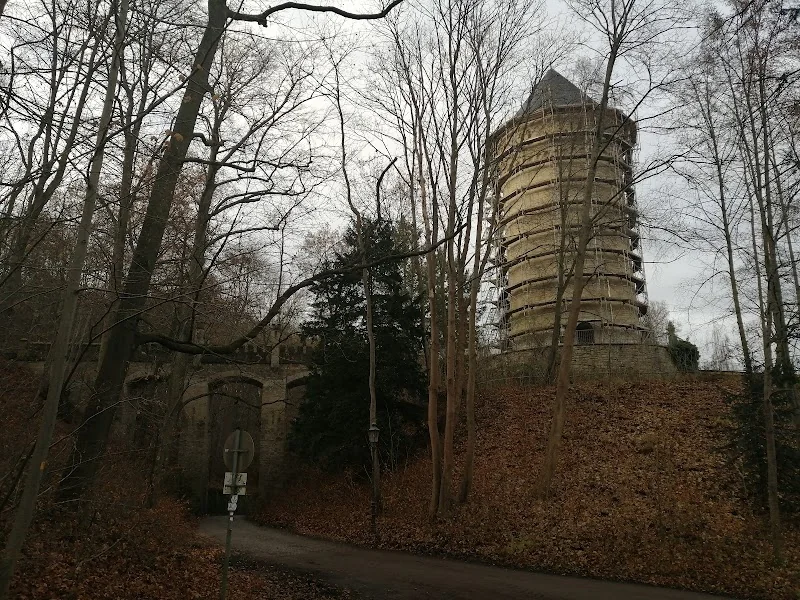
Schloss Osterstein is one of the most impressive historical sites in Gera: Located high above the White Elster on Hainberg, it served for many centuries as a castle, residence, and political center of the Reuß younger line. Today, the image is shaped primarily by the restored keep, the Wolf Bridge, parts of the lower castle courtyard, the terrace café, and modern residential use. The city of Gera describes the site as a cultural heritage, a popular meeting point, and a viewpoint, while the project page emphasizes the connection between monument preservation, living, and new use. This mixture makes Schloss Osterstein equally exciting for visitors, apartment seekers, and history enthusiasts: Here, medieval origins, princely representation, war destruction, post-war development, and current urban development meet at one place. ([gera.de](https://www.gera.de/schloss-osterstein))
History of Schloss Osterstein: from Castle to Residence
The history of Osterstein begins long before the castle in its current sense. Initially, a Bronze Age fortification stood on Hainberg, later a Slavic castle. In the 12th and 13th centuries, the Vogts of Weida built a castle complex here, from which the keep originates, which still serves as one of the few preserved components reminiscent of the medieval castle. With the renovations of the 15th and 16th centuries, the character of the site gradually transformed from a fortified castle to a representative palace. A fortification became a residence and seat of government, and a height structure became a symbol of territorial power. This development explains why Schloss Osterstein holds such a special place in the history of Gera: It was not just a building, but a political center and a visible sign of rule. ([schlossosterstein.de](https://schlossosterstein.de/historie-von-schloss-osterstein/))
Under the Reuß, who made Gera the capital of a territory again in 1564, Schloss Osterstein became the central residence of the lords, later counts and princes of the Reuß younger line. Until 1918, it remained the seat of the territorial lords and was thus closely linked to the history of Thuringia. Important family and political decisions were made in the castle; on November 10, 1918, Heinrich XXVII. signed his abdication here. This marked the end of princely rule at a place that had embodied power, representation, and dynastic identity for generations. The historical sources of the city and the project page also emphasize that the castle was repeatedly adapted to the needs of the times throughout its history. The site was never static but always part of a vibrant change between defense, representation, and administration. ([gera.de](https://www.gera.de/schloss-osterstein))
Reuß, Representation, and Destruction in 1945
Particularly impressive is how much Schloss Osterstein was once again enhanced in the 19th and early 20th centuries. According to municipal representation, the east wing underwent a representative redesign in the 1860s, and in the fifth construction phase of the castle in 1911, the upper castle complex was expanded by an additional representative floor. This included, among other things, a marble hall, a tapestry hall, and a library; the state rooms served to store and display the Reuß art collections. These collections included valuable tapestries from the royal Parisian manufactory. This shows that Schloss Osterstein was not only a residence but also an exhibition and representation space with high cultural aspirations. The site was thus a kind of princely total work of art, where architecture, collection, and ideas of rule interacted. ([gera.de](https://www.gera.de/tourismus-freizeit-kultur/stadt-erleben/stadtgesichter/audiowalk-spurensuche/station-10-schloss-osterstein))
The destruction in World War II marked a dramatic break. During the heaviest air raid on Gera on April 6, 1945, the castle was completely destroyed by fire. In the post-war years, the burned walls were gradually used as material for the reconstruction of the city, leading to further decay of the ruins. On December 9, 1962, the remaining building substance was finally blown up; essentially, only the keep with its current conical tower cap remained. At the same time, further traces of the former residence are still preserved, such as the Wolf Bridge built in 1857 and parts of the lower castle courtyard. The current form of Schloss Osterstein is therefore the result of loss, securing, demolition, and careful reclamation. Thus, anyone looking at Hainberg today sees not just a monument but a place that carries a very large history in a few visible remains. ([schlossosterstein.de](https://schlossosterstein.de/historie-von-schloss-osterstein/))
Apartments at Schloss Osterstein: Rent, Amenities, and Parking
With the current residential use, Schloss Osterstein has acquired a second, very contemporary biography. The official project page provides detailed descriptions of apartments in the residential building Schloss Osterstein 5; additionally, there are areas Schloss Osterstein 3 and 4. According to the website, the apartments are planned with attention to detail and feature high-quality materials, parquet flooring, tiles, underfloor heating, video intercom, elevator, and a modern air heat pump combined with photovoltaics. The window and insulation standards are also highlighted, including wooden windows with triple glazing. Notably, the variety of floor plans is striking: The offering ranges from smaller units to spacious apartments with city, tower, and forest views. Thus, the historical site is not transformed into a museum-like special object but rather a practical residential location with modern comfort and a unique environment. ([schlossosterstein.de](https://schlossosterstein.de/wohnung-mieten/))
For many interested parties, practical details are just as important as the atmosphere. The website mentions residential areas of approximately 33 to almost 186 square meters for the residential building Schloss Osterstein 5; in the area Schloss Osterstein 3 and 4, additional residential units and a commercial garden hall are added. Particularly interesting is the parking concept: A parking deck with two levels for 21 vehicles has been created on the property, complemented by five large garages. All parking spaces can be prepared for E-charging stations. This is by no means a matter of course for a historical location and shows how consistently the project is geared towards contemporary use. Therefore, those searching for terms like apartments, rent, or living at Schloss Osterstein will find not a nostalgic promise but a concretely described residential ensemble with clear features. ([schlossosterstein.de](https://schlossosterstein.de/wohnung-mieten/))
Terrace Café Osterstein: Events, Gastronomy, and Future
The terrace café is almost as important for the perception of Schloss Osterstein as the keep. It was built in 1964 on the wall remnants of the former princely castle and quickly developed into a popular excursion destination with a large outdoor area, beer garden, and space for up to 800 guests. The project page reminds us that the terrace café was a vibrant meeting point for many residents of Gera until the 1990s. This historical change of function is already remarkable: No mere replacement building was constructed on the destroyed ruins, but rather a place for leisure, views, and shared experiences. Thus, the terrace café remains closely linked to the emotional memory of Schloss Osterstein and also plays an important role in the search for restaurants, events, or visits. ([schlossosterstein.de](https://schlossosterstein.de/terrasse-cafe/))
Later, the building was temporarily used as an event location. At the same time, current pages show that the terrace café today stands mostly empty and awaits a new use. This is precisely where its tension lies: It is both a place of memory and a space for the future. The official representation emphasizes that the building is an extraordinary monument with much potential and that a concept is being sought that preserves the place and fills it with new life. On the city’s audio walk page, a space for upscale gastronomy is even explicitly promised for the area. Thus, Schloss Osterstein is a good example of how monument, living, and possible event or gastronomy use can be thought together without losing the historical identity of the place. ([schlossosterstein.de](https://schlossosterstein.de/terrasse-cafe/))
Visiting, Opening Hours, and Directions to Gera-Untermhaus
Those searching for Schloss Osterstein often want not only to know the history but also to receive very practical information. The area is located in the Gera district of Untermhaus on Hainberg above the White Elster. The city describes Schloss Osterstein as a cultural heritage, a popular meeting point, and a viewpoint, while the project page emphasizes residential and renovation use. This results in an important hint for visitors: Classic museum opening hours or a regular, daily regulated visiting operation are not listed as standard on the official pages. Therefore, the site should not be confused with a classic exhibition but rather understood as a historical ensemble that one experiences from the outside, in the vicinity of the keep and in connection with the garden and viewpoint. For inquiries such as visiting or opening hours, this distinction is crucial. ([gera.de](https://www.gera.de/schloss-osterstein))
Also regarding parking, the project page provides the most concrete information. It mentions a parking deck with two levels for 21 vehicles and five large garages; all parking spaces can be prepared for E-charging stations. For access, the location in the Untermhaus district is advantageous because the castle, city forest, and the area around the White Elster are spatially close together, and Hainberg clearly marks the location. Those wishing to photograph the castle or enjoy its view should best combine the visit with a walk through the historically shaped surroundings. Especially at a place like Schloss Osterstein, the question of access is closely linked to the question of experience: One does not come only to a building but to a place with panorama, landscape reference, and urban historical depth. ([schlossosterstein.de](https://schlossosterstein.de/wohnung-mieten/))
Photos, Views, and Today's Significance for Gera
Photographically, Schloss Osterstein thrives on contrasts: the medieval keep, the remnants of the lower courtyard, the terrace café, the modern residential building by the forest, and the greenery of Hainberg. The city of Gera particularly highlights the location high above the White Elster and describes the complex as a place where cultural and artistic significance connects with a wide view over the city. In addition, there are the historical outbuildings of the former residence, such as Wolf Bridge, Old Guard, Garden Hall, Castle Garden, and Chamber Estate. Therefore, those searching for photos of Schloss Osterstein will find not just a single motif but a whole sequence of perspectives: historical remains, today's residential architecture, views, and landscapes. This is precisely what makes the ensemble visually strong and recognizable. ([gera.de](https://www.gera.de/schloss-osterstein))
The question of today's significance can also be answered clearly: Schloss Osterstein is not simply a former castle but a place of continued urban development. The area became the property of the city of Gera in 1945, was included in the redevelopment area of Alt-Untermhaus in 1998, and was acquired by current owners in 2020. Since then, it has been gradually developed as a high-quality residential complex with a parking deck and, prospectively, also with gastronomic use. Thus, Schloss Osterstein is an example of how monument protection, quality of living, and urban history can be meaningfully combined. The complex shows that a historical place does not have to remain in a state of loss but can become part of everyday life again through careful planning. This is especially important for Gera: Schloss Osterstein thus remains not only a memory but also a visibly lived present. ([schlossosterstein.de](https://schlossosterstein.de/historie-von-schloss-osterstein/))
Sources:
- City of Gera - Schloss Osterstein
- City Museum Gera - Schloss Osterstein, Facets of a Residence
- City of Gera - Audiowalk Station 10: Schloss Osterstein
- Schloss Osterstein eGbR - History of Schloss Osterstein
- Schloss Osterstein eGbR - Apartments Schloss Osterstein 5
- Schloss Osterstein eGbR - Terrace Café Schloss Osterstein
Show moreShow less
Schloss Osterstein | Apartments & Events
Schloss Osterstein is one of the most impressive historical sites in Gera: Located high above the White Elster on Hainberg, it served for many centuries as a castle, residence, and political center of the Reuß younger line. Today, the image is shaped primarily by the restored keep, the Wolf Bridge, parts of the lower castle courtyard, the terrace café, and modern residential use. The city of Gera describes the site as a cultural heritage, a popular meeting point, and a viewpoint, while the project page emphasizes the connection between monument preservation, living, and new use. This mixture makes Schloss Osterstein equally exciting for visitors, apartment seekers, and history enthusiasts: Here, medieval origins, princely representation, war destruction, post-war development, and current urban development meet at one place. ([gera.de](https://www.gera.de/schloss-osterstein))
History of Schloss Osterstein: from Castle to Residence
The history of Osterstein begins long before the castle in its current sense. Initially, a Bronze Age fortification stood on Hainberg, later a Slavic castle. In the 12th and 13th centuries, the Vogts of Weida built a castle complex here, from which the keep originates, which still serves as one of the few preserved components reminiscent of the medieval castle. With the renovations of the 15th and 16th centuries, the character of the site gradually transformed from a fortified castle to a representative palace. A fortification became a residence and seat of government, and a height structure became a symbol of territorial power. This development explains why Schloss Osterstein holds such a special place in the history of Gera: It was not just a building, but a political center and a visible sign of rule. ([schlossosterstein.de](https://schlossosterstein.de/historie-von-schloss-osterstein/))
Under the Reuß, who made Gera the capital of a territory again in 1564, Schloss Osterstein became the central residence of the lords, later counts and princes of the Reuß younger line. Until 1918, it remained the seat of the territorial lords and was thus closely linked to the history of Thuringia. Important family and political decisions were made in the castle; on November 10, 1918, Heinrich XXVII. signed his abdication here. This marked the end of princely rule at a place that had embodied power, representation, and dynastic identity for generations. The historical sources of the city and the project page also emphasize that the castle was repeatedly adapted to the needs of the times throughout its history. The site was never static but always part of a vibrant change between defense, representation, and administration. ([gera.de](https://www.gera.de/schloss-osterstein))
Reuß, Representation, and Destruction in 1945
Particularly impressive is how much Schloss Osterstein was once again enhanced in the 19th and early 20th centuries. According to municipal representation, the east wing underwent a representative redesign in the 1860s, and in the fifth construction phase of the castle in 1911, the upper castle complex was expanded by an additional representative floor. This included, among other things, a marble hall, a tapestry hall, and a library; the state rooms served to store and display the Reuß art collections. These collections included valuable tapestries from the royal Parisian manufactory. This shows that Schloss Osterstein was not only a residence but also an exhibition and representation space with high cultural aspirations. The site was thus a kind of princely total work of art, where architecture, collection, and ideas of rule interacted. ([gera.de](https://www.gera.de/tourismus-freizeit-kultur/stadt-erleben/stadtgesichter/audiowalk-spurensuche/station-10-schloss-osterstein))
The destruction in World War II marked a dramatic break. During the heaviest air raid on Gera on April 6, 1945, the castle was completely destroyed by fire. In the post-war years, the burned walls were gradually used as material for the reconstruction of the city, leading to further decay of the ruins. On December 9, 1962, the remaining building substance was finally blown up; essentially, only the keep with its current conical tower cap remained. At the same time, further traces of the former residence are still preserved, such as the Wolf Bridge built in 1857 and parts of the lower castle courtyard. The current form of Schloss Osterstein is therefore the result of loss, securing, demolition, and careful reclamation. Thus, anyone looking at Hainberg today sees not just a monument but a place that carries a very large history in a few visible remains. ([schlossosterstein.de](https://schlossosterstein.de/historie-von-schloss-osterstein/))
Apartments at Schloss Osterstein: Rent, Amenities, and Parking
With the current residential use, Schloss Osterstein has acquired a second, very contemporary biography. The official project page provides detailed descriptions of apartments in the residential building Schloss Osterstein 5; additionally, there are areas Schloss Osterstein 3 and 4. According to the website, the apartments are planned with attention to detail and feature high-quality materials, parquet flooring, tiles, underfloor heating, video intercom, elevator, and a modern air heat pump combined with photovoltaics. The window and insulation standards are also highlighted, including wooden windows with triple glazing. Notably, the variety of floor plans is striking: The offering ranges from smaller units to spacious apartments with city, tower, and forest views. Thus, the historical site is not transformed into a museum-like special object but rather a practical residential location with modern comfort and a unique environment. ([schlossosterstein.de](https://schlossosterstein.de/wohnung-mieten/))
For many interested parties, practical details are just as important as the atmosphere. The website mentions residential areas of approximately 33 to almost 186 square meters for the residential building Schloss Osterstein 5; in the area Schloss Osterstein 3 and 4, additional residential units and a commercial garden hall are added. Particularly interesting is the parking concept: A parking deck with two levels for 21 vehicles has been created on the property, complemented by five large garages. All parking spaces can be prepared for E-charging stations. This is by no means a matter of course for a historical location and shows how consistently the project is geared towards contemporary use. Therefore, those searching for terms like apartments, rent, or living at Schloss Osterstein will find not a nostalgic promise but a concretely described residential ensemble with clear features. ([schlossosterstein.de](https://schlossosterstein.de/wohnung-mieten/))
Terrace Café Osterstein: Events, Gastronomy, and Future
The terrace café is almost as important for the perception of Schloss Osterstein as the keep. It was built in 1964 on the wall remnants of the former princely castle and quickly developed into a popular excursion destination with a large outdoor area, beer garden, and space for up to 800 guests. The project page reminds us that the terrace café was a vibrant meeting point for many residents of Gera until the 1990s. This historical change of function is already remarkable: No mere replacement building was constructed on the destroyed ruins, but rather a place for leisure, views, and shared experiences. Thus, the terrace café remains closely linked to the emotional memory of Schloss Osterstein and also plays an important role in the search for restaurants, events, or visits. ([schlossosterstein.de](https://schlossosterstein.de/terrasse-cafe/))
Later, the building was temporarily used as an event location. At the same time, current pages show that the terrace café today stands mostly empty and awaits a new use. This is precisely where its tension lies: It is both a place of memory and a space for the future. The official representation emphasizes that the building is an extraordinary monument with much potential and that a concept is being sought that preserves the place and fills it with new life. On the city’s audio walk page, a space for upscale gastronomy is even explicitly promised for the area. Thus, Schloss Osterstein is a good example of how monument, living, and possible event or gastronomy use can be thought together without losing the historical identity of the place. ([schlossosterstein.de](https://schlossosterstein.de/terrasse-cafe/))
Visiting, Opening Hours, and Directions to Gera-Untermhaus
Those searching for Schloss Osterstein often want not only to know the history but also to receive very practical information. The area is located in the Gera district of Untermhaus on Hainberg above the White Elster. The city describes Schloss Osterstein as a cultural heritage, a popular meeting point, and a viewpoint, while the project page emphasizes residential and renovation use. This results in an important hint for visitors: Classic museum opening hours or a regular, daily regulated visiting operation are not listed as standard on the official pages. Therefore, the site should not be confused with a classic exhibition but rather understood as a historical ensemble that one experiences from the outside, in the vicinity of the keep and in connection with the garden and viewpoint. For inquiries such as visiting or opening hours, this distinction is crucial. ([gera.de](https://www.gera.de/schloss-osterstein))
Also regarding parking, the project page provides the most concrete information. It mentions a parking deck with two levels for 21 vehicles and five large garages; all parking spaces can be prepared for E-charging stations. For access, the location in the Untermhaus district is advantageous because the castle, city forest, and the area around the White Elster are spatially close together, and Hainberg clearly marks the location. Those wishing to photograph the castle or enjoy its view should best combine the visit with a walk through the historically shaped surroundings. Especially at a place like Schloss Osterstein, the question of access is closely linked to the question of experience: One does not come only to a building but to a place with panorama, landscape reference, and urban historical depth. ([schlossosterstein.de](https://schlossosterstein.de/wohnung-mieten/))
Photos, Views, and Today's Significance for Gera
Photographically, Schloss Osterstein thrives on contrasts: the medieval keep, the remnants of the lower courtyard, the terrace café, the modern residential building by the forest, and the greenery of Hainberg. The city of Gera particularly highlights the location high above the White Elster and describes the complex as a place where cultural and artistic significance connects with a wide view over the city. In addition, there are the historical outbuildings of the former residence, such as Wolf Bridge, Old Guard, Garden Hall, Castle Garden, and Chamber Estate. Therefore, those searching for photos of Schloss Osterstein will find not just a single motif but a whole sequence of perspectives: historical remains, today's residential architecture, views, and landscapes. This is precisely what makes the ensemble visually strong and recognizable. ([gera.de](https://www.gera.de/schloss-osterstein))
The question of today's significance can also be answered clearly: Schloss Osterstein is not simply a former castle but a place of continued urban development. The area became the property of the city of Gera in 1945, was included in the redevelopment area of Alt-Untermhaus in 1998, and was acquired by current owners in 2020. Since then, it has been gradually developed as a high-quality residential complex with a parking deck and, prospectively, also with gastronomic use. Thus, Schloss Osterstein is an example of how monument protection, quality of living, and urban history can be meaningfully combined. The complex shows that a historical place does not have to remain in a state of loss but can become part of everyday life again through careful planning. This is especially important for Gera: Schloss Osterstein thus remains not only a memory but also a visibly lived present. ([schlossosterstein.de](https://schlossosterstein.de/historie-von-schloss-osterstein/))
Sources:
- City of Gera - Schloss Osterstein
- City Museum Gera - Schloss Osterstein, Facets of a Residence
- City of Gera - Audiowalk Station 10: Schloss Osterstein
- Schloss Osterstein eGbR - History of Schloss Osterstein
- Schloss Osterstein eGbR - Apartments Schloss Osterstein 5
- Schloss Osterstein eGbR - Terrace Café Schloss Osterstein
Schloss Osterstein | Apartments & Events
Schloss Osterstein is one of the most impressive historical sites in Gera: Located high above the White Elster on Hainberg, it served for many centuries as a castle, residence, and political center of the Reuß younger line. Today, the image is shaped primarily by the restored keep, the Wolf Bridge, parts of the lower castle courtyard, the terrace café, and modern residential use. The city of Gera describes the site as a cultural heritage, a popular meeting point, and a viewpoint, while the project page emphasizes the connection between monument preservation, living, and new use. This mixture makes Schloss Osterstein equally exciting for visitors, apartment seekers, and history enthusiasts: Here, medieval origins, princely representation, war destruction, post-war development, and current urban development meet at one place. ([gera.de](https://www.gera.de/schloss-osterstein))
History of Schloss Osterstein: from Castle to Residence
The history of Osterstein begins long before the castle in its current sense. Initially, a Bronze Age fortification stood on Hainberg, later a Slavic castle. In the 12th and 13th centuries, the Vogts of Weida built a castle complex here, from which the keep originates, which still serves as one of the few preserved components reminiscent of the medieval castle. With the renovations of the 15th and 16th centuries, the character of the site gradually transformed from a fortified castle to a representative palace. A fortification became a residence and seat of government, and a height structure became a symbol of territorial power. This development explains why Schloss Osterstein holds such a special place in the history of Gera: It was not just a building, but a political center and a visible sign of rule. ([schlossosterstein.de](https://schlossosterstein.de/historie-von-schloss-osterstein/))
Under the Reuß, who made Gera the capital of a territory again in 1564, Schloss Osterstein became the central residence of the lords, later counts and princes of the Reuß younger line. Until 1918, it remained the seat of the territorial lords and was thus closely linked to the history of Thuringia. Important family and political decisions were made in the castle; on November 10, 1918, Heinrich XXVII. signed his abdication here. This marked the end of princely rule at a place that had embodied power, representation, and dynastic identity for generations. The historical sources of the city and the project page also emphasize that the castle was repeatedly adapted to the needs of the times throughout its history. The site was never static but always part of a vibrant change between defense, representation, and administration. ([gera.de](https://www.gera.de/schloss-osterstein))
Reuß, Representation, and Destruction in 1945
Particularly impressive is how much Schloss Osterstein was once again enhanced in the 19th and early 20th centuries. According to municipal representation, the east wing underwent a representative redesign in the 1860s, and in the fifth construction phase of the castle in 1911, the upper castle complex was expanded by an additional representative floor. This included, among other things, a marble hall, a tapestry hall, and a library; the state rooms served to store and display the Reuß art collections. These collections included valuable tapestries from the royal Parisian manufactory. This shows that Schloss Osterstein was not only a residence but also an exhibition and representation space with high cultural aspirations. The site was thus a kind of princely total work of art, where architecture, collection, and ideas of rule interacted. ([gera.de](https://www.gera.de/tourismus-freizeit-kultur/stadt-erleben/stadtgesichter/audiowalk-spurensuche/station-10-schloss-osterstein))
The destruction in World War II marked a dramatic break. During the heaviest air raid on Gera on April 6, 1945, the castle was completely destroyed by fire. In the post-war years, the burned walls were gradually used as material for the reconstruction of the city, leading to further decay of the ruins. On December 9, 1962, the remaining building substance was finally blown up; essentially, only the keep with its current conical tower cap remained. At the same time, further traces of the former residence are still preserved, such as the Wolf Bridge built in 1857 and parts of the lower castle courtyard. The current form of Schloss Osterstein is therefore the result of loss, securing, demolition, and careful reclamation. Thus, anyone looking at Hainberg today sees not just a monument but a place that carries a very large history in a few visible remains. ([schlossosterstein.de](https://schlossosterstein.de/historie-von-schloss-osterstein/))
Apartments at Schloss Osterstein: Rent, Amenities, and Parking
With the current residential use, Schloss Osterstein has acquired a second, very contemporary biography. The official project page provides detailed descriptions of apartments in the residential building Schloss Osterstein 5; additionally, there are areas Schloss Osterstein 3 and 4. According to the website, the apartments are planned with attention to detail and feature high-quality materials, parquet flooring, tiles, underfloor heating, video intercom, elevator, and a modern air heat pump combined with photovoltaics. The window and insulation standards are also highlighted, including wooden windows with triple glazing. Notably, the variety of floor plans is striking: The offering ranges from smaller units to spacious apartments with city, tower, and forest views. Thus, the historical site is not transformed into a museum-like special object but rather a practical residential location with modern comfort and a unique environment. ([schlossosterstein.de](https://schlossosterstein.de/wohnung-mieten/))
For many interested parties, practical details are just as important as the atmosphere. The website mentions residential areas of approximately 33 to almost 186 square meters for the residential building Schloss Osterstein 5; in the area Schloss Osterstein 3 and 4, additional residential units and a commercial garden hall are added. Particularly interesting is the parking concept: A parking deck with two levels for 21 vehicles has been created on the property, complemented by five large garages. All parking spaces can be prepared for E-charging stations. This is by no means a matter of course for a historical location and shows how consistently the project is geared towards contemporary use. Therefore, those searching for terms like apartments, rent, or living at Schloss Osterstein will find not a nostalgic promise but a concretely described residential ensemble with clear features. ([schlossosterstein.de](https://schlossosterstein.de/wohnung-mieten/))
Terrace Café Osterstein: Events, Gastronomy, and Future
The terrace café is almost as important for the perception of Schloss Osterstein as the keep. It was built in 1964 on the wall remnants of the former princely castle and quickly developed into a popular excursion destination with a large outdoor area, beer garden, and space for up to 800 guests. The project page reminds us that the terrace café was a vibrant meeting point for many residents of Gera until the 1990s. This historical change of function is already remarkable: No mere replacement building was constructed on the destroyed ruins, but rather a place for leisure, views, and shared experiences. Thus, the terrace café remains closely linked to the emotional memory of Schloss Osterstein and also plays an important role in the search for restaurants, events, or visits. ([schlossosterstein.de](https://schlossosterstein.de/terrasse-cafe/))
Later, the building was temporarily used as an event location. At the same time, current pages show that the terrace café today stands mostly empty and awaits a new use. This is precisely where its tension lies: It is both a place of memory and a space for the future. The official representation emphasizes that the building is an extraordinary monument with much potential and that a concept is being sought that preserves the place and fills it with new life. On the city’s audio walk page, a space for upscale gastronomy is even explicitly promised for the area. Thus, Schloss Osterstein is a good example of how monument, living, and possible event or gastronomy use can be thought together without losing the historical identity of the place. ([schlossosterstein.de](https://schlossosterstein.de/terrasse-cafe/))
Visiting, Opening Hours, and Directions to Gera-Untermhaus
Those searching for Schloss Osterstein often want not only to know the history but also to receive very practical information. The area is located in the Gera district of Untermhaus on Hainberg above the White Elster. The city describes Schloss Osterstein as a cultural heritage, a popular meeting point, and a viewpoint, while the project page emphasizes residential and renovation use. This results in an important hint for visitors: Classic museum opening hours or a regular, daily regulated visiting operation are not listed as standard on the official pages. Therefore, the site should not be confused with a classic exhibition but rather understood as a historical ensemble that one experiences from the outside, in the vicinity of the keep and in connection with the garden and viewpoint. For inquiries such as visiting or opening hours, this distinction is crucial. ([gera.de](https://www.gera.de/schloss-osterstein))
Also regarding parking, the project page provides the most concrete information. It mentions a parking deck with two levels for 21 vehicles and five large garages; all parking spaces can be prepared for E-charging stations. For access, the location in the Untermhaus district is advantageous because the castle, city forest, and the area around the White Elster are spatially close together, and Hainberg clearly marks the location. Those wishing to photograph the castle or enjoy its view should best combine the visit with a walk through the historically shaped surroundings. Especially at a place like Schloss Osterstein, the question of access is closely linked to the question of experience: One does not come only to a building but to a place with panorama, landscape reference, and urban historical depth. ([schlossosterstein.de](https://schlossosterstein.de/wohnung-mieten/))
Photos, Views, and Today's Significance for Gera
Photographically, Schloss Osterstein thrives on contrasts: the medieval keep, the remnants of the lower courtyard, the terrace café, the modern residential building by the forest, and the greenery of Hainberg. The city of Gera particularly highlights the location high above the White Elster and describes the complex as a place where cultural and artistic significance connects with a wide view over the city. In addition, there are the historical outbuildings of the former residence, such as Wolf Bridge, Old Guard, Garden Hall, Castle Garden, and Chamber Estate. Therefore, those searching for photos of Schloss Osterstein will find not just a single motif but a whole sequence of perspectives: historical remains, today's residential architecture, views, and landscapes. This is precisely what makes the ensemble visually strong and recognizable. ([gera.de](https://www.gera.de/schloss-osterstein))
The question of today's significance can also be answered clearly: Schloss Osterstein is not simply a former castle but a place of continued urban development. The area became the property of the city of Gera in 1945, was included in the redevelopment area of Alt-Untermhaus in 1998, and was acquired by current owners in 2020. Since then, it has been gradually developed as a high-quality residential complex with a parking deck and, prospectively, also with gastronomic use. Thus, Schloss Osterstein is an example of how monument protection, quality of living, and urban history can be meaningfully combined. The complex shows that a historical place does not have to remain in a state of loss but can become part of everyday life again through careful planning. This is especially important for Gera: Schloss Osterstein thus remains not only a memory but also a visibly lived present. ([schlossosterstein.de](https://schlossosterstein.de/historie-von-schloss-osterstein/))
Sources:
- City of Gera - Schloss Osterstein
- City Museum Gera - Schloss Osterstein, Facets of a Residence
- City of Gera - Audiowalk Station 10: Schloss Osterstein
- Schloss Osterstein eGbR - History of Schloss Osterstein
- Schloss Osterstein eGbR - Apartments Schloss Osterstein 5
- Schloss Osterstein eGbR - Terrace Café Schloss Osterstein
Frequently Asked Questions
Reviews
No reviews found