
Gera
Kirchengemeinde Gera-Innenstadt, Zabelstraße 2, 07545 Gera, Deutschland
St. Johanniskirche Gera | Program & Organ Concerts
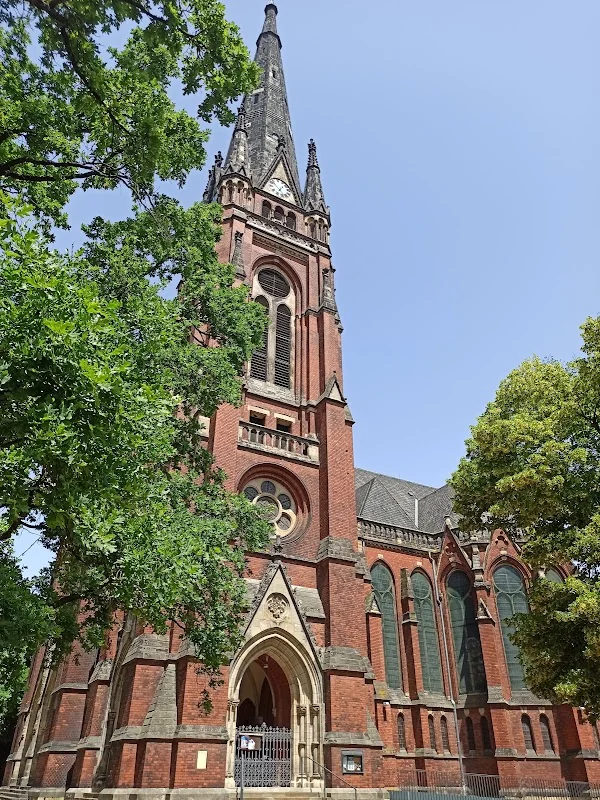
The St. Johanniskirche in Gera is one of the defining places in the city: it is the largest church and also the main church of Gera, standing visibly and freely in the expanded city center and still serving as a space for services, music, reflection, and urban memory. The neo-Gothic brick building was constructed in the 1880s as a successor to the old Johanniskirche, which burned down in 1780, and is closely linked to the development of Gera as a growing city in the 19th century. Particularly striking are the 70-meter-high tower, its strong presence in the cityscape, and the combination of liturgical use and cultural life. Today, the church is not only a sacred place but also a vibrant event space for choir work, organ music, and special community moments. Those searching for St. Johanniskirche Gera, Johanniskirche Gera program, organ concerts, or Winterkirche will find a place with history, substance, and presence. ([gera.de](https://www.gera.de/tourismus-freizeit-kultur/stadt-erleben/sehenswertes/kirchen/johanniskirche))
Program, Services, and Concerts at St. Johanniskirche Gera
The official city church community of Gera shows that the Johanniskirche is regularly used for services and church musical formats. In the current community media and dates, it appears as Johanniskirche, Johanniskirche (Winterkirche), and as a place for Holy Communion. This is important for visitors who not only want to see a historical building but are looking for a specific program, the next service, or a musical event. The church is thus not a static monument but a continuously used community space, whose rhythm is oriented to the liturgical times of the year. Particularly, the Winterkirche is a clear search term with practical relevance, as it describes the seasonal use within the community and signals that the church remains active even in the cold season. ([kirche-gera.net](https://www.kirche-gera.net/assets/kirchenfenster-dez25-febr26_web.pdf))
In addition, there is a remarkably dense musical life. On the pages of the city church community, groups and ensembles such as the handbell choir, brass choir, St. John’s Singers, Voice for Life children's choir, and the Heinrich Schütz Choir can be found. This makes it clear that the Johanniskirche is not only a place for preaching but also a musical home. Especially for search queries like Johanniskirche Gera concert, Johanniskirche Gera organ, or Johanniskirche Gera events, this is crucial: The church stands for classical church music, choir work, and special concert evenings, which are often associated with a spiritual profile. A current example is the benefit concert for the planned restoration of the Kreutzbach organ. Such events show that the community is actively working on the preservation of the instrument and understands music as both a cultural mission and part of its church identity. ([kirche-gera.net](https://www.kirche-gera.net/beitraege/benefizkonzert-mit-kmd-burghardt-zitzmann))
The abundance of community dates also speaks for a place with regular use and not just with occasional peak events. On the official pages, the Johanniskirche and its Winterkirche are repeatedly mentioned in connection with Sunday services, communion celebrations, and community life. For visitors, this means: Those who want to get to know the church should not only think of a classic tour date but also consider a visit during a service or concert. The combination of liturgy, music, and open community practice is particularly appealing. Those searching for a program in 2026 or current Johanniskirche Gera events will find the most reliable information on dates, locations, and focuses on the official pages of the city church community. ([kirche-gera.net](https://www.kirche-gera.net/assets/kirchenfenster-dez25-febr26_web.pdf))
History of the Johanniskirche in Gera: from Johannisplatz to neo-Gothic City Church
The current Johanniskirche is the result of a long history marked by upheavals. The city of Gera reminds us that the old Johanniskirche at Johannisplatz was already documented as a city church since the 13th century and was destroyed in the great city fire of 1780. The current building was then constructed between 1881 and 1885 from red bricks. It was designed by the Leipzig architect Julius Hartel. The site change was a conscious decision: instead of the cramped historical Johannisplatz, a green, more spacious environment in the expanded city center and the Gründerzeit villa district was chosen. This not only rethought the church functionally but also positioned it as a widely visible dominant in urban planning. The official city description emphasizes that the new building was made possible by donations from the economically successful bourgeoisie. ([gera.de](https://www.gera.de/tourismus-freizeit-kultur/stadt-erleben/sehenswertes/kirchen/johanniskirche))
The church is now dedicated to John the Evangelist and not to John the Baptist. This is a small but precise detail that underscores the historical and confessional character of the building. With its 70-meter-high tower, it is the largest church and also the main church of Gera. This role explains why the Johanniskirche repeatedly appears in urban and ecclesiastical contexts: it stands not only for architecture but for identity. The connection of sacred space, urban development, and the bourgeoisie of the 19th century makes it a particularly interesting destination for visitors interested in history, cityscape, and architectural culture. The church is thus closely linked to the self-understanding of the bourgeois Gera, which was expressed in public buildings, foundations, and religious spaces in the 19th century. ([gera.de](https://www.gera.de/tourismus-freizeit-kultur/stadt-erleben/sehenswertes/kirchen/johanniskirche))
Among the historical milestones of later use are the installation of cast steel bells in 1922, the renovation of the interior between 1972 and 1975, and the redesign of the altar area in 1998 by restorer Kurt Thümmler, which integrated carved figures from the old pulpit. From 2000 onwards, the tower and facade were gradually renovated. These details show that the Johanniskirche does not rest on its past but has been maintained, renewed, and adapted over decades. Its political symbolism is also particularly impressive: The city of Gera explicitly points out that the Johanniskirche was a place of peace prayers and a starting point for the demonstrations of the peaceful revolution of 1989. This makes it a religious and at the same time a socio-historical memorial site. ([gera.de](https://www.gera.de/tourismus-freizeit-kultur/stadt-erleben/sehenswertes/kirchen/johanniskirche))
A further look at Johannisplatz deepens this historical picture. The old city church St. Johannis stood there, and the current design of the square makes its ground plan visible since the redesign between 2000 and 2008 with glass blue bands. A granite block commemorates the former crypt of the Reußen, and a red glass band with the life confession of Heinrich Posthumus Reuß is embedded in the stone. So, those searching for Johanniskirche Gera history or the old Johanniskirche will find not just a single building but an urban memorial field where church, power, Reformation history, and urban development are closely intertwined. ([gera.de](https://www.gera.de/tourismus-freizeit-kultur/stadt-erleben/sehenswertes/johannisplatz))
Kreutzbach Organ, Choir Work, and Musical Highlights
For many visitors and seekers, the Johanniskirche is primarily a music venue. This is mainly due to the Kreutzbach organ, which is described in the church musical announcement of the Evangelical Church in Central Germany as a three-manual Urban-Kreutzbach organ from 1885 with 57 registers. It is also mentioned that about 1100 seats are available on the spacious gallery of the Johanniskirche. These numbers are particularly relevant for the SEO topics seating plan, seats, capacity, and organ, as they show that the space is designed for large musical formats. At the same time, it becomes clear that the church has an exceptionally strong organ musical infrastructure beyond classical community work. This makes it equally interesting for concerts, choral works, and organ evenings. ([kirchenmusik-ekm.de](https://www.kirchenmusik-ekm.de/fileadmin/PDF-Zwischentoene/2009/ZWISCHENTOENE_2009_1.pdf))
The current community work confirms this musical imprint. On the official pages of the city church community, the handbell choir, brass choir, St. John’s Singers, and Voice for Life children's choir are explicitly located at the Johanniskirche. For visitors searching for Johanniskirche Gera organ, choir, or concert, this is a strong signal: It is not just about a single instrument but a whole ensemble of voices, brass, and keys. The planned restoration of the Kreutzbach organ is also particularly noteworthy. According to a current article, the instrument will be comprehensively restored, the internal structure reorganized, lost sound colors reconstructed, and a new console installed. The estimated total costs are at least 690,000 euros. This shows how high the cultural-historical value of the organ is assessed. ([kirche-gera.net](https://www.kirche-gera.net/beitraege/benefizkonzert-mit-kmd-burghardt-zitzmann))
The musical everyday life of the Johanniskirche is also closely linked to the profile of the Heinrich Schütz Choir, which is described on the city church community page as a choir for the performance of major works. In addition, benefit concerts, summer concerts, and special programs that focus on the church's sound world are included. In a current summer concert, the large Kreutzbach organ and the connection between choral and organ music are explicitly highlighted. This makes it clear that the Johanniskirche is not only thought of as sacred but also acoustically. Those searching for Johanniskirche Gera photos will therefore find not only a beautiful facade but often also images of concerts, choirs, and the large gallery architecture that opens the space for musical events. The church thrives on this interplay of sound, space, and ritual. ([kirche-gera.net](https://www.kirche-gera.net/beitraege/reif-fuer-die-insel-sommerkonzert?utm_source=openai))
In addition to the main organ, a two-manual Stahlhuth organ with 9 registers is also mentioned in the church musical announcement in the choir apse. This additional organ emphasizes that the Johanniskirche not only has a representative main instrument but also a differentiated musical equipment for various liturgical and concert requirements. For SEO and user inquiries, this is particularly interesting because it distinguishes the Johanniskirche from many other inner-city churches: Here, music is not an addition but the core of the use. Therefore, terms like Johanniskirche Gera organ, Kreutzbach organ Gera, church music Gera, and concert venue fit very well with this place. ([kirchenmusik-ekm.de](https://www.kirchenmusik-ekm.de/fileadmin/PDF-Zwischentoene/2009/ZWISCHENTOENE_2009_1.pdf))
Seating, Winterkirche, and Spatial Effect in the Interior
The St. Johanniskirche Gera not only offers history and music but also a surprisingly spacious interior. With around 1100 seats, it is one of the large church spaces in Thuringia. This is an important point of reference for visitors searching for seating plan, seats, or capacity. The gallery, where the large organ is located, significantly shapes the spatial effect and explains why the church is suitable for choral concerts and large services. The space feels open, high, and representative, yet clearly oriented towards the liturgical center. Upon entering the church space, one does not experience a small neighborhood church but an urban main church space with a deliberately monumental aura. This size is related to the construction period in the late 19th century when the community grew and a new building became necessary. ([kirchenmusik-ekm.de](https://www.kirchenmusik-ekm.de/fileadmin/PDF-Zwischentoene/2009/ZWISCHENTOENE_2009_1.pdf))
The history of the interior is also important. Between 1972 and 1975, the building was renovated internally, the altar area was redesigned in 1998 with the carved figures from the old pulpit, and since 2000, the tower and facade have been gradually renovated. This means for visitors: The space has grown historically but is not museum-like frozen. It shows traces of different epochs and thus makes visible how lively a church can be that has been used, changed, and preserved over more than a century. This information is particularly helpful for search queries about Johanniskirche Gera interior, seating, or equipment, as it connects the spatial feeling with solid facts. ([gera.de](https://www.gera.de/tourismus-freizeit-kultur/stadt-erleben/sehenswertes/kirchen/johanniskirche))
The term Winterkirche adds an additional everyday dimension to the place. In the community media and groups of the city church community, the Johanniskirche is regularly referred to as Winterkirche, meaning a place where community and musical life also concentrate in the cooler season. For visitors, this is practically and atmospherically interesting: The use adapts to the annual cycle without the church losing significance. Those who want to experience the Johanniskirche in Gera should therefore not only think of grand occasions but also of normal Sundays, smaller community services, and the calm atmosphere of a winter service. This mix of monumentality and closeness makes the place particularly special. ([kirche-gera.net](https://www.kirche-gera.net/assets/kirchenfenster-dez25-febr26_web.pdf))
Directions, Parking, and Location in Gera
The official address of St. Johanniskirche is Zabelstraße 2, 07545 Gera, Germany. The city of Gera describes the location as central in the expanded city center and also situated on a large open space. This is an advantage for access, as the building can be easily oriented in the cityscape and is not obscured by narrow old town structures. So, those searching for Johanniskirche Gera directions will find a clear reference here: The church is centrally located, clearly visible, and in immediate connection to the inner-city environment. For many visitors, this is important because churches in German cities are often hidden between narrow alleys; the Johanniskirche, on the other hand, presents itself openly and prominently. ([gera.de](https://www.gera.de/tourismus-freizeit-kultur/stadt-erleben/sehenswertes/kirchen/johanniskirche))
When parking, it is advisable to pay attention to the general city parking options in the center. The city of Gera mentions several central parking facilities, including the Gera-Arcaden parking garage at Heinrichstraße 30, the Zentrum parking garage at Dr.-Eckner-Straße 1, the City parking garage at Lessingstraße 6, the Markt/Rathaus parking garage, and the parking lot at the market (Stadtgraben). For visitors to the Johanniskirche, this means: The city center offers several options that can be used depending on the time of day and event. Since parking situations in city centers can change, it is advisable to check the current city notices before visiting. Those searching for Johanniskirche Gera parking thus receive a realistic, central, and practical orientation. ([gera.de](https://www.gera.de/leben-in-gera/mobilitaet-verkehr-rad/parkplaetze))
The location within Gera also contributes to the visitor experience. The Johanniskirche is not isolated at the edge but is part of the dense urban core with shops, schools, residential areas, and cultural sites. The official city description explicitly highlights that it is located in the Gründerzeit villa district of the expanded city center. This connects urban representation, historical architecture, and everyday accessibility. This is ideal for users seeking location information for an event or church visit: One can reach the place through the center, find the church easily, and combine the visit well with further paths in the city center. ([gera.de](https://www.gera.de/tourismus-freizeit-kultur/stadt-erleben/sehenswertes/kirchen/johanniskirche))
Photos, Highlights, and Historical Significance of the Johanniskirche
Those searching for Johanniskirche Gera photos will quickly find reasons why the church is so frequently photographed. The 70-meter-high tower, the red brick, the freestanding location on a large area, and the clear neo-Gothic form language make the building extremely photogenic. At the same time, the church is interesting not only as an exterior view but also as part of a larger historical context. The former area at Johannisplatz, the old ground plan of the former church, and the memory of the Reußen crypt show that several temporal layers overlap at this site. The current Johanniskirche is thus more than just a beautiful motif: it is a visible expression of how a city reorders its religious and historical heritage and integrates it into modern urban spaces. ([gera.de](https://www.gera.de/tourismus-freizeit-kultur/stadt-erleben/sehenswertes/kirchen/johanniskirche))
The special significance of the place is also evident in its political and social dimension. The city of Gera explicitly names the Johanniskirche as a place of peace prayers and as a starting point for the demonstrations of 1989. Thus, it is not only a destination for architecture or music enthusiasts but also for people interested in the peaceful revolution, civil society, and religious public life in the GDR. This dual significance is rare: the church is simultaneously a main church, concert venue, memorial site, and urban landmark. This is exactly what makes it so relevant in the SEO context, as many search queries combine practical questions with cultural curiosity. The Johanniskirche fulfills both: it is easily findable and rich in content. ([gera.de](https://www.gera.de/tourismus-freizeit-kultur/stadt-erleben/sehenswertes/kirchen/johanniskirche))
In the end, the impression remains of a place that is much more than just a beautiful church building in Gera. The Johanniskirche connects neo-Gothic architecture, a striking tower, a significant organ, a lively community life, and a strong memorial cultural role. Those looking for the program will find services, Winterkirche, and concerts. Those interested in history will encounter Johannisplatz, the city fire of 1780, and the construction phase of the 19th century. Those interested in music will discover the Kreutzbach organ, choirs, and benefit concerts. And those simply wanting to see photos or plan a visit will find a place that asserts itself distinctly in both the cityscape and the city's history. That is why St. Johanniskirche Gera is such a strong SEO and location content case. ([kirche-gera.net](https://www.kirche-gera.net/beitraege/reif-fuer-die-insel-sommerkonzert?utm_source=openai))
Sources:
- City of Gera - Johanniskirche
- City of Gera - Churches in Gera
- City of Gera - Johannisplatz
- Evangelical-Lutheran City Church Community Gera - Benefit Concert Kreutzbach Organ
- Evangelical-Lutheran City Church Community Gera - Groups
- Evangelical Church in Central Germany - Zwischentöne 2009
- City of Gera - Parking
Mehr anzeigenWeniger anzeigen
St. Johanniskirche Gera | Program & Organ Concerts
The St. Johanniskirche in Gera is one of the defining places in the city: it is the largest church and also the main church of Gera, standing visibly and freely in the expanded city center and still serving as a space for services, music, reflection, and urban memory. The neo-Gothic brick building was constructed in the 1880s as a successor to the old Johanniskirche, which burned down in 1780, and is closely linked to the development of Gera as a growing city in the 19th century. Particularly striking are the 70-meter-high tower, its strong presence in the cityscape, and the combination of liturgical use and cultural life. Today, the church is not only a sacred place but also a vibrant event space for choir work, organ music, and special community moments. Those searching for St. Johanniskirche Gera, Johanniskirche Gera program, organ concerts, or Winterkirche will find a place with history, substance, and presence. ([gera.de](https://www.gera.de/tourismus-freizeit-kultur/stadt-erleben/sehenswertes/kirchen/johanniskirche))
Program, Services, and Concerts at St. Johanniskirche Gera
The official city church community of Gera shows that the Johanniskirche is regularly used for services and church musical formats. In the current community media and dates, it appears as Johanniskirche, Johanniskirche (Winterkirche), and as a place for Holy Communion. This is important for visitors who not only want to see a historical building but are looking for a specific program, the next service, or a musical event. The church is thus not a static monument but a continuously used community space, whose rhythm is oriented to the liturgical times of the year. Particularly, the Winterkirche is a clear search term with practical relevance, as it describes the seasonal use within the community and signals that the church remains active even in the cold season. ([kirche-gera.net](https://www.kirche-gera.net/assets/kirchenfenster-dez25-febr26_web.pdf))
In addition, there is a remarkably dense musical life. On the pages of the city church community, groups and ensembles such as the handbell choir, brass choir, St. John’s Singers, Voice for Life children's choir, and the Heinrich Schütz Choir can be found. This makes it clear that the Johanniskirche is not only a place for preaching but also a musical home. Especially for search queries like Johanniskirche Gera concert, Johanniskirche Gera organ, or Johanniskirche Gera events, this is crucial: The church stands for classical church music, choir work, and special concert evenings, which are often associated with a spiritual profile. A current example is the benefit concert for the planned restoration of the Kreutzbach organ. Such events show that the community is actively working on the preservation of the instrument and understands music as both a cultural mission and part of its church identity. ([kirche-gera.net](https://www.kirche-gera.net/beitraege/benefizkonzert-mit-kmd-burghardt-zitzmann))
The abundance of community dates also speaks for a place with regular use and not just with occasional peak events. On the official pages, the Johanniskirche and its Winterkirche are repeatedly mentioned in connection with Sunday services, communion celebrations, and community life. For visitors, this means: Those who want to get to know the church should not only think of a classic tour date but also consider a visit during a service or concert. The combination of liturgy, music, and open community practice is particularly appealing. Those searching for a program in 2026 or current Johanniskirche Gera events will find the most reliable information on dates, locations, and focuses on the official pages of the city church community. ([kirche-gera.net](https://www.kirche-gera.net/assets/kirchenfenster-dez25-febr26_web.pdf))
History of the Johanniskirche in Gera: from Johannisplatz to neo-Gothic City Church
The current Johanniskirche is the result of a long history marked by upheavals. The city of Gera reminds us that the old Johanniskirche at Johannisplatz was already documented as a city church since the 13th century and was destroyed in the great city fire of 1780. The current building was then constructed between 1881 and 1885 from red bricks. It was designed by the Leipzig architect Julius Hartel. The site change was a conscious decision: instead of the cramped historical Johannisplatz, a green, more spacious environment in the expanded city center and the Gründerzeit villa district was chosen. This not only rethought the church functionally but also positioned it as a widely visible dominant in urban planning. The official city description emphasizes that the new building was made possible by donations from the economically successful bourgeoisie. ([gera.de](https://www.gera.de/tourismus-freizeit-kultur/stadt-erleben/sehenswertes/kirchen/johanniskirche))
The church is now dedicated to John the Evangelist and not to John the Baptist. This is a small but precise detail that underscores the historical and confessional character of the building. With its 70-meter-high tower, it is the largest church and also the main church of Gera. This role explains why the Johanniskirche repeatedly appears in urban and ecclesiastical contexts: it stands not only for architecture but for identity. The connection of sacred space, urban development, and the bourgeoisie of the 19th century makes it a particularly interesting destination for visitors interested in history, cityscape, and architectural culture. The church is thus closely linked to the self-understanding of the bourgeois Gera, which was expressed in public buildings, foundations, and religious spaces in the 19th century. ([gera.de](https://www.gera.de/tourismus-freizeit-kultur/stadt-erleben/sehenswertes/kirchen/johanniskirche))
Among the historical milestones of later use are the installation of cast steel bells in 1922, the renovation of the interior between 1972 and 1975, and the redesign of the altar area in 1998 by restorer Kurt Thümmler, which integrated carved figures from the old pulpit. From 2000 onwards, the tower and facade were gradually renovated. These details show that the Johanniskirche does not rest on its past but has been maintained, renewed, and adapted over decades. Its political symbolism is also particularly impressive: The city of Gera explicitly points out that the Johanniskirche was a place of peace prayers and a starting point for the demonstrations of the peaceful revolution of 1989. This makes it a religious and at the same time a socio-historical memorial site. ([gera.de](https://www.gera.de/tourismus-freizeit-kultur/stadt-erleben/sehenswertes/kirchen/johanniskirche))
A further look at Johannisplatz deepens this historical picture. The old city church St. Johannis stood there, and the current design of the square makes its ground plan visible since the redesign between 2000 and 2008 with glass blue bands. A granite block commemorates the former crypt of the Reußen, and a red glass band with the life confession of Heinrich Posthumus Reuß is embedded in the stone. So, those searching for Johanniskirche Gera history or the old Johanniskirche will find not just a single building but an urban memorial field where church, power, Reformation history, and urban development are closely intertwined. ([gera.de](https://www.gera.de/tourismus-freizeit-kultur/stadt-erleben/sehenswertes/johannisplatz))
Kreutzbach Organ, Choir Work, and Musical Highlights
For many visitors and seekers, the Johanniskirche is primarily a music venue. This is mainly due to the Kreutzbach organ, which is described in the church musical announcement of the Evangelical Church in Central Germany as a three-manual Urban-Kreutzbach organ from 1885 with 57 registers. It is also mentioned that about 1100 seats are available on the spacious gallery of the Johanniskirche. These numbers are particularly relevant for the SEO topics seating plan, seats, capacity, and organ, as they show that the space is designed for large musical formats. At the same time, it becomes clear that the church has an exceptionally strong organ musical infrastructure beyond classical community work. This makes it equally interesting for concerts, choral works, and organ evenings. ([kirchenmusik-ekm.de](https://www.kirchenmusik-ekm.de/fileadmin/PDF-Zwischentoene/2009/ZWISCHENTOENE_2009_1.pdf))
The current community work confirms this musical imprint. On the official pages of the city church community, the handbell choir, brass choir, St. John’s Singers, and Voice for Life children's choir are explicitly located at the Johanniskirche. For visitors searching for Johanniskirche Gera organ, choir, or concert, this is a strong signal: It is not just about a single instrument but a whole ensemble of voices, brass, and keys. The planned restoration of the Kreutzbach organ is also particularly noteworthy. According to a current article, the instrument will be comprehensively restored, the internal structure reorganized, lost sound colors reconstructed, and a new console installed. The estimated total costs are at least 690,000 euros. This shows how high the cultural-historical value of the organ is assessed. ([kirche-gera.net](https://www.kirche-gera.net/beitraege/benefizkonzert-mit-kmd-burghardt-zitzmann))
The musical everyday life of the Johanniskirche is also closely linked to the profile of the Heinrich Schütz Choir, which is described on the city church community page as a choir for the performance of major works. In addition, benefit concerts, summer concerts, and special programs that focus on the church's sound world are included. In a current summer concert, the large Kreutzbach organ and the connection between choral and organ music are explicitly highlighted. This makes it clear that the Johanniskirche is not only thought of as sacred but also acoustically. Those searching for Johanniskirche Gera photos will therefore find not only a beautiful facade but often also images of concerts, choirs, and the large gallery architecture that opens the space for musical events. The church thrives on this interplay of sound, space, and ritual. ([kirche-gera.net](https://www.kirche-gera.net/beitraege/reif-fuer-die-insel-sommerkonzert?utm_source=openai))
In addition to the main organ, a two-manual Stahlhuth organ with 9 registers is also mentioned in the church musical announcement in the choir apse. This additional organ emphasizes that the Johanniskirche not only has a representative main instrument but also a differentiated musical equipment for various liturgical and concert requirements. For SEO and user inquiries, this is particularly interesting because it distinguishes the Johanniskirche from many other inner-city churches: Here, music is not an addition but the core of the use. Therefore, terms like Johanniskirche Gera organ, Kreutzbach organ Gera, church music Gera, and concert venue fit very well with this place. ([kirchenmusik-ekm.de](https://www.kirchenmusik-ekm.de/fileadmin/PDF-Zwischentoene/2009/ZWISCHENTOENE_2009_1.pdf))
Seating, Winterkirche, and Spatial Effect in the Interior
The St. Johanniskirche Gera not only offers history and music but also a surprisingly spacious interior. With around 1100 seats, it is one of the large church spaces in Thuringia. This is an important point of reference for visitors searching for seating plan, seats, or capacity. The gallery, where the large organ is located, significantly shapes the spatial effect and explains why the church is suitable for choral concerts and large services. The space feels open, high, and representative, yet clearly oriented towards the liturgical center. Upon entering the church space, one does not experience a small neighborhood church but an urban main church space with a deliberately monumental aura. This size is related to the construction period in the late 19th century when the community grew and a new building became necessary. ([kirchenmusik-ekm.de](https://www.kirchenmusik-ekm.de/fileadmin/PDF-Zwischentoene/2009/ZWISCHENTOENE_2009_1.pdf))
The history of the interior is also important. Between 1972 and 1975, the building was renovated internally, the altar area was redesigned in 1998 with the carved figures from the old pulpit, and since 2000, the tower and facade have been gradually renovated. This means for visitors: The space has grown historically but is not museum-like frozen. It shows traces of different epochs and thus makes visible how lively a church can be that has been used, changed, and preserved over more than a century. This information is particularly helpful for search queries about Johanniskirche Gera interior, seating, or equipment, as it connects the spatial feeling with solid facts. ([gera.de](https://www.gera.de/tourismus-freizeit-kultur/stadt-erleben/sehenswertes/kirchen/johanniskirche))
The term Winterkirche adds an additional everyday dimension to the place. In the community media and groups of the city church community, the Johanniskirche is regularly referred to as Winterkirche, meaning a place where community and musical life also concentrate in the cooler season. For visitors, this is practically and atmospherically interesting: The use adapts to the annual cycle without the church losing significance. Those who want to experience the Johanniskirche in Gera should therefore not only think of grand occasions but also of normal Sundays, smaller community services, and the calm atmosphere of a winter service. This mix of monumentality and closeness makes the place particularly special. ([kirche-gera.net](https://www.kirche-gera.net/assets/kirchenfenster-dez25-febr26_web.pdf))
Directions, Parking, and Location in Gera
The official address of St. Johanniskirche is Zabelstraße 2, 07545 Gera, Germany. The city of Gera describes the location as central in the expanded city center and also situated on a large open space. This is an advantage for access, as the building can be easily oriented in the cityscape and is not obscured by narrow old town structures. So, those searching for Johanniskirche Gera directions will find a clear reference here: The church is centrally located, clearly visible, and in immediate connection to the inner-city environment. For many visitors, this is important because churches in German cities are often hidden between narrow alleys; the Johanniskirche, on the other hand, presents itself openly and prominently. ([gera.de](https://www.gera.de/tourismus-freizeit-kultur/stadt-erleben/sehenswertes/kirchen/johanniskirche))
When parking, it is advisable to pay attention to the general city parking options in the center. The city of Gera mentions several central parking facilities, including the Gera-Arcaden parking garage at Heinrichstraße 30, the Zentrum parking garage at Dr.-Eckner-Straße 1, the City parking garage at Lessingstraße 6, the Markt/Rathaus parking garage, and the parking lot at the market (Stadtgraben). For visitors to the Johanniskirche, this means: The city center offers several options that can be used depending on the time of day and event. Since parking situations in city centers can change, it is advisable to check the current city notices before visiting. Those searching for Johanniskirche Gera parking thus receive a realistic, central, and practical orientation. ([gera.de](https://www.gera.de/leben-in-gera/mobilitaet-verkehr-rad/parkplaetze))
The location within Gera also contributes to the visitor experience. The Johanniskirche is not isolated at the edge but is part of the dense urban core with shops, schools, residential areas, and cultural sites. The official city description explicitly highlights that it is located in the Gründerzeit villa district of the expanded city center. This connects urban representation, historical architecture, and everyday accessibility. This is ideal for users seeking location information for an event or church visit: One can reach the place through the center, find the church easily, and combine the visit well with further paths in the city center. ([gera.de](https://www.gera.de/tourismus-freizeit-kultur/stadt-erleben/sehenswertes/kirchen/johanniskirche))
Photos, Highlights, and Historical Significance of the Johanniskirche
Those searching for Johanniskirche Gera photos will quickly find reasons why the church is so frequently photographed. The 70-meter-high tower, the red brick, the freestanding location on a large area, and the clear neo-Gothic form language make the building extremely photogenic. At the same time, the church is interesting not only as an exterior view but also as part of a larger historical context. The former area at Johannisplatz, the old ground plan of the former church, and the memory of the Reußen crypt show that several temporal layers overlap at this site. The current Johanniskirche is thus more than just a beautiful motif: it is a visible expression of how a city reorders its religious and historical heritage and integrates it into modern urban spaces. ([gera.de](https://www.gera.de/tourismus-freizeit-kultur/stadt-erleben/sehenswertes/kirchen/johanniskirche))
The special significance of the place is also evident in its political and social dimension. The city of Gera explicitly names the Johanniskirche as a place of peace prayers and as a starting point for the demonstrations of 1989. Thus, it is not only a destination for architecture or music enthusiasts but also for people interested in the peaceful revolution, civil society, and religious public life in the GDR. This dual significance is rare: the church is simultaneously a main church, concert venue, memorial site, and urban landmark. This is exactly what makes it so relevant in the SEO context, as many search queries combine practical questions with cultural curiosity. The Johanniskirche fulfills both: it is easily findable and rich in content. ([gera.de](https://www.gera.de/tourismus-freizeit-kultur/stadt-erleben/sehenswertes/kirchen/johanniskirche))
In the end, the impression remains of a place that is much more than just a beautiful church building in Gera. The Johanniskirche connects neo-Gothic architecture, a striking tower, a significant organ, a lively community life, and a strong memorial cultural role. Those looking for the program will find services, Winterkirche, and concerts. Those interested in history will encounter Johannisplatz, the city fire of 1780, and the construction phase of the 19th century. Those interested in music will discover the Kreutzbach organ, choirs, and benefit concerts. And those simply wanting to see photos or plan a visit will find a place that asserts itself distinctly in both the cityscape and the city's history. That is why St. Johanniskirche Gera is such a strong SEO and location content case. ([kirche-gera.net](https://www.kirche-gera.net/beitraege/reif-fuer-die-insel-sommerkonzert?utm_source=openai))
Sources:
- City of Gera - Johanniskirche
- City of Gera - Churches in Gera
- City of Gera - Johannisplatz
- Evangelical-Lutheran City Church Community Gera - Benefit Concert Kreutzbach Organ
- Evangelical-Lutheran City Church Community Gera - Groups
- Evangelical Church in Central Germany - Zwischentöne 2009
- City of Gera - Parking
St. Johanniskirche Gera | Program & Organ Concerts
The St. Johanniskirche in Gera is one of the defining places in the city: it is the largest church and also the main church of Gera, standing visibly and freely in the expanded city center and still serving as a space for services, music, reflection, and urban memory. The neo-Gothic brick building was constructed in the 1880s as a successor to the old Johanniskirche, which burned down in 1780, and is closely linked to the development of Gera as a growing city in the 19th century. Particularly striking are the 70-meter-high tower, its strong presence in the cityscape, and the combination of liturgical use and cultural life. Today, the church is not only a sacred place but also a vibrant event space for choir work, organ music, and special community moments. Those searching for St. Johanniskirche Gera, Johanniskirche Gera program, organ concerts, or Winterkirche will find a place with history, substance, and presence. ([gera.de](https://www.gera.de/tourismus-freizeit-kultur/stadt-erleben/sehenswertes/kirchen/johanniskirche))
Program, Services, and Concerts at St. Johanniskirche Gera
The official city church community of Gera shows that the Johanniskirche is regularly used for services and church musical formats. In the current community media and dates, it appears as Johanniskirche, Johanniskirche (Winterkirche), and as a place for Holy Communion. This is important for visitors who not only want to see a historical building but are looking for a specific program, the next service, or a musical event. The church is thus not a static monument but a continuously used community space, whose rhythm is oriented to the liturgical times of the year. Particularly, the Winterkirche is a clear search term with practical relevance, as it describes the seasonal use within the community and signals that the church remains active even in the cold season. ([kirche-gera.net](https://www.kirche-gera.net/assets/kirchenfenster-dez25-febr26_web.pdf))
In addition, there is a remarkably dense musical life. On the pages of the city church community, groups and ensembles such as the handbell choir, brass choir, St. John’s Singers, Voice for Life children's choir, and the Heinrich Schütz Choir can be found. This makes it clear that the Johanniskirche is not only a place for preaching but also a musical home. Especially for search queries like Johanniskirche Gera concert, Johanniskirche Gera organ, or Johanniskirche Gera events, this is crucial: The church stands for classical church music, choir work, and special concert evenings, which are often associated with a spiritual profile. A current example is the benefit concert for the planned restoration of the Kreutzbach organ. Such events show that the community is actively working on the preservation of the instrument and understands music as both a cultural mission and part of its church identity. ([kirche-gera.net](https://www.kirche-gera.net/beitraege/benefizkonzert-mit-kmd-burghardt-zitzmann))
The abundance of community dates also speaks for a place with regular use and not just with occasional peak events. On the official pages, the Johanniskirche and its Winterkirche are repeatedly mentioned in connection with Sunday services, communion celebrations, and community life. For visitors, this means: Those who want to get to know the church should not only think of a classic tour date but also consider a visit during a service or concert. The combination of liturgy, music, and open community practice is particularly appealing. Those searching for a program in 2026 or current Johanniskirche Gera events will find the most reliable information on dates, locations, and focuses on the official pages of the city church community. ([kirche-gera.net](https://www.kirche-gera.net/assets/kirchenfenster-dez25-febr26_web.pdf))
History of the Johanniskirche in Gera: from Johannisplatz to neo-Gothic City Church
The current Johanniskirche is the result of a long history marked by upheavals. The city of Gera reminds us that the old Johanniskirche at Johannisplatz was already documented as a city church since the 13th century and was destroyed in the great city fire of 1780. The current building was then constructed between 1881 and 1885 from red bricks. It was designed by the Leipzig architect Julius Hartel. The site change was a conscious decision: instead of the cramped historical Johannisplatz, a green, more spacious environment in the expanded city center and the Gründerzeit villa district was chosen. This not only rethought the church functionally but also positioned it as a widely visible dominant in urban planning. The official city description emphasizes that the new building was made possible by donations from the economically successful bourgeoisie. ([gera.de](https://www.gera.de/tourismus-freizeit-kultur/stadt-erleben/sehenswertes/kirchen/johanniskirche))
The church is now dedicated to John the Evangelist and not to John the Baptist. This is a small but precise detail that underscores the historical and confessional character of the building. With its 70-meter-high tower, it is the largest church and also the main church of Gera. This role explains why the Johanniskirche repeatedly appears in urban and ecclesiastical contexts: it stands not only for architecture but for identity. The connection of sacred space, urban development, and the bourgeoisie of the 19th century makes it a particularly interesting destination for visitors interested in history, cityscape, and architectural culture. The church is thus closely linked to the self-understanding of the bourgeois Gera, which was expressed in public buildings, foundations, and religious spaces in the 19th century. ([gera.de](https://www.gera.de/tourismus-freizeit-kultur/stadt-erleben/sehenswertes/kirchen/johanniskirche))
Among the historical milestones of later use are the installation of cast steel bells in 1922, the renovation of the interior between 1972 and 1975, and the redesign of the altar area in 1998 by restorer Kurt Thümmler, which integrated carved figures from the old pulpit. From 2000 onwards, the tower and facade were gradually renovated. These details show that the Johanniskirche does not rest on its past but has been maintained, renewed, and adapted over decades. Its political symbolism is also particularly impressive: The city of Gera explicitly points out that the Johanniskirche was a place of peace prayers and a starting point for the demonstrations of the peaceful revolution of 1989. This makes it a religious and at the same time a socio-historical memorial site. ([gera.de](https://www.gera.de/tourismus-freizeit-kultur/stadt-erleben/sehenswertes/kirchen/johanniskirche))
A further look at Johannisplatz deepens this historical picture. The old city church St. Johannis stood there, and the current design of the square makes its ground plan visible since the redesign between 2000 and 2008 with glass blue bands. A granite block commemorates the former crypt of the Reußen, and a red glass band with the life confession of Heinrich Posthumus Reuß is embedded in the stone. So, those searching for Johanniskirche Gera history or the old Johanniskirche will find not just a single building but an urban memorial field where church, power, Reformation history, and urban development are closely intertwined. ([gera.de](https://www.gera.de/tourismus-freizeit-kultur/stadt-erleben/sehenswertes/johannisplatz))
Kreutzbach Organ, Choir Work, and Musical Highlights
For many visitors and seekers, the Johanniskirche is primarily a music venue. This is mainly due to the Kreutzbach organ, which is described in the church musical announcement of the Evangelical Church in Central Germany as a three-manual Urban-Kreutzbach organ from 1885 with 57 registers. It is also mentioned that about 1100 seats are available on the spacious gallery of the Johanniskirche. These numbers are particularly relevant for the SEO topics seating plan, seats, capacity, and organ, as they show that the space is designed for large musical formats. At the same time, it becomes clear that the church has an exceptionally strong organ musical infrastructure beyond classical community work. This makes it equally interesting for concerts, choral works, and organ evenings. ([kirchenmusik-ekm.de](https://www.kirchenmusik-ekm.de/fileadmin/PDF-Zwischentoene/2009/ZWISCHENTOENE_2009_1.pdf))
The current community work confirms this musical imprint. On the official pages of the city church community, the handbell choir, brass choir, St. John’s Singers, and Voice for Life children's choir are explicitly located at the Johanniskirche. For visitors searching for Johanniskirche Gera organ, choir, or concert, this is a strong signal: It is not just about a single instrument but a whole ensemble of voices, brass, and keys. The planned restoration of the Kreutzbach organ is also particularly noteworthy. According to a current article, the instrument will be comprehensively restored, the internal structure reorganized, lost sound colors reconstructed, and a new console installed. The estimated total costs are at least 690,000 euros. This shows how high the cultural-historical value of the organ is assessed. ([kirche-gera.net](https://www.kirche-gera.net/beitraege/benefizkonzert-mit-kmd-burghardt-zitzmann))
The musical everyday life of the Johanniskirche is also closely linked to the profile of the Heinrich Schütz Choir, which is described on the city church community page as a choir for the performance of major works. In addition, benefit concerts, summer concerts, and special programs that focus on the church's sound world are included. In a current summer concert, the large Kreutzbach organ and the connection between choral and organ music are explicitly highlighted. This makes it clear that the Johanniskirche is not only thought of as sacred but also acoustically. Those searching for Johanniskirche Gera photos will therefore find not only a beautiful facade but often also images of concerts, choirs, and the large gallery architecture that opens the space for musical events. The church thrives on this interplay of sound, space, and ritual. ([kirche-gera.net](https://www.kirche-gera.net/beitraege/reif-fuer-die-insel-sommerkonzert?utm_source=openai))
In addition to the main organ, a two-manual Stahlhuth organ with 9 registers is also mentioned in the church musical announcement in the choir apse. This additional organ emphasizes that the Johanniskirche not only has a representative main instrument but also a differentiated musical equipment for various liturgical and concert requirements. For SEO and user inquiries, this is particularly interesting because it distinguishes the Johanniskirche from many other inner-city churches: Here, music is not an addition but the core of the use. Therefore, terms like Johanniskirche Gera organ, Kreutzbach organ Gera, church music Gera, and concert venue fit very well with this place. ([kirchenmusik-ekm.de](https://www.kirchenmusik-ekm.de/fileadmin/PDF-Zwischentoene/2009/ZWISCHENTOENE_2009_1.pdf))
Seating, Winterkirche, and Spatial Effect in the Interior
The St. Johanniskirche Gera not only offers history and music but also a surprisingly spacious interior. With around 1100 seats, it is one of the large church spaces in Thuringia. This is an important point of reference for visitors searching for seating plan, seats, or capacity. The gallery, where the large organ is located, significantly shapes the spatial effect and explains why the church is suitable for choral concerts and large services. The space feels open, high, and representative, yet clearly oriented towards the liturgical center. Upon entering the church space, one does not experience a small neighborhood church but an urban main church space with a deliberately monumental aura. This size is related to the construction period in the late 19th century when the community grew and a new building became necessary. ([kirchenmusik-ekm.de](https://www.kirchenmusik-ekm.de/fileadmin/PDF-Zwischentoene/2009/ZWISCHENTOENE_2009_1.pdf))
The history of the interior is also important. Between 1972 and 1975, the building was renovated internally, the altar area was redesigned in 1998 with the carved figures from the old pulpit, and since 2000, the tower and facade have been gradually renovated. This means for visitors: The space has grown historically but is not museum-like frozen. It shows traces of different epochs and thus makes visible how lively a church can be that has been used, changed, and preserved over more than a century. This information is particularly helpful for search queries about Johanniskirche Gera interior, seating, or equipment, as it connects the spatial feeling with solid facts. ([gera.de](https://www.gera.de/tourismus-freizeit-kultur/stadt-erleben/sehenswertes/kirchen/johanniskirche))
The term Winterkirche adds an additional everyday dimension to the place. In the community media and groups of the city church community, the Johanniskirche is regularly referred to as Winterkirche, meaning a place where community and musical life also concentrate in the cooler season. For visitors, this is practically and atmospherically interesting: The use adapts to the annual cycle without the church losing significance. Those who want to experience the Johanniskirche in Gera should therefore not only think of grand occasions but also of normal Sundays, smaller community services, and the calm atmosphere of a winter service. This mix of monumentality and closeness makes the place particularly special. ([kirche-gera.net](https://www.kirche-gera.net/assets/kirchenfenster-dez25-febr26_web.pdf))
Directions, Parking, and Location in Gera
The official address of St. Johanniskirche is Zabelstraße 2, 07545 Gera, Germany. The city of Gera describes the location as central in the expanded city center and also situated on a large open space. This is an advantage for access, as the building can be easily oriented in the cityscape and is not obscured by narrow old town structures. So, those searching for Johanniskirche Gera directions will find a clear reference here: The church is centrally located, clearly visible, and in immediate connection to the inner-city environment. For many visitors, this is important because churches in German cities are often hidden between narrow alleys; the Johanniskirche, on the other hand, presents itself openly and prominently. ([gera.de](https://www.gera.de/tourismus-freizeit-kultur/stadt-erleben/sehenswertes/kirchen/johanniskirche))
When parking, it is advisable to pay attention to the general city parking options in the center. The city of Gera mentions several central parking facilities, including the Gera-Arcaden parking garage at Heinrichstraße 30, the Zentrum parking garage at Dr.-Eckner-Straße 1, the City parking garage at Lessingstraße 6, the Markt/Rathaus parking garage, and the parking lot at the market (Stadtgraben). For visitors to the Johanniskirche, this means: The city center offers several options that can be used depending on the time of day and event. Since parking situations in city centers can change, it is advisable to check the current city notices before visiting. Those searching for Johanniskirche Gera parking thus receive a realistic, central, and practical orientation. ([gera.de](https://www.gera.de/leben-in-gera/mobilitaet-verkehr-rad/parkplaetze))
The location within Gera also contributes to the visitor experience. The Johanniskirche is not isolated at the edge but is part of the dense urban core with shops, schools, residential areas, and cultural sites. The official city description explicitly highlights that it is located in the Gründerzeit villa district of the expanded city center. This connects urban representation, historical architecture, and everyday accessibility. This is ideal for users seeking location information for an event or church visit: One can reach the place through the center, find the church easily, and combine the visit well with further paths in the city center. ([gera.de](https://www.gera.de/tourismus-freizeit-kultur/stadt-erleben/sehenswertes/kirchen/johanniskirche))
Photos, Highlights, and Historical Significance of the Johanniskirche
Those searching for Johanniskirche Gera photos will quickly find reasons why the church is so frequently photographed. The 70-meter-high tower, the red brick, the freestanding location on a large area, and the clear neo-Gothic form language make the building extremely photogenic. At the same time, the church is interesting not only as an exterior view but also as part of a larger historical context. The former area at Johannisplatz, the old ground plan of the former church, and the memory of the Reußen crypt show that several temporal layers overlap at this site. The current Johanniskirche is thus more than just a beautiful motif: it is a visible expression of how a city reorders its religious and historical heritage and integrates it into modern urban spaces. ([gera.de](https://www.gera.de/tourismus-freizeit-kultur/stadt-erleben/sehenswertes/kirchen/johanniskirche))
The special significance of the place is also evident in its political and social dimension. The city of Gera explicitly names the Johanniskirche as a place of peace prayers and as a starting point for the demonstrations of 1989. Thus, it is not only a destination for architecture or music enthusiasts but also for people interested in the peaceful revolution, civil society, and religious public life in the GDR. This dual significance is rare: the church is simultaneously a main church, concert venue, memorial site, and urban landmark. This is exactly what makes it so relevant in the SEO context, as many search queries combine practical questions with cultural curiosity. The Johanniskirche fulfills both: it is easily findable and rich in content. ([gera.de](https://www.gera.de/tourismus-freizeit-kultur/stadt-erleben/sehenswertes/kirchen/johanniskirche))
In the end, the impression remains of a place that is much more than just a beautiful church building in Gera. The Johanniskirche connects neo-Gothic architecture, a striking tower, a significant organ, a lively community life, and a strong memorial cultural role. Those looking for the program will find services, Winterkirche, and concerts. Those interested in history will encounter Johannisplatz, the city fire of 1780, and the construction phase of the 19th century. Those interested in music will discover the Kreutzbach organ, choirs, and benefit concerts. And those simply wanting to see photos or plan a visit will find a place that asserts itself distinctly in both the cityscape and the city's history. That is why St. Johanniskirche Gera is such a strong SEO and location content case. ([kirche-gera.net](https://www.kirche-gera.net/beitraege/reif-fuer-die-insel-sommerkonzert?utm_source=openai))
Sources:
- City of Gera - Johanniskirche
- City of Gera - Churches in Gera
- City of Gera - Johannisplatz
- Evangelical-Lutheran City Church Community Gera - Benefit Concert Kreutzbach Organ
- Evangelical-Lutheran City Church Community Gera - Groups
- Evangelical Church in Central Germany - Zwischentöne 2009
- City of Gera - Parking
Frequently Asked Questions
Reviews
No reviews found