
Clara-Zetkin-Straße 1, Gera
Clara-Zetkin-Straße 1, 07545 Gera, Germany
TheaterFABRIK Gera | Program & Directions
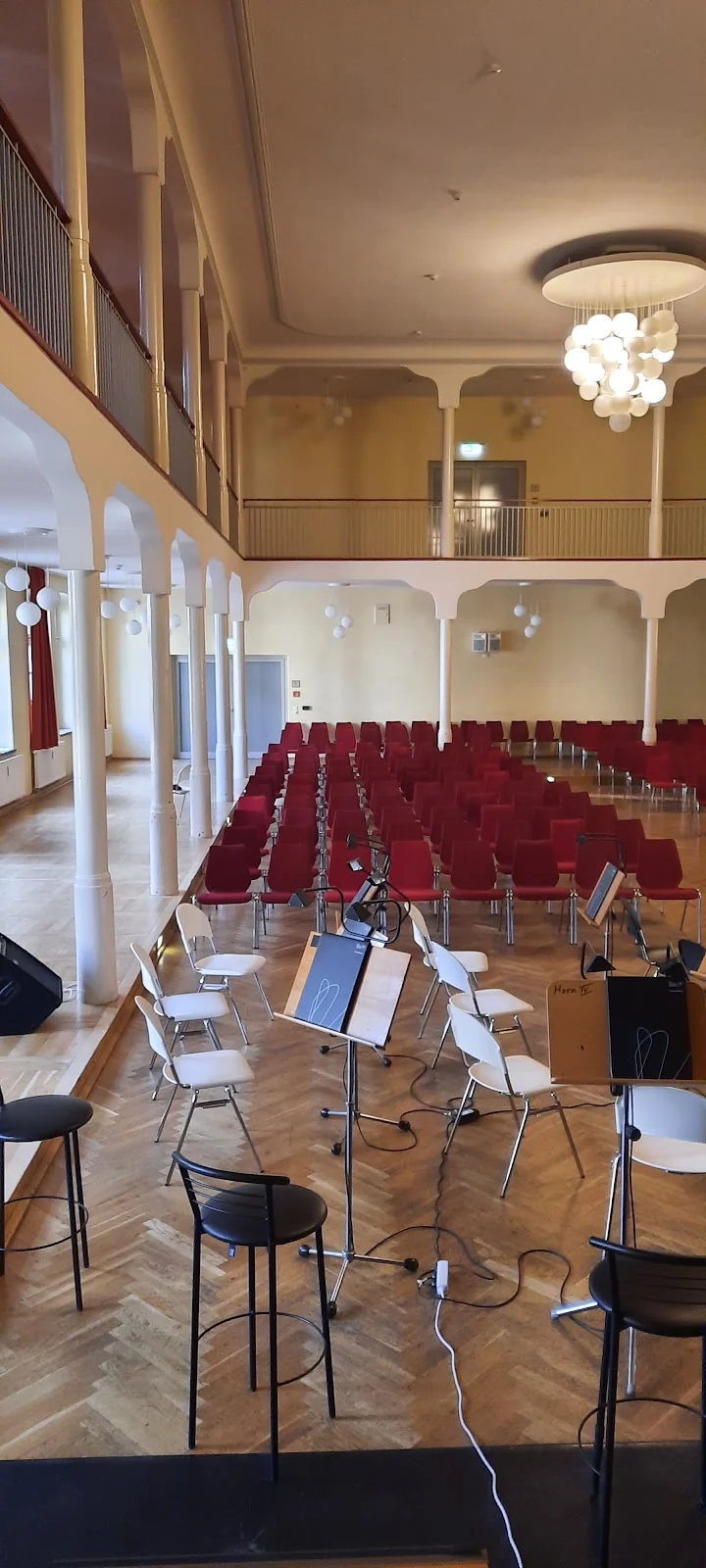
The TheaterFABRIK Gera is one of the most exciting small cultural addresses in the city because it brings together theater education, youth culture, and a historic venue in a very concentrated space. It is located in the Tonhalle at Clara-Zetkin-Straße 1 and is thus closely connected to a building that has played a special role in Gera since the 19th century. Today, it is not about grand opera facades or monumental hall buildings, but about closeness, participation, and lively forms of theater. This is exactly what makes the TheaterFABRIK interesting for many groups: children, teenagers, adults, school classes, theater enthusiasts, and people who want to become active themselves find a place here that takes creative work seriously while remaining accessible. The current venue page describes the Tonhalle as the location of the TheaterFABRIK and as a place for vibrant youth culture in downtown Gera. The technical equipment also shows that the space is intentionally designed as a studio stage, with limited but flexible capacity and an atmosphere that brings the audience very close to the stage. ([theater-altenburg-gera.de](https://theater-altenburg-gera.de/ueber-uns/spielstaetten-gera/tonhalle/))
Program, Workshops, and LesBar at the TheaterFABRIK Gera
When looking for the TheaterFABRIK Gera program, it is especially worthwhile to take a look at the participatory and workshop offerings. The TheaterFABRIK sees itself not only as a venue but explicitly as the theater education department of the Theater Altenburg Gera. The current offerings page describes several workshops that work with different age groups and clear structure. The Flohbühne is aimed at children aged 8 to 12, the TheaterLABOR at teenagers aged 12 to 18, the ImproBühne at adults aged 18 and over, and the StadtBühne also at adults aged 18 and over. Thus, the TheaterFABRIK covers an unusually broad area and creates offerings for beginners as well as for people who have been doing theater for a longer time. It is particularly important that the formats do not only aim for finished performances but for the journey there: rehearsals, developing, trying out, discarding, resetting, and playing together are part of the core. This structure makes the house so relevant for inquiries about programs, courses, and workshops. ([theater-altenburg-gera.de](https://theater-altenburg-gera.de/mitmachen-vermittlung/angebote-zum-mitmachen/theaterfabrik-gera/))
The page also mentions specific framework data that are practical for interested parties. The Flohbühne is led by Debora Willing-Gäber, takes place on Tuesdays in two groups, and runs as an annual course with costs of 110 euros including Give me Five. The TheaterLABOR, under the direction of Nadja Grasselli, rehearses on Wednesdays in the late afternoon and is also designed as an annual format. The ImproBühne, led by Annette Steppan, meets every two weeks on Monday evenings, while the StadtBühne is offered free of charge and works by arrangement. This makes it clear that the TheaterFABRIK is not just a stage but a continuous learning place. Those looking for a theater project, a theatrical leisure activity, or an entry into stage experience receive not only an appointment but a real process. Additionally, for participants under 27 years old, the youth subscription Give me five is included in the course fee, provided they meet the stated requirements. The TheaterFABRIK is thus not only programmatically open but also designed for long-term participation. ([theater-altenburg-gera.de](https://theater-altenburg-gera.de/mitmachen-vermittlung/angebote-zum-mitmachen/theaterfabrik-gera/))
Another important program point is the LesBar, which is mentioned in the current theater information as a regular literature meeting. It takes place on every third Monday of the month at the TheaterFABRIK, is free of charge, and does not require registration. It is moderated by theater educator Anne-Christin Martz. The content is not only about classic reading circles but about an open exchange about books from various genres, from classics to novels to essays and short stories. For SEO relevance, this is particularly interesting because it anchors a recurring cultural format in the house alongside theater and workshops. Inquiries about TheaterFABRIK Gera LesBar, TheaterFABRIK Gera program, or TheaterFABRIK Gera events actually encounter a real, regularly maintained offering. The house is thus not only a place for premieres but also for literary encounters and cultural conversations in a small setting. ([theater-altenburg-gera.de](https://theater-altenburg-gera.de/stuecke-konzerte/lesbar-1816/?utm_source=openai))
Tonhalle Gera: History, Renovation, and Special Significance
The history of the TheaterFABRIK cannot be separated from the building in which it is located. The Tonhalle in Gera was built in 1866 and was until the construction of the new theater in 1902 the largest concert and ballroom in the city. Thus, the house belongs to the historically significant places of Gera's cultural history. Later, it was used in very different political and social phases, including during the GDR era as a club for youth and athletes. The current Tonhalle page also describes that there were dance teas, balls, youth confirmations, and at times even boxing events. Such information makes it understandable why the place still possesses a special symbolic power: it has always been a space for public encounters and for changing forms of urban life. So, those looking for TheaterFABRIK Gera history or Tonhalle Gera are not just searching for a house but for a piece of city history that extends into the present. ([theater-altenburg-gera.de](https://theater-altenburg-gera.de/ueber-uns/spielstaetten-gera/tonhalle/))
Particularly important is the renovation in 2005/06. According to the current venue page, the Tonhalle was extensively renovated with funding from the EU program Urban II and subsequently required to use the building exclusively for youth education. Since then, it has housed a youth club and the Stadtjugendring Gera e.V.; in addition, the Heinrich Schütz music school is active there. In exactly this environment, the TheaterFABRIK finds its place with a small studio stage and additional rehearsal rooms. This is culturally politically interesting because the TheaterFABRIK is thus not isolated but part of a whole educational and youth culture ensemble. The history of the building, the renovation, and the current use are thus directly intertwined. From an SEO perspective, this is a strong distinguishing feature: this location is not just any event address but a grown place that unites historical substance, municipal youth education, and contemporary theater at one point. ([theater-altenburg-gera.de](https://theater-altenburg-gera.de/ueber-uns/spielstaetten-gera/tonhalle/))
The significance for the city is also evident in that the TheaterFABRIK is described in the official presentation as a place for unconventional theater, with the citizens and for the citizens of the city and the region. This is a sentence that summarizes the character of the house very well. It is not about distance or high culture from above, but about cultural participation and urban reference. Especially because the Tonhalle is located in the city center, it is well embedded in urban everyday life. For visitors, this means: the TheaterFABRIK is not just a destination for individual performances, but a place where Gera can show itself in a very immediate way. This makes the location so valuable for inquiries about history, special features, and background. The historical framework provides emotion, the current use provides function, and together they create a profile that clearly differs from larger standard stages. ([theater-altenburg-gera.de](https://theater-altenburg-gera.de/ueber-uns/spielstaetten-gera/tonhalle/))
Seating, Spatial Feel, and Technical Equipment in the Studio Stage
Those looking for TheaterFABRIK Gera seating or TheaterFABRIK Gera capacity will find no classic large hall but a compact studio stage with deliberately limited visitor numbers. The technical documents indicate a playing area of about 80 square meters, including a variable audience platform. It also states that a maximum of 50 spectators are allowed. This is a crucial point for the perception of the place, as it not only shapes ticket sales but also the spatial feel. Small audience numbers create closeness, concentration, and often stronger reactions to the stage events. For a theater education house, this is ideal because the direct contact between performers and the audience is maintained. The technical description also indicates that there are columns and a truss installation in the room. This means: the space is flexible but architecturally not arbitrary. This gives the TheaterFABRIK its special studio stage character. ([theater-altenburg-gera.de](https://theater-altenburg-gera.de/fileadmin/Data_Storage/St%C3%BCcke/Junge_B%C3%BChne/Wildwechsel_2026/Technische_Daten_TheaterFABRIK.pdf))
The room height is also interesting because it further enhances the impression of closeness and intimacy. According to the PDF, the room height is 3.70 meters but is reduced on the playing area due to the truss installation to 3.00 meters and due to the spotlights to 2.50 meters. This makes it clear that this is not a classic multipurpose hall with high ceilings but a working space tailored to theater production. The same technical overview also lists the available lighting, sound, and video components, including a lighting console, several dimmer circuits, different spotlights, speakers, a playback device, and a projector. For artists who work with smaller, flexible formats, this is a practical advantage. The space is not spectacular in the sense of a large show stage, but it is functional, focused, and technically equipped for studio operations. This mix of simplicity and professionalism is crucial for the TheaterFABRIK. ([theater-altenburg-gera.de](https://theater-altenburg-gera.de/fileadmin/Data_Storage/St%C3%BCcke/Junge_B%C3%BChne/Wildwechsel_2026/Technische_Daten_TheaterFABRIK.pdf))
Another technical point is important for organizers and educators: no drilling is allowed in the floor. This shows that the use of the space is versatile but also carefully regulated. For small productions, workshops, and playful formats, this is well planable because the boundaries of the area are clearly defined. For this reason, the TheaterFABRIK is very well suited for rehearsals, workshops, and flexible projects that adapt to the space rather than overwhelm it. Those looking for a seating plan, hall plan, or best seats will find a more variable than a fixed solution here. This is typical for a studio stage and, in this case, even part of the appeal. The TheaterFABRIK does not promise the distance of a large opera house but the immediacy of a space where every movement and every reaction becomes visible. This is precisely the reason why such small houses have a particularly impressive effect on many visitors. ([theater-altenburg-gera.de](https://theater-altenburg-gera.de/fileadmin/Data_Storage/St%C3%BCcke/Junge_B%C3%BChne/Wildwechsel_2026/Technische_Daten_TheaterFABRIK.pdf))
Directions and Parking around the TheaterFABRIK Gera
For inquiries about TheaterFABRIK Gera directions or TheaterFABRIK Gera parking, the most important information is initially the address itself: Clara-Zetkin-Straße 1, 07545 Gera. The Tonhalle page clearly names this address as the location of the TheaterFABRIK, making orientation for the journey straightforward. However, what the official Tonhalle page does not indicate is a dedicated visitor parking lot directly at the building. Therefore, it is sensible to consider the general parking options in the city of Gera for practical planning. The municipal parking overview refers to parking garages and public parking spaces in the center, and the visitor information from the city also recommends using surrounding parking garages and public spaces. This means for visitors: the TheaterFABRIK is centrally accessible, but parking should be planned with some thought, as is the case with many urban cultural venues. ([theater-altenburg-gera.de](https://theater-altenburg-gera.de/ueber-uns/spielstaetten-gera/tonhalle/))
Those arriving by car should therefore expect more of a city center location than a large dedicated parking lot. This is not a disadvantage but a typical feature of urban cultural venues. Especially because the TheaterFABRIK is located in the city center of Gera, cultural visits can be easily combined with a city stroll, a café visit, or other errands. For SEO logic, this is important because the search terms directions and parking are often very practical: users want to know how to arrive without stress. The answer here is: note the address, check the current parking overview of the city, and plan enough time. Since parking conditions in a city can change, the official overview of the city of Gera is the most reliable source for up-to-date information. Thus, the journey to the TheaterFABRIK remains planable, even if the location itself provides only limited information about parking spaces. ([gera.de](https://www.gera.de/leben-in-gera/mobilitaet-verkehr-rad/parkplaetze?utm_source=openai))
The central location also speaks for arriving by public transport, even if the Tonhalle page primarily highlights the address and technical data. The house is not located in a peripheral area but in the urban environment of the city center, which fundamentally facilitates access. For those specifically searching for TheaterFABRIK Gera directions or TheaterFABRIK Gera parking, this is crucial: it is a compact place with an urban environment, not a large event parking lot with its own guidance system. So, those who want to arrive relaxed should best use the city parking finder, compare the available options in the city center, and allow a small time buffer for events. This slightly forward-looking planning pays off, especially for workshop formats, LesBar evenings, or smaller productions. The journey thus remains uncomplicated and corresponds to the nature of the house: close, personal, and embedded in the city. ([theater-altenburg-gera.de](https://theater-altenburg-gera.de/ueber-uns/spielstaetten-gera/tonhalle/))
Participate, Rehearse, and Special Experiences at the TheaterFABRIK Gera
The TheaterFABRIK Gera is particularly interesting because it not only shows performances but also enables participation. The current concept focuses on theater educational continuity: those who participate here do not receive a single event but a space to grow. This is evident in the workshops as well as in the accompanying formats for schools, children, and adults. The offerings page makes it clear that the TheaterFABRIK chooses an open, learning approach to theater playing. The description text states that through play, one learns to know oneself, others, and the world from different perspectives. This attitude shapes the work on site. The TheaterFABRIK is thus a place where artistic practice and cultural education do not stand side by side but reinforce each other. This is particularly strong for searches for terms like theater education, youth culture, or workshops because the location truly fulfills these search intentions. ([theater-altenburg-gera.de](https://theater-altenburg-gera.de/mitmachen-vermittlung/angebote-zum-mitmachen/theaterfabrik-gera/))
The organizational structure is also noteworthy. The theater workshops cover different age groups and are accompanied by fixed contact persons. The current page names Anne-Christin Martz and Nadja Grasselli as theater educators and directors of the TheaterFABRIK. Additionally, the number of participants is limited, which speaks for close supervision. For those under 27, the youth subscription Give me five is included in the course fee, provided the requirements are met. This is not only attractive for families and young people but also a clear signal that the TheaterFABRIK takes participation seriously. Such information is often more important for user inquiries about programs and participation than a classic schedule because they describe the concrete entry into the use of the house. The TheaterFABRIK thus clearly shows that it is not just a backdrop but an active part of cultural education in Gera. ([theater-altenburg-gera.de](https://theater-altenburg-gera.de/mitmachen-vermittlung/angebote-zum-mitmachen/theaterfabrik-gera/))
Particularly characteristic is also the connection between local public and cultural self-production. The current description of the Tonhalle emphasizes that the TheaterFABRIK, with a small studio stage, not only finds a venue but also additional rehearsal rooms. This creates formats that often remain close to the urban society and are not only intended for a one-time audience. Additionally, recurring projects in schools, readings, workshops, and collaborations are taken up in the theater work. This also fits the profile of the location: unconventional, participatory, and place-based. Those looking for a location for cultural education, smaller stage formats, or a lively view of Gera will find a very clear meeting point here. The TheaterFABRIK is therefore much more than an address line in the city center. It is a venue, a learning place, and a social cultural space in one. This multi-layered nature makes it relevant for visitors, search engines, and local culture enthusiasts alike. ([theater-altenburg-gera.de](https://theater-altenburg-gera.de/ueber-uns/spielstaetten-gera/tonhalle/))
Sources:
- Theater Altenburg Gera – Tonhalle ([theater-altenburg-gera.de](https://theater-altenburg-gera.de/ueber-uns/spielstaetten-gera/tonhalle/))
- Theater Altenburg Gera – TheaterFABRIK (Gera) ([theater-altenburg-gera.de](https://theater-altenburg-gera.de/mitmachen-vermittlung/angebote-zum-mitmachen/theaterfabrik-gera/))
- Theater Altenburg Gera – Technical Data TheaterFABRIK ([theater-altenburg-gera.de](https://theater-altenburg-gera.de/fileadmin/Data_Storage/St%C3%BCcke/Junge_B%C3%BChne/Wildwechsel_2026/Technische_Daten_TheaterFABRIK.pdf))
- Ecumenical Academy Gera / Altenburg – Theaterfabrik Gera ([oek-akademie-gera.de](https://oek-akademie-gera.de/locations/theaterfabrik-gera/))
- City of Gera – Parking ([gera.de](https://www.gera.de/leben-in-gera/mobilitaet-verkehr-rad/parkplaetze?utm_source=openai))
- City of Gera – Arrival, Parking, and Admission Regulations ([gera.de](https://www.gera.de/kultur-und-kongresszentrum/besucherinformationen/anreise-parken-und-einlassbestimmungen?utm_source=openai))
- Theater Altenburg Gera – LesBar ([theater-altenburg-gera.de](https://theater-altenburg-gera.de/stuecke-konzerte/lesbar-1816/?utm_source=openai))
Show moreShow less
TheaterFABRIK Gera | Program & Directions
The TheaterFABRIK Gera is one of the most exciting small cultural addresses in the city because it brings together theater education, youth culture, and a historic venue in a very concentrated space. It is located in the Tonhalle at Clara-Zetkin-Straße 1 and is thus closely connected to a building that has played a special role in Gera since the 19th century. Today, it is not about grand opera facades or monumental hall buildings, but about closeness, participation, and lively forms of theater. This is exactly what makes the TheaterFABRIK interesting for many groups: children, teenagers, adults, school classes, theater enthusiasts, and people who want to become active themselves find a place here that takes creative work seriously while remaining accessible. The current venue page describes the Tonhalle as the location of the TheaterFABRIK and as a place for vibrant youth culture in downtown Gera. The technical equipment also shows that the space is intentionally designed as a studio stage, with limited but flexible capacity and an atmosphere that brings the audience very close to the stage. ([theater-altenburg-gera.de](https://theater-altenburg-gera.de/ueber-uns/spielstaetten-gera/tonhalle/))
Program, Workshops, and LesBar at the TheaterFABRIK Gera
When looking for the TheaterFABRIK Gera program, it is especially worthwhile to take a look at the participatory and workshop offerings. The TheaterFABRIK sees itself not only as a venue but explicitly as the theater education department of the Theater Altenburg Gera. The current offerings page describes several workshops that work with different age groups and clear structure. The Flohbühne is aimed at children aged 8 to 12, the TheaterLABOR at teenagers aged 12 to 18, the ImproBühne at adults aged 18 and over, and the StadtBühne also at adults aged 18 and over. Thus, the TheaterFABRIK covers an unusually broad area and creates offerings for beginners as well as for people who have been doing theater for a longer time. It is particularly important that the formats do not only aim for finished performances but for the journey there: rehearsals, developing, trying out, discarding, resetting, and playing together are part of the core. This structure makes the house so relevant for inquiries about programs, courses, and workshops. ([theater-altenburg-gera.de](https://theater-altenburg-gera.de/mitmachen-vermittlung/angebote-zum-mitmachen/theaterfabrik-gera/))
The page also mentions specific framework data that are practical for interested parties. The Flohbühne is led by Debora Willing-Gäber, takes place on Tuesdays in two groups, and runs as an annual course with costs of 110 euros including Give me Five. The TheaterLABOR, under the direction of Nadja Grasselli, rehearses on Wednesdays in the late afternoon and is also designed as an annual format. The ImproBühne, led by Annette Steppan, meets every two weeks on Monday evenings, while the StadtBühne is offered free of charge and works by arrangement. This makes it clear that the TheaterFABRIK is not just a stage but a continuous learning place. Those looking for a theater project, a theatrical leisure activity, or an entry into stage experience receive not only an appointment but a real process. Additionally, for participants under 27 years old, the youth subscription Give me five is included in the course fee, provided they meet the stated requirements. The TheaterFABRIK is thus not only programmatically open but also designed for long-term participation. ([theater-altenburg-gera.de](https://theater-altenburg-gera.de/mitmachen-vermittlung/angebote-zum-mitmachen/theaterfabrik-gera/))
Another important program point is the LesBar, which is mentioned in the current theater information as a regular literature meeting. It takes place on every third Monday of the month at the TheaterFABRIK, is free of charge, and does not require registration. It is moderated by theater educator Anne-Christin Martz. The content is not only about classic reading circles but about an open exchange about books from various genres, from classics to novels to essays and short stories. For SEO relevance, this is particularly interesting because it anchors a recurring cultural format in the house alongside theater and workshops. Inquiries about TheaterFABRIK Gera LesBar, TheaterFABRIK Gera program, or TheaterFABRIK Gera events actually encounter a real, regularly maintained offering. The house is thus not only a place for premieres but also for literary encounters and cultural conversations in a small setting. ([theater-altenburg-gera.de](https://theater-altenburg-gera.de/stuecke-konzerte/lesbar-1816/?utm_source=openai))
Tonhalle Gera: History, Renovation, and Special Significance
The history of the TheaterFABRIK cannot be separated from the building in which it is located. The Tonhalle in Gera was built in 1866 and was until the construction of the new theater in 1902 the largest concert and ballroom in the city. Thus, the house belongs to the historically significant places of Gera's cultural history. Later, it was used in very different political and social phases, including during the GDR era as a club for youth and athletes. The current Tonhalle page also describes that there were dance teas, balls, youth confirmations, and at times even boxing events. Such information makes it understandable why the place still possesses a special symbolic power: it has always been a space for public encounters and for changing forms of urban life. So, those looking for TheaterFABRIK Gera history or Tonhalle Gera are not just searching for a house but for a piece of city history that extends into the present. ([theater-altenburg-gera.de](https://theater-altenburg-gera.de/ueber-uns/spielstaetten-gera/tonhalle/))
Particularly important is the renovation in 2005/06. According to the current venue page, the Tonhalle was extensively renovated with funding from the EU program Urban II and subsequently required to use the building exclusively for youth education. Since then, it has housed a youth club and the Stadtjugendring Gera e.V.; in addition, the Heinrich Schütz music school is active there. In exactly this environment, the TheaterFABRIK finds its place with a small studio stage and additional rehearsal rooms. This is culturally politically interesting because the TheaterFABRIK is thus not isolated but part of a whole educational and youth culture ensemble. The history of the building, the renovation, and the current use are thus directly intertwined. From an SEO perspective, this is a strong distinguishing feature: this location is not just any event address but a grown place that unites historical substance, municipal youth education, and contemporary theater at one point. ([theater-altenburg-gera.de](https://theater-altenburg-gera.de/ueber-uns/spielstaetten-gera/tonhalle/))
The significance for the city is also evident in that the TheaterFABRIK is described in the official presentation as a place for unconventional theater, with the citizens and for the citizens of the city and the region. This is a sentence that summarizes the character of the house very well. It is not about distance or high culture from above, but about cultural participation and urban reference. Especially because the Tonhalle is located in the city center, it is well embedded in urban everyday life. For visitors, this means: the TheaterFABRIK is not just a destination for individual performances, but a place where Gera can show itself in a very immediate way. This makes the location so valuable for inquiries about history, special features, and background. The historical framework provides emotion, the current use provides function, and together they create a profile that clearly differs from larger standard stages. ([theater-altenburg-gera.de](https://theater-altenburg-gera.de/ueber-uns/spielstaetten-gera/tonhalle/))
Seating, Spatial Feel, and Technical Equipment in the Studio Stage
Those looking for TheaterFABRIK Gera seating or TheaterFABRIK Gera capacity will find no classic large hall but a compact studio stage with deliberately limited visitor numbers. The technical documents indicate a playing area of about 80 square meters, including a variable audience platform. It also states that a maximum of 50 spectators are allowed. This is a crucial point for the perception of the place, as it not only shapes ticket sales but also the spatial feel. Small audience numbers create closeness, concentration, and often stronger reactions to the stage events. For a theater education house, this is ideal because the direct contact between performers and the audience is maintained. The technical description also indicates that there are columns and a truss installation in the room. This means: the space is flexible but architecturally not arbitrary. This gives the TheaterFABRIK its special studio stage character. ([theater-altenburg-gera.de](https://theater-altenburg-gera.de/fileadmin/Data_Storage/St%C3%BCcke/Junge_B%C3%BChne/Wildwechsel_2026/Technische_Daten_TheaterFABRIK.pdf))
The room height is also interesting because it further enhances the impression of closeness and intimacy. According to the PDF, the room height is 3.70 meters but is reduced on the playing area due to the truss installation to 3.00 meters and due to the spotlights to 2.50 meters. This makes it clear that this is not a classic multipurpose hall with high ceilings but a working space tailored to theater production. The same technical overview also lists the available lighting, sound, and video components, including a lighting console, several dimmer circuits, different spotlights, speakers, a playback device, and a projector. For artists who work with smaller, flexible formats, this is a practical advantage. The space is not spectacular in the sense of a large show stage, but it is functional, focused, and technically equipped for studio operations. This mix of simplicity and professionalism is crucial for the TheaterFABRIK. ([theater-altenburg-gera.de](https://theater-altenburg-gera.de/fileadmin/Data_Storage/St%C3%BCcke/Junge_B%C3%BChne/Wildwechsel_2026/Technische_Daten_TheaterFABRIK.pdf))
Another technical point is important for organizers and educators: no drilling is allowed in the floor. This shows that the use of the space is versatile but also carefully regulated. For small productions, workshops, and playful formats, this is well planable because the boundaries of the area are clearly defined. For this reason, the TheaterFABRIK is very well suited for rehearsals, workshops, and flexible projects that adapt to the space rather than overwhelm it. Those looking for a seating plan, hall plan, or best seats will find a more variable than a fixed solution here. This is typical for a studio stage and, in this case, even part of the appeal. The TheaterFABRIK does not promise the distance of a large opera house but the immediacy of a space where every movement and every reaction becomes visible. This is precisely the reason why such small houses have a particularly impressive effect on many visitors. ([theater-altenburg-gera.de](https://theater-altenburg-gera.de/fileadmin/Data_Storage/St%C3%BCcke/Junge_B%C3%BChne/Wildwechsel_2026/Technische_Daten_TheaterFABRIK.pdf))
Directions and Parking around the TheaterFABRIK Gera
For inquiries about TheaterFABRIK Gera directions or TheaterFABRIK Gera parking, the most important information is initially the address itself: Clara-Zetkin-Straße 1, 07545 Gera. The Tonhalle page clearly names this address as the location of the TheaterFABRIK, making orientation for the journey straightforward. However, what the official Tonhalle page does not indicate is a dedicated visitor parking lot directly at the building. Therefore, it is sensible to consider the general parking options in the city of Gera for practical planning. The municipal parking overview refers to parking garages and public parking spaces in the center, and the visitor information from the city also recommends using surrounding parking garages and public spaces. This means for visitors: the TheaterFABRIK is centrally accessible, but parking should be planned with some thought, as is the case with many urban cultural venues. ([theater-altenburg-gera.de](https://theater-altenburg-gera.de/ueber-uns/spielstaetten-gera/tonhalle/))
Those arriving by car should therefore expect more of a city center location than a large dedicated parking lot. This is not a disadvantage but a typical feature of urban cultural venues. Especially because the TheaterFABRIK is located in the city center of Gera, cultural visits can be easily combined with a city stroll, a café visit, or other errands. For SEO logic, this is important because the search terms directions and parking are often very practical: users want to know how to arrive without stress. The answer here is: note the address, check the current parking overview of the city, and plan enough time. Since parking conditions in a city can change, the official overview of the city of Gera is the most reliable source for up-to-date information. Thus, the journey to the TheaterFABRIK remains planable, even if the location itself provides only limited information about parking spaces. ([gera.de](https://www.gera.de/leben-in-gera/mobilitaet-verkehr-rad/parkplaetze?utm_source=openai))
The central location also speaks for arriving by public transport, even if the Tonhalle page primarily highlights the address and technical data. The house is not located in a peripheral area but in the urban environment of the city center, which fundamentally facilitates access. For those specifically searching for TheaterFABRIK Gera directions or TheaterFABRIK Gera parking, this is crucial: it is a compact place with an urban environment, not a large event parking lot with its own guidance system. So, those who want to arrive relaxed should best use the city parking finder, compare the available options in the city center, and allow a small time buffer for events. This slightly forward-looking planning pays off, especially for workshop formats, LesBar evenings, or smaller productions. The journey thus remains uncomplicated and corresponds to the nature of the house: close, personal, and embedded in the city. ([theater-altenburg-gera.de](https://theater-altenburg-gera.de/ueber-uns/spielstaetten-gera/tonhalle/))
Participate, Rehearse, and Special Experiences at the TheaterFABRIK Gera
The TheaterFABRIK Gera is particularly interesting because it not only shows performances but also enables participation. The current concept focuses on theater educational continuity: those who participate here do not receive a single event but a space to grow. This is evident in the workshops as well as in the accompanying formats for schools, children, and adults. The offerings page makes it clear that the TheaterFABRIK chooses an open, learning approach to theater playing. The description text states that through play, one learns to know oneself, others, and the world from different perspectives. This attitude shapes the work on site. The TheaterFABRIK is thus a place where artistic practice and cultural education do not stand side by side but reinforce each other. This is particularly strong for searches for terms like theater education, youth culture, or workshops because the location truly fulfills these search intentions. ([theater-altenburg-gera.de](https://theater-altenburg-gera.de/mitmachen-vermittlung/angebote-zum-mitmachen/theaterfabrik-gera/))
The organizational structure is also noteworthy. The theater workshops cover different age groups and are accompanied by fixed contact persons. The current page names Anne-Christin Martz and Nadja Grasselli as theater educators and directors of the TheaterFABRIK. Additionally, the number of participants is limited, which speaks for close supervision. For those under 27, the youth subscription Give me five is included in the course fee, provided the requirements are met. This is not only attractive for families and young people but also a clear signal that the TheaterFABRIK takes participation seriously. Such information is often more important for user inquiries about programs and participation than a classic schedule because they describe the concrete entry into the use of the house. The TheaterFABRIK thus clearly shows that it is not just a backdrop but an active part of cultural education in Gera. ([theater-altenburg-gera.de](https://theater-altenburg-gera.de/mitmachen-vermittlung/angebote-zum-mitmachen/theaterfabrik-gera/))
Particularly characteristic is also the connection between local public and cultural self-production. The current description of the Tonhalle emphasizes that the TheaterFABRIK, with a small studio stage, not only finds a venue but also additional rehearsal rooms. This creates formats that often remain close to the urban society and are not only intended for a one-time audience. Additionally, recurring projects in schools, readings, workshops, and collaborations are taken up in the theater work. This also fits the profile of the location: unconventional, participatory, and place-based. Those looking for a location for cultural education, smaller stage formats, or a lively view of Gera will find a very clear meeting point here. The TheaterFABRIK is therefore much more than an address line in the city center. It is a venue, a learning place, and a social cultural space in one. This multi-layered nature makes it relevant for visitors, search engines, and local culture enthusiasts alike. ([theater-altenburg-gera.de](https://theater-altenburg-gera.de/ueber-uns/spielstaetten-gera/tonhalle/))
Sources:
- Theater Altenburg Gera – Tonhalle ([theater-altenburg-gera.de](https://theater-altenburg-gera.de/ueber-uns/spielstaetten-gera/tonhalle/))
- Theater Altenburg Gera – TheaterFABRIK (Gera) ([theater-altenburg-gera.de](https://theater-altenburg-gera.de/mitmachen-vermittlung/angebote-zum-mitmachen/theaterfabrik-gera/))
- Theater Altenburg Gera – Technical Data TheaterFABRIK ([theater-altenburg-gera.de](https://theater-altenburg-gera.de/fileadmin/Data_Storage/St%C3%BCcke/Junge_B%C3%BChne/Wildwechsel_2026/Technische_Daten_TheaterFABRIK.pdf))
- Ecumenical Academy Gera / Altenburg – Theaterfabrik Gera ([oek-akademie-gera.de](https://oek-akademie-gera.de/locations/theaterfabrik-gera/))
- City of Gera – Parking ([gera.de](https://www.gera.de/leben-in-gera/mobilitaet-verkehr-rad/parkplaetze?utm_source=openai))
- City of Gera – Arrival, Parking, and Admission Regulations ([gera.de](https://www.gera.de/kultur-und-kongresszentrum/besucherinformationen/anreise-parken-und-einlassbestimmungen?utm_source=openai))
- Theater Altenburg Gera – LesBar ([theater-altenburg-gera.de](https://theater-altenburg-gera.de/stuecke-konzerte/lesbar-1816/?utm_source=openai))
TheaterFABRIK Gera | Program & Directions
The TheaterFABRIK Gera is one of the most exciting small cultural addresses in the city because it brings together theater education, youth culture, and a historic venue in a very concentrated space. It is located in the Tonhalle at Clara-Zetkin-Straße 1 and is thus closely connected to a building that has played a special role in Gera since the 19th century. Today, it is not about grand opera facades or monumental hall buildings, but about closeness, participation, and lively forms of theater. This is exactly what makes the TheaterFABRIK interesting for many groups: children, teenagers, adults, school classes, theater enthusiasts, and people who want to become active themselves find a place here that takes creative work seriously while remaining accessible. The current venue page describes the Tonhalle as the location of the TheaterFABRIK and as a place for vibrant youth culture in downtown Gera. The technical equipment also shows that the space is intentionally designed as a studio stage, with limited but flexible capacity and an atmosphere that brings the audience very close to the stage. ([theater-altenburg-gera.de](https://theater-altenburg-gera.de/ueber-uns/spielstaetten-gera/tonhalle/))
Program, Workshops, and LesBar at the TheaterFABRIK Gera
When looking for the TheaterFABRIK Gera program, it is especially worthwhile to take a look at the participatory and workshop offerings. The TheaterFABRIK sees itself not only as a venue but explicitly as the theater education department of the Theater Altenburg Gera. The current offerings page describes several workshops that work with different age groups and clear structure. The Flohbühne is aimed at children aged 8 to 12, the TheaterLABOR at teenagers aged 12 to 18, the ImproBühne at adults aged 18 and over, and the StadtBühne also at adults aged 18 and over. Thus, the TheaterFABRIK covers an unusually broad area and creates offerings for beginners as well as for people who have been doing theater for a longer time. It is particularly important that the formats do not only aim for finished performances but for the journey there: rehearsals, developing, trying out, discarding, resetting, and playing together are part of the core. This structure makes the house so relevant for inquiries about programs, courses, and workshops. ([theater-altenburg-gera.de](https://theater-altenburg-gera.de/mitmachen-vermittlung/angebote-zum-mitmachen/theaterfabrik-gera/))
The page also mentions specific framework data that are practical for interested parties. The Flohbühne is led by Debora Willing-Gäber, takes place on Tuesdays in two groups, and runs as an annual course with costs of 110 euros including Give me Five. The TheaterLABOR, under the direction of Nadja Grasselli, rehearses on Wednesdays in the late afternoon and is also designed as an annual format. The ImproBühne, led by Annette Steppan, meets every two weeks on Monday evenings, while the StadtBühne is offered free of charge and works by arrangement. This makes it clear that the TheaterFABRIK is not just a stage but a continuous learning place. Those looking for a theater project, a theatrical leisure activity, or an entry into stage experience receive not only an appointment but a real process. Additionally, for participants under 27 years old, the youth subscription Give me five is included in the course fee, provided they meet the stated requirements. The TheaterFABRIK is thus not only programmatically open but also designed for long-term participation. ([theater-altenburg-gera.de](https://theater-altenburg-gera.de/mitmachen-vermittlung/angebote-zum-mitmachen/theaterfabrik-gera/))
Another important program point is the LesBar, which is mentioned in the current theater information as a regular literature meeting. It takes place on every third Monday of the month at the TheaterFABRIK, is free of charge, and does not require registration. It is moderated by theater educator Anne-Christin Martz. The content is not only about classic reading circles but about an open exchange about books from various genres, from classics to novels to essays and short stories. For SEO relevance, this is particularly interesting because it anchors a recurring cultural format in the house alongside theater and workshops. Inquiries about TheaterFABRIK Gera LesBar, TheaterFABRIK Gera program, or TheaterFABRIK Gera events actually encounter a real, regularly maintained offering. The house is thus not only a place for premieres but also for literary encounters and cultural conversations in a small setting. ([theater-altenburg-gera.de](https://theater-altenburg-gera.de/stuecke-konzerte/lesbar-1816/?utm_source=openai))
Tonhalle Gera: History, Renovation, and Special Significance
The history of the TheaterFABRIK cannot be separated from the building in which it is located. The Tonhalle in Gera was built in 1866 and was until the construction of the new theater in 1902 the largest concert and ballroom in the city. Thus, the house belongs to the historically significant places of Gera's cultural history. Later, it was used in very different political and social phases, including during the GDR era as a club for youth and athletes. The current Tonhalle page also describes that there were dance teas, balls, youth confirmations, and at times even boxing events. Such information makes it understandable why the place still possesses a special symbolic power: it has always been a space for public encounters and for changing forms of urban life. So, those looking for TheaterFABRIK Gera history or Tonhalle Gera are not just searching for a house but for a piece of city history that extends into the present. ([theater-altenburg-gera.de](https://theater-altenburg-gera.de/ueber-uns/spielstaetten-gera/tonhalle/))
Particularly important is the renovation in 2005/06. According to the current venue page, the Tonhalle was extensively renovated with funding from the EU program Urban II and subsequently required to use the building exclusively for youth education. Since then, it has housed a youth club and the Stadtjugendring Gera e.V.; in addition, the Heinrich Schütz music school is active there. In exactly this environment, the TheaterFABRIK finds its place with a small studio stage and additional rehearsal rooms. This is culturally politically interesting because the TheaterFABRIK is thus not isolated but part of a whole educational and youth culture ensemble. The history of the building, the renovation, and the current use are thus directly intertwined. From an SEO perspective, this is a strong distinguishing feature: this location is not just any event address but a grown place that unites historical substance, municipal youth education, and contemporary theater at one point. ([theater-altenburg-gera.de](https://theater-altenburg-gera.de/ueber-uns/spielstaetten-gera/tonhalle/))
The significance for the city is also evident in that the TheaterFABRIK is described in the official presentation as a place for unconventional theater, with the citizens and for the citizens of the city and the region. This is a sentence that summarizes the character of the house very well. It is not about distance or high culture from above, but about cultural participation and urban reference. Especially because the Tonhalle is located in the city center, it is well embedded in urban everyday life. For visitors, this means: the TheaterFABRIK is not just a destination for individual performances, but a place where Gera can show itself in a very immediate way. This makes the location so valuable for inquiries about history, special features, and background. The historical framework provides emotion, the current use provides function, and together they create a profile that clearly differs from larger standard stages. ([theater-altenburg-gera.de](https://theater-altenburg-gera.de/ueber-uns/spielstaetten-gera/tonhalle/))
Seating, Spatial Feel, and Technical Equipment in the Studio Stage
Those looking for TheaterFABRIK Gera seating or TheaterFABRIK Gera capacity will find no classic large hall but a compact studio stage with deliberately limited visitor numbers. The technical documents indicate a playing area of about 80 square meters, including a variable audience platform. It also states that a maximum of 50 spectators are allowed. This is a crucial point for the perception of the place, as it not only shapes ticket sales but also the spatial feel. Small audience numbers create closeness, concentration, and often stronger reactions to the stage events. For a theater education house, this is ideal because the direct contact between performers and the audience is maintained. The technical description also indicates that there are columns and a truss installation in the room. This means: the space is flexible but architecturally not arbitrary. This gives the TheaterFABRIK its special studio stage character. ([theater-altenburg-gera.de](https://theater-altenburg-gera.de/fileadmin/Data_Storage/St%C3%BCcke/Junge_B%C3%BChne/Wildwechsel_2026/Technische_Daten_TheaterFABRIK.pdf))
The room height is also interesting because it further enhances the impression of closeness and intimacy. According to the PDF, the room height is 3.70 meters but is reduced on the playing area due to the truss installation to 3.00 meters and due to the spotlights to 2.50 meters. This makes it clear that this is not a classic multipurpose hall with high ceilings but a working space tailored to theater production. The same technical overview also lists the available lighting, sound, and video components, including a lighting console, several dimmer circuits, different spotlights, speakers, a playback device, and a projector. For artists who work with smaller, flexible formats, this is a practical advantage. The space is not spectacular in the sense of a large show stage, but it is functional, focused, and technically equipped for studio operations. This mix of simplicity and professionalism is crucial for the TheaterFABRIK. ([theater-altenburg-gera.de](https://theater-altenburg-gera.de/fileadmin/Data_Storage/St%C3%BCcke/Junge_B%C3%BChne/Wildwechsel_2026/Technische_Daten_TheaterFABRIK.pdf))
Another technical point is important for organizers and educators: no drilling is allowed in the floor. This shows that the use of the space is versatile but also carefully regulated. For small productions, workshops, and playful formats, this is well planable because the boundaries of the area are clearly defined. For this reason, the TheaterFABRIK is very well suited for rehearsals, workshops, and flexible projects that adapt to the space rather than overwhelm it. Those looking for a seating plan, hall plan, or best seats will find a more variable than a fixed solution here. This is typical for a studio stage and, in this case, even part of the appeal. The TheaterFABRIK does not promise the distance of a large opera house but the immediacy of a space where every movement and every reaction becomes visible. This is precisely the reason why such small houses have a particularly impressive effect on many visitors. ([theater-altenburg-gera.de](https://theater-altenburg-gera.de/fileadmin/Data_Storage/St%C3%BCcke/Junge_B%C3%BChne/Wildwechsel_2026/Technische_Daten_TheaterFABRIK.pdf))
Directions and Parking around the TheaterFABRIK Gera
For inquiries about TheaterFABRIK Gera directions or TheaterFABRIK Gera parking, the most important information is initially the address itself: Clara-Zetkin-Straße 1, 07545 Gera. The Tonhalle page clearly names this address as the location of the TheaterFABRIK, making orientation for the journey straightforward. However, what the official Tonhalle page does not indicate is a dedicated visitor parking lot directly at the building. Therefore, it is sensible to consider the general parking options in the city of Gera for practical planning. The municipal parking overview refers to parking garages and public parking spaces in the center, and the visitor information from the city also recommends using surrounding parking garages and public spaces. This means for visitors: the TheaterFABRIK is centrally accessible, but parking should be planned with some thought, as is the case with many urban cultural venues. ([theater-altenburg-gera.de](https://theater-altenburg-gera.de/ueber-uns/spielstaetten-gera/tonhalle/))
Those arriving by car should therefore expect more of a city center location than a large dedicated parking lot. This is not a disadvantage but a typical feature of urban cultural venues. Especially because the TheaterFABRIK is located in the city center of Gera, cultural visits can be easily combined with a city stroll, a café visit, or other errands. For SEO logic, this is important because the search terms directions and parking are often very practical: users want to know how to arrive without stress. The answer here is: note the address, check the current parking overview of the city, and plan enough time. Since parking conditions in a city can change, the official overview of the city of Gera is the most reliable source for up-to-date information. Thus, the journey to the TheaterFABRIK remains planable, even if the location itself provides only limited information about parking spaces. ([gera.de](https://www.gera.de/leben-in-gera/mobilitaet-verkehr-rad/parkplaetze?utm_source=openai))
The central location also speaks for arriving by public transport, even if the Tonhalle page primarily highlights the address and technical data. The house is not located in a peripheral area but in the urban environment of the city center, which fundamentally facilitates access. For those specifically searching for TheaterFABRIK Gera directions or TheaterFABRIK Gera parking, this is crucial: it is a compact place with an urban environment, not a large event parking lot with its own guidance system. So, those who want to arrive relaxed should best use the city parking finder, compare the available options in the city center, and allow a small time buffer for events. This slightly forward-looking planning pays off, especially for workshop formats, LesBar evenings, or smaller productions. The journey thus remains uncomplicated and corresponds to the nature of the house: close, personal, and embedded in the city. ([theater-altenburg-gera.de](https://theater-altenburg-gera.de/ueber-uns/spielstaetten-gera/tonhalle/))
Participate, Rehearse, and Special Experiences at the TheaterFABRIK Gera
The TheaterFABRIK Gera is particularly interesting because it not only shows performances but also enables participation. The current concept focuses on theater educational continuity: those who participate here do not receive a single event but a space to grow. This is evident in the workshops as well as in the accompanying formats for schools, children, and adults. The offerings page makes it clear that the TheaterFABRIK chooses an open, learning approach to theater playing. The description text states that through play, one learns to know oneself, others, and the world from different perspectives. This attitude shapes the work on site. The TheaterFABRIK is thus a place where artistic practice and cultural education do not stand side by side but reinforce each other. This is particularly strong for searches for terms like theater education, youth culture, or workshops because the location truly fulfills these search intentions. ([theater-altenburg-gera.de](https://theater-altenburg-gera.de/mitmachen-vermittlung/angebote-zum-mitmachen/theaterfabrik-gera/))
The organizational structure is also noteworthy. The theater workshops cover different age groups and are accompanied by fixed contact persons. The current page names Anne-Christin Martz and Nadja Grasselli as theater educators and directors of the TheaterFABRIK. Additionally, the number of participants is limited, which speaks for close supervision. For those under 27, the youth subscription Give me five is included in the course fee, provided the requirements are met. This is not only attractive for families and young people but also a clear signal that the TheaterFABRIK takes participation seriously. Such information is often more important for user inquiries about programs and participation than a classic schedule because they describe the concrete entry into the use of the house. The TheaterFABRIK thus clearly shows that it is not just a backdrop but an active part of cultural education in Gera. ([theater-altenburg-gera.de](https://theater-altenburg-gera.de/mitmachen-vermittlung/angebote-zum-mitmachen/theaterfabrik-gera/))
Particularly characteristic is also the connection between local public and cultural self-production. The current description of the Tonhalle emphasizes that the TheaterFABRIK, with a small studio stage, not only finds a venue but also additional rehearsal rooms. This creates formats that often remain close to the urban society and are not only intended for a one-time audience. Additionally, recurring projects in schools, readings, workshops, and collaborations are taken up in the theater work. This also fits the profile of the location: unconventional, participatory, and place-based. Those looking for a location for cultural education, smaller stage formats, or a lively view of Gera will find a very clear meeting point here. The TheaterFABRIK is therefore much more than an address line in the city center. It is a venue, a learning place, and a social cultural space in one. This multi-layered nature makes it relevant for visitors, search engines, and local culture enthusiasts alike. ([theater-altenburg-gera.de](https://theater-altenburg-gera.de/ueber-uns/spielstaetten-gera/tonhalle/))
Sources:
- Theater Altenburg Gera – Tonhalle ([theater-altenburg-gera.de](https://theater-altenburg-gera.de/ueber-uns/spielstaetten-gera/tonhalle/))
- Theater Altenburg Gera – TheaterFABRIK (Gera) ([theater-altenburg-gera.de](https://theater-altenburg-gera.de/mitmachen-vermittlung/angebote-zum-mitmachen/theaterfabrik-gera/))
- Theater Altenburg Gera – Technical Data TheaterFABRIK ([theater-altenburg-gera.de](https://theater-altenburg-gera.de/fileadmin/Data_Storage/St%C3%BCcke/Junge_B%C3%BChne/Wildwechsel_2026/Technische_Daten_TheaterFABRIK.pdf))
- Ecumenical Academy Gera / Altenburg – Theaterfabrik Gera ([oek-akademie-gera.de](https://oek-akademie-gera.de/locations/theaterfabrik-gera/))
- City of Gera – Parking ([gera.de](https://www.gera.de/leben-in-gera/mobilitaet-verkehr-rad/parkplaetze?utm_source=openai))
- City of Gera – Arrival, Parking, and Admission Regulations ([gera.de](https://www.gera.de/kultur-und-kongresszentrum/besucherinformationen/anreise-parken-und-einlassbestimmungen?utm_source=openai))
- Theater Altenburg Gera – LesBar ([theater-altenburg-gera.de](https://theater-altenburg-gera.de/stuecke-konzerte/lesbar-1816/?utm_source=openai))

Frequently Asked Questions
Reviews
Rike Schreiber
17. November 2024
Great rooms, great staff, an important place for amateur theater and acting in Gera :)
Andrea Annelena Dressel
1. February 2020
The large hall: Simply too cold for Volunteer Day at the beginning of December.
Sonja Schuhmann
7. June 2023
Very nice event space with a gallery and stage. 👌😊
Виктория Одинцова
16. February 2024
Very cozy, solemn place
Movie Fan 1000
13. May 2019
Great atmosphere and you learn what’s important.