
Gera
Str. des Friedens 85, 07548 Gera, Deutschland
Tierpark Gera | Opening Hours & Prices
The Tierpark Gera is much more than a classic zoo: it is a developed family place in Martinsgrund, a piece of city history, a nature-oriented excursion destination, and at the same time a modern experience area with a park railway, farm, walk-through enclosures, and the new climate garden. Since its founding in 1962, the area has developed from a small animal enclosure with initially native species to one of the most popular cultural institutions in East Thuringia. Today, over 900 animals from 63 species live here on about 20 hectares, and it is precisely this mix of space, diversity, and closeness that makes the charm of the zoo. Those planning a visit usually look for opening hours, admission prices, parking, dog rules, playground, slide, gastronomy, or the current plan. These topics are closely connected in the Tierpark Gera because the stay is equally interesting for families, school classes, walkers, and railway enthusiasts. The zoo is located in greenery, is accessible for people with disabilities, and offers many reasons to visit more than once a year with events, feeding times, and special experiences. ([gera.de](https://www.gera.de/tourismus-freizeit-kultur/freizeit-gestalten/tierpark-gera/historie?utm_source=openai))
Opening Hours and Admission Prices at Tierpark Gera
The opening hours are among the most important search queries regarding Tierpark Gera, and the official city website answers them very clearly: The zoo is open 365 days a year. The regular hours vary by month, so that visits can be well planned both in winter and during the long summer months. In January and December, it is open from 9:00 AM to 4:00 PM, in February and November from 9:00 AM to 5:00 PM, and from March to October usually from 9:00 AM to 6:00 PM. On December 24 and 31, a shortened opening time of 9:00 AM to 2:00 PM applies. Those who want to time their visit perfectly should also note that the last admission takes place 45 minutes before closing. This makes the visit relaxed, even when arriving with children, dogs, or grandparents, and still allows some time for the park railway or the kiosk. The pricing structure is family-friendly and distinguishes between adults, reduced rates, children, families, groups, annual passes, and dogs. Adults pay 9.00 euros, reduced rates 6.00 euros, and children aged 3 to 16 years 3.00 euros. For families, there are two options: 22.00 euros for two adults with up to three children or grandchildren, and 14.00 euros for one adult with up to three children or grandchildren. Annual passes, group prices, and the dog ticket complement the offer. Parking and the park railway are also transparently listed on the pricing page. Parking in the park costs 3.00 euros, and the park railway charges 1.50 euros per trip for adults and 1.00 euro for children, students, and disabled persons. Additionally, the city points out that admission prices and fare prices may change during events, anniversaries, or other special occasions, and annual passes do not apply then. Those using a discount can save one euro with the Simson card for adults and families. ([gera.de](https://www.gera.de/tourismus-freizeit-kultur/freizeit-gestalten/tierpark-gera/oeffnungszeiten))
Parking, Access, and Dogs at Tierpark Gera
Regarding access and parking, Tierpark Gera also provides real practical information instead of unclear hints. The official address is Straße des Friedens 85, 07548 Gera, and the city marks the access as barrier-free. For visitors with cars, it is particularly important that parking in the park is explicitly mentioned for 3.00 euros on the pricing page. At the same time, the traffic situation at the parking lot at the upper entrance has been improved with a new exit, making arrival more structured and departure more relaxed. This is a real advantage for families with strollers, day visitors, and visitors with a tight schedule, especially on busy days. The official parking plan or parking regulations, which can be accessed on the city website, is also helpful. It states, among other things, that the zoo is located in the middle of the city forest, that smoking is only allowed in designated areas, that children should not be left unattended, and that bicycles, scooters, and other sports equipment are not permitted for safety reasons. The leash requirement for dogs is also clearly stated there: dogs are warmly welcomed but must be kept on a short leash. This fits well with the admission prices, as there is a separate ticket price of 2.00 euros for dogs. Visitors should also know that feeding with brought food is expressly prohibited; however, suitable snacks for the animals are offered at the cash registers. It is precisely this mix of clear rules and friendly service that makes the stay pleasant. Those exploring the area can orient themselves to the fact that there are several entrances and paths and that there are parking options for bicycles and similar vehicles at the entrances. This creates a visit process that remains uncomplicated while still respecting animals, the forest, and other guests. ([gera.de](https://www.gera.de/tourismus-freizeit-kultur/freizeit-gestalten/tierpark-gera/oeffnungszeiten))
Animals, Farm, and Walk-Through Enclosures
The heart of Tierpark Gera is, of course, the animals, and it is here that the special mix of classic zoo, nature experience, and family destination is evident. The official city website currently describes the stock as over 900 animals from 63 species. Many of them are native to the northern hemisphere, including fallow deer, red deer, elk, reindeer, yaks, mouflons, lynxes, and Ouessant sheep. There are also bird species such as Eurasian eagle-owls, snowy owls, amazons, parakeets, and nandus. The zoo also includes exotics, such as the lion as the emblem of the city of Gera, porcupines, and Bennett's kangaroos. The walk-through enclosure for Barbary macaques is particularly popular because the family life of the animals can be observed without disturbing bars. This makes the difference between mere watching and real experiencing: you get closeness without pressuring the animals. For children, the farm is also a highlight. Typical farm animals such as chickens and ducks live there, as well as donkeys, ponies, Owambo goats, sheep, and pigs. A petting zoo ensures that domestic breeds such as sheep, goats, and ponies can be experienced up close. It is always important to treat the animals with respect, as not all animals want to be petted. The park itself explicitly points out to stay on the designated paths and to observe the signs at the enclosures. This is complemented by daily cleaning and care times, during which visitors can observe the animals. This is a strong search topic because many families want to know when a visit is particularly worthwhile. The city describes these feeding and care moments as a real experience, and there are treats available at the cash registers as a reward. All of this shows how Tierpark Gera connects knowledge, observation, closeness, and responsibility. So, those looking for animals at Tierpark Gera do not just get a list of species but a lively place where animal husbandry, encounters, and consideration belong together. ([gera.de](https://www.gera.de/tierpark))
Park Railway Gera: Timetable, Route, and History
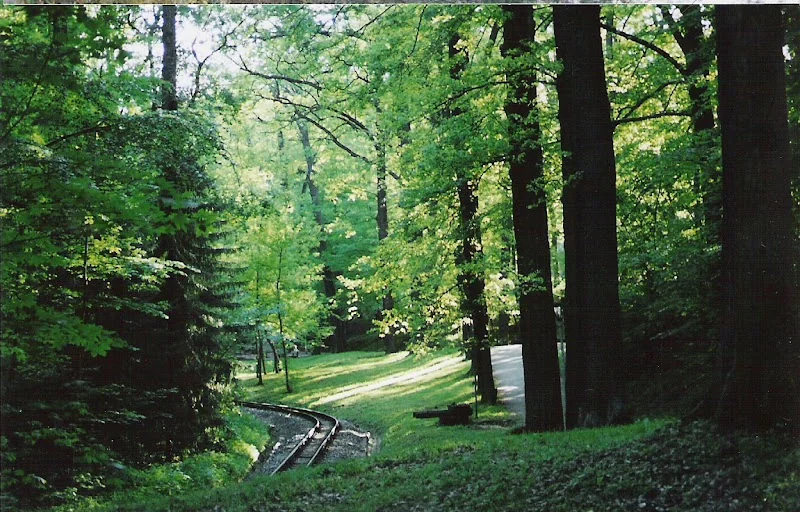
The park railway is one of the most well-known features of Tierpark Gera and is a destination in its own right for many visitors. The official park railway website refers to it as the only park railway in Thuringia. Right behind the main entrance of the zoo, the ticket counter starts, from where the little train invites you to a winding ride through Martinsgrund. The route is romantic, scenically appealing, and technically surprisingly precise: it is 0.8 kilometers long, has a gauge of 600 millimeters, three bridges, and a gradient of 2.9 percent. The facility has two stations, Martinsgrund and Wolfsgehege, and transports around 35,000 passengers annually, according to the city website. For children and young people, the train is not only a means of transport but also a place to learn. Upon reaching the age of ten, every child can become a park railway worker. Interested students learn the basics of railway technology there and take on tasks such as supervision, switch and signal operator, train conductor, ticket seller, or dispatcher under supervision. This combination of technology, volunteer work, and participation continues to shape the character of the railway today. For the 2026 season, the official website states clear operating hours: from April 1 to November 1, 2026, or according to the seasonal indication until November 2, 2026, Wednesdays to Sundays and on public holidays, each from 9:30 AM to 11:30 AM and 1:00 PM to 5:00 PM; Mondays and Tuesdays are rest days, and no operations take place in unfavorable weather conditions. The fare is simple: 1.50 euros for adults and 1.00 euro for children aged three and older as well as for reduced rates. Those looking for photos will also find a media library and galleries with exciting images from construction, reconstruction, excursions, and anniversaries on the park railway website. Thus, the railway is not only a nostalgic detail but a true trademark that makes Tierpark Gera unmistakable. ([parkeisenbahn-gera.de](https://www.parkeisenbahn-gera.de/))
Climate Garden, Playground, and the New Giant Slide
A particularly current topic surrounding Tierpark Gera is the climate garden, which opened in May 2026 and expands the park with a modern learning and experience area. On about 0.8 hectares between the lion and lynx enclosures, an area has been created to show how urban greenery can adapt to climate change. The city describes a mix of nature, research, and recreational fun. Highlights include 45 climate-adapted tree and plant species, scientifically accompanied, sensors for soil moisture, temperature, and CO₂, interactive monitors, and a so-called Talking Tree, which will complement the offer from autumn. At the same time, the area is clearly intended as a family space: there are nature-oriented relaxation areas, a water playground, climbing and balancing elements, and the 18.2-meter-long giant slide, which has been announced as the longest slide in Gera. For many search queries regarding Tierpark Gera playground or Tierpark Gera new slide, this is the most important current information, as not only a single play device stands here, but a small experience area has been created. The city had the slide delivered and installed with great effort in March 2026; it was only opened to visitors with the inauguration of the climate garden. The gastronomy is also relevant for the family outing: the zoo offers a kiosk where there is something for the physical well-being without prior registration, but not year-round. Additionally, the city mentions cozy picnic spots in the area, which fits well with the nature-oriented paths and longer stays. So, those searching for Tierpark Gera photos, playground, gastronomy, or slide will not find a random leisure mix here, but a very current component of the park that connects education, recreation, and movement. Especially in conjunction with the animals and the forest character, the climate garden acts as a contemporary addition that makes the visit even more attractive for children while providing adults with informative added value. ([gera.de](https://www.gera.de/meldung/klimagarten-im-tierpark-gera-eroeffnet))
Easter, Tours, and Special Experiences at Tierpark Gera
The history of Tierpark Gera is closely linked to the development of the city and shows how a small enclosure became a large-scale recreational area. According to the official history, it all began in 1962 in Martinsgrund with mouflons, deer, and red deer. In 1973, the city council decided to develop it as a local recreation destination, and in 1975, the then pioneer railway was inaugurated; later, among other things, the expansion of the Waldschänke restaurant, new paths, bridges, parking areas, and modernizations followed. This long development explains why the zoo appears so diverse today: it is not only a facility but a grown urban culture. The special experiences that the city now offers fit into this. Those who want more than a normal tour can book guided tours, during which a visitor supervisor leads through the animal world. The group size is limited to a maximum of 25 people, and registration should take place at least one week in advance. The guided tour with a guide costs 30.00 euros, the variant with an animal companion such as a donkey, alpaca, or pony costs 50.00 euros, each plus admission. For children aged 11 and older, there is also the offer of being a zookeeper for a day, which is possible from Monday to Friday and costs 60.00 euros. As a memento, there is a certificate, and booking is possible by phone or email. The children's birthday party at the zoo is also very popular, costing 200.00 euros as a package and including a guided tour, an animal companion, animal food, and a decorated room or seating area. For 2026, the city also names specific dates for events: WIR! Children's festival on June 7, Tierpark and Dahlia festival on September 12, Halloween in the zoo on October 30, as well as the animals' wish tree and gift-giving during Advent. Especially around Easter, the zoo is a strong destination because it is open daily during the holidays, offers Easter crafts, and the Easter bunny comes through the park on Easter Sunday and Easter Monday. This mix of tradition, family programming, and seasonal events makes Tierpark Gera a place that can be visited not just once but repeatedly. So, those searching for Tierpark Gera Easter, program, history, or special experiences will find a very rounded, well-organized offer with clear facts and real occasions for a day trip. ([gera.de](https://www.gera.de/tourismus-freizeit-kultur/freizeit-gestalten/tierpark-gera/historie?utm_source=openai))
Sources:
- Tierpark Gera - Official City Website ([gera.de](https://www.gera.de/tierpark))
- Tierpark Gera - Opening Hours ([gera.de](https://www.gera.de/tourismus-freizeit-kultur/freizeit-gestalten/tierpark-gera/oeffnungszeiten))
- Tierpark Gera - Prices and Admission ([gera.de](https://www.gera.de/tourismus-freizeit-kultur/freizeit-gestalten/tierpark-gera/preise-und-oeffnungszeiten))
- Tierpark Gera - Parking Plan and Regulations ([gera.de](https://www.gera.de/tourismus-freizeit-kultur/freizeit-gestalten/tierpark-gera/parkplan-/-parkordnung?utm_source=openai))
- Park Railway Gera - Timetable and History ([parkeisenbahn-gera.de](https://www.parkeisenbahn-gera.de/))
- Climate Garden Opens at Tierpark Gera ([gera.de](https://www.gera.de/meldung/klimagarten-im-tierpark-gera-eroeffnet))
Mehr anzeigenWeniger anzeigen
Tierpark Gera | Opening Hours & Prices
The Tierpark Gera is much more than a classic zoo: it is a developed family place in Martinsgrund, a piece of city history, a nature-oriented excursion destination, and at the same time a modern experience area with a park railway, farm, walk-through enclosures, and the new climate garden. Since its founding in 1962, the area has developed from a small animal enclosure with initially native species to one of the most popular cultural institutions in East Thuringia. Today, over 900 animals from 63 species live here on about 20 hectares, and it is precisely this mix of space, diversity, and closeness that makes the charm of the zoo. Those planning a visit usually look for opening hours, admission prices, parking, dog rules, playground, slide, gastronomy, or the current plan. These topics are closely connected in the Tierpark Gera because the stay is equally interesting for families, school classes, walkers, and railway enthusiasts. The zoo is located in greenery, is accessible for people with disabilities, and offers many reasons to visit more than once a year with events, feeding times, and special experiences. ([gera.de](https://www.gera.de/tourismus-freizeit-kultur/freizeit-gestalten/tierpark-gera/historie?utm_source=openai))
Opening Hours and Admission Prices at Tierpark Gera
The opening hours are among the most important search queries regarding Tierpark Gera, and the official city website answers them very clearly: The zoo is open 365 days a year. The regular hours vary by month, so that visits can be well planned both in winter and during the long summer months. In January and December, it is open from 9:00 AM to 4:00 PM, in February and November from 9:00 AM to 5:00 PM, and from March to October usually from 9:00 AM to 6:00 PM. On December 24 and 31, a shortened opening time of 9:00 AM to 2:00 PM applies. Those who want to time their visit perfectly should also note that the last admission takes place 45 minutes before closing. This makes the visit relaxed, even when arriving with children, dogs, or grandparents, and still allows some time for the park railway or the kiosk. The pricing structure is family-friendly and distinguishes between adults, reduced rates, children, families, groups, annual passes, and dogs. Adults pay 9.00 euros, reduced rates 6.00 euros, and children aged 3 to 16 years 3.00 euros. For families, there are two options: 22.00 euros for two adults with up to three children or grandchildren, and 14.00 euros for one adult with up to three children or grandchildren. Annual passes, group prices, and the dog ticket complement the offer. Parking and the park railway are also transparently listed on the pricing page. Parking in the park costs 3.00 euros, and the park railway charges 1.50 euros per trip for adults and 1.00 euro for children, students, and disabled persons. Additionally, the city points out that admission prices and fare prices may change during events, anniversaries, or other special occasions, and annual passes do not apply then. Those using a discount can save one euro with the Simson card for adults and families. ([gera.de](https://www.gera.de/tourismus-freizeit-kultur/freizeit-gestalten/tierpark-gera/oeffnungszeiten))
Parking, Access, and Dogs at Tierpark Gera
Regarding access and parking, Tierpark Gera also provides real practical information instead of unclear hints. The official address is Straße des Friedens 85, 07548 Gera, and the city marks the access as barrier-free. For visitors with cars, it is particularly important that parking in the park is explicitly mentioned for 3.00 euros on the pricing page. At the same time, the traffic situation at the parking lot at the upper entrance has been improved with a new exit, making arrival more structured and departure more relaxed. This is a real advantage for families with strollers, day visitors, and visitors with a tight schedule, especially on busy days. The official parking plan or parking regulations, which can be accessed on the city website, is also helpful. It states, among other things, that the zoo is located in the middle of the city forest, that smoking is only allowed in designated areas, that children should not be left unattended, and that bicycles, scooters, and other sports equipment are not permitted for safety reasons. The leash requirement for dogs is also clearly stated there: dogs are warmly welcomed but must be kept on a short leash. This fits well with the admission prices, as there is a separate ticket price of 2.00 euros for dogs. Visitors should also know that feeding with brought food is expressly prohibited; however, suitable snacks for the animals are offered at the cash registers. It is precisely this mix of clear rules and friendly service that makes the stay pleasant. Those exploring the area can orient themselves to the fact that there are several entrances and paths and that there are parking options for bicycles and similar vehicles at the entrances. This creates a visit process that remains uncomplicated while still respecting animals, the forest, and other guests. ([gera.de](https://www.gera.de/tourismus-freizeit-kultur/freizeit-gestalten/tierpark-gera/oeffnungszeiten))
Animals, Farm, and Walk-Through Enclosures
The heart of Tierpark Gera is, of course, the animals, and it is here that the special mix of classic zoo, nature experience, and family destination is evident. The official city website currently describes the stock as over 900 animals from 63 species. Many of them are native to the northern hemisphere, including fallow deer, red deer, elk, reindeer, yaks, mouflons, lynxes, and Ouessant sheep. There are also bird species such as Eurasian eagle-owls, snowy owls, amazons, parakeets, and nandus. The zoo also includes exotics, such as the lion as the emblem of the city of Gera, porcupines, and Bennett's kangaroos. The walk-through enclosure for Barbary macaques is particularly popular because the family life of the animals can be observed without disturbing bars. This makes the difference between mere watching and real experiencing: you get closeness without pressuring the animals. For children, the farm is also a highlight. Typical farm animals such as chickens and ducks live there, as well as donkeys, ponies, Owambo goats, sheep, and pigs. A petting zoo ensures that domestic breeds such as sheep, goats, and ponies can be experienced up close. It is always important to treat the animals with respect, as not all animals want to be petted. The park itself explicitly points out to stay on the designated paths and to observe the signs at the enclosures. This is complemented by daily cleaning and care times, during which visitors can observe the animals. This is a strong search topic because many families want to know when a visit is particularly worthwhile. The city describes these feeding and care moments as a real experience, and there are treats available at the cash registers as a reward. All of this shows how Tierpark Gera connects knowledge, observation, closeness, and responsibility. So, those looking for animals at Tierpark Gera do not just get a list of species but a lively place where animal husbandry, encounters, and consideration belong together. ([gera.de](https://www.gera.de/tierpark))
Park Railway Gera: Timetable, Route, and History
The park railway is one of the most well-known features of Tierpark Gera and is a destination in its own right for many visitors. The official park railway website refers to it as the only park railway in Thuringia. Right behind the main entrance of the zoo, the ticket counter starts, from where the little train invites you to a winding ride through Martinsgrund. The route is romantic, scenically appealing, and technically surprisingly precise: it is 0.8 kilometers long, has a gauge of 600 millimeters, three bridges, and a gradient of 2.9 percent. The facility has two stations, Martinsgrund and Wolfsgehege, and transports around 35,000 passengers annually, according to the city website. For children and young people, the train is not only a means of transport but also a place to learn. Upon reaching the age of ten, every child can become a park railway worker. Interested students learn the basics of railway technology there and take on tasks such as supervision, switch and signal operator, train conductor, ticket seller, or dispatcher under supervision. This combination of technology, volunteer work, and participation continues to shape the character of the railway today. For the 2026 season, the official website states clear operating hours: from April 1 to November 1, 2026, or according to the seasonal indication until November 2, 2026, Wednesdays to Sundays and on public holidays, each from 9:30 AM to 11:30 AM and 1:00 PM to 5:00 PM; Mondays and Tuesdays are rest days, and no operations take place in unfavorable weather conditions. The fare is simple: 1.50 euros for adults and 1.00 euro for children aged three and older as well as for reduced rates. Those looking for photos will also find a media library and galleries with exciting images from construction, reconstruction, excursions, and anniversaries on the park railway website. Thus, the railway is not only a nostalgic detail but a true trademark that makes Tierpark Gera unmistakable. ([parkeisenbahn-gera.de](https://www.parkeisenbahn-gera.de/))
Climate Garden, Playground, and the New Giant Slide
A particularly current topic surrounding Tierpark Gera is the climate garden, which opened in May 2026 and expands the park with a modern learning and experience area. On about 0.8 hectares between the lion and lynx enclosures, an area has been created to show how urban greenery can adapt to climate change. The city describes a mix of nature, research, and recreational fun. Highlights include 45 climate-adapted tree and plant species, scientifically accompanied, sensors for soil moisture, temperature, and CO₂, interactive monitors, and a so-called Talking Tree, which will complement the offer from autumn. At the same time, the area is clearly intended as a family space: there are nature-oriented relaxation areas, a water playground, climbing and balancing elements, and the 18.2-meter-long giant slide, which has been announced as the longest slide in Gera. For many search queries regarding Tierpark Gera playground or Tierpark Gera new slide, this is the most important current information, as not only a single play device stands here, but a small experience area has been created. The city had the slide delivered and installed with great effort in March 2026; it was only opened to visitors with the inauguration of the climate garden. The gastronomy is also relevant for the family outing: the zoo offers a kiosk where there is something for the physical well-being without prior registration, but not year-round. Additionally, the city mentions cozy picnic spots in the area, which fits well with the nature-oriented paths and longer stays. So, those searching for Tierpark Gera photos, playground, gastronomy, or slide will not find a random leisure mix here, but a very current component of the park that connects education, recreation, and movement. Especially in conjunction with the animals and the forest character, the climate garden acts as a contemporary addition that makes the visit even more attractive for children while providing adults with informative added value. ([gera.de](https://www.gera.de/meldung/klimagarten-im-tierpark-gera-eroeffnet))
Easter, Tours, and Special Experiences at Tierpark Gera
The history of Tierpark Gera is closely linked to the development of the city and shows how a small enclosure became a large-scale recreational area. According to the official history, it all began in 1962 in Martinsgrund with mouflons, deer, and red deer. In 1973, the city council decided to develop it as a local recreation destination, and in 1975, the then pioneer railway was inaugurated; later, among other things, the expansion of the Waldschänke restaurant, new paths, bridges, parking areas, and modernizations followed. This long development explains why the zoo appears so diverse today: it is not only a facility but a grown urban culture. The special experiences that the city now offers fit into this. Those who want more than a normal tour can book guided tours, during which a visitor supervisor leads through the animal world. The group size is limited to a maximum of 25 people, and registration should take place at least one week in advance. The guided tour with a guide costs 30.00 euros, the variant with an animal companion such as a donkey, alpaca, or pony costs 50.00 euros, each plus admission. For children aged 11 and older, there is also the offer of being a zookeeper for a day, which is possible from Monday to Friday and costs 60.00 euros. As a memento, there is a certificate, and booking is possible by phone or email. The children's birthday party at the zoo is also very popular, costing 200.00 euros as a package and including a guided tour, an animal companion, animal food, and a decorated room or seating area. For 2026, the city also names specific dates for events: WIR! Children's festival on June 7, Tierpark and Dahlia festival on September 12, Halloween in the zoo on October 30, as well as the animals' wish tree and gift-giving during Advent. Especially around Easter, the zoo is a strong destination because it is open daily during the holidays, offers Easter crafts, and the Easter bunny comes through the park on Easter Sunday and Easter Monday. This mix of tradition, family programming, and seasonal events makes Tierpark Gera a place that can be visited not just once but repeatedly. So, those searching for Tierpark Gera Easter, program, history, or special experiences will find a very rounded, well-organized offer with clear facts and real occasions for a day trip. ([gera.de](https://www.gera.de/tourismus-freizeit-kultur/freizeit-gestalten/tierpark-gera/historie?utm_source=openai))
Sources:
- Tierpark Gera - Official City Website ([gera.de](https://www.gera.de/tierpark))
- Tierpark Gera - Opening Hours ([gera.de](https://www.gera.de/tourismus-freizeit-kultur/freizeit-gestalten/tierpark-gera/oeffnungszeiten))
- Tierpark Gera - Prices and Admission ([gera.de](https://www.gera.de/tourismus-freizeit-kultur/freizeit-gestalten/tierpark-gera/preise-und-oeffnungszeiten))
- Tierpark Gera - Parking Plan and Regulations ([gera.de](https://www.gera.de/tourismus-freizeit-kultur/freizeit-gestalten/tierpark-gera/parkplan-/-parkordnung?utm_source=openai))
- Park Railway Gera - Timetable and History ([parkeisenbahn-gera.de](https://www.parkeisenbahn-gera.de/))
- Climate Garden Opens at Tierpark Gera ([gera.de](https://www.gera.de/meldung/klimagarten-im-tierpark-gera-eroeffnet))
Tierpark Gera | Opening Hours & Prices
The Tierpark Gera is much more than a classic zoo: it is a developed family place in Martinsgrund, a piece of city history, a nature-oriented excursion destination, and at the same time a modern experience area with a park railway, farm, walk-through enclosures, and the new climate garden. Since its founding in 1962, the area has developed from a small animal enclosure with initially native species to one of the most popular cultural institutions in East Thuringia. Today, over 900 animals from 63 species live here on about 20 hectares, and it is precisely this mix of space, diversity, and closeness that makes the charm of the zoo. Those planning a visit usually look for opening hours, admission prices, parking, dog rules, playground, slide, gastronomy, or the current plan. These topics are closely connected in the Tierpark Gera because the stay is equally interesting for families, school classes, walkers, and railway enthusiasts. The zoo is located in greenery, is accessible for people with disabilities, and offers many reasons to visit more than once a year with events, feeding times, and special experiences. ([gera.de](https://www.gera.de/tourismus-freizeit-kultur/freizeit-gestalten/tierpark-gera/historie?utm_source=openai))
Opening Hours and Admission Prices at Tierpark Gera
The opening hours are among the most important search queries regarding Tierpark Gera, and the official city website answers them very clearly: The zoo is open 365 days a year. The regular hours vary by month, so that visits can be well planned both in winter and during the long summer months. In January and December, it is open from 9:00 AM to 4:00 PM, in February and November from 9:00 AM to 5:00 PM, and from March to October usually from 9:00 AM to 6:00 PM. On December 24 and 31, a shortened opening time of 9:00 AM to 2:00 PM applies. Those who want to time their visit perfectly should also note that the last admission takes place 45 minutes before closing. This makes the visit relaxed, even when arriving with children, dogs, or grandparents, and still allows some time for the park railway or the kiosk. The pricing structure is family-friendly and distinguishes between adults, reduced rates, children, families, groups, annual passes, and dogs. Adults pay 9.00 euros, reduced rates 6.00 euros, and children aged 3 to 16 years 3.00 euros. For families, there are two options: 22.00 euros for two adults with up to three children or grandchildren, and 14.00 euros for one adult with up to three children or grandchildren. Annual passes, group prices, and the dog ticket complement the offer. Parking and the park railway are also transparently listed on the pricing page. Parking in the park costs 3.00 euros, and the park railway charges 1.50 euros per trip for adults and 1.00 euro for children, students, and disabled persons. Additionally, the city points out that admission prices and fare prices may change during events, anniversaries, or other special occasions, and annual passes do not apply then. Those using a discount can save one euro with the Simson card for adults and families. ([gera.de](https://www.gera.de/tourismus-freizeit-kultur/freizeit-gestalten/tierpark-gera/oeffnungszeiten))
Parking, Access, and Dogs at Tierpark Gera
Regarding access and parking, Tierpark Gera also provides real practical information instead of unclear hints. The official address is Straße des Friedens 85, 07548 Gera, and the city marks the access as barrier-free. For visitors with cars, it is particularly important that parking in the park is explicitly mentioned for 3.00 euros on the pricing page. At the same time, the traffic situation at the parking lot at the upper entrance has been improved with a new exit, making arrival more structured and departure more relaxed. This is a real advantage for families with strollers, day visitors, and visitors with a tight schedule, especially on busy days. The official parking plan or parking regulations, which can be accessed on the city website, is also helpful. It states, among other things, that the zoo is located in the middle of the city forest, that smoking is only allowed in designated areas, that children should not be left unattended, and that bicycles, scooters, and other sports equipment are not permitted for safety reasons. The leash requirement for dogs is also clearly stated there: dogs are warmly welcomed but must be kept on a short leash. This fits well with the admission prices, as there is a separate ticket price of 2.00 euros for dogs. Visitors should also know that feeding with brought food is expressly prohibited; however, suitable snacks for the animals are offered at the cash registers. It is precisely this mix of clear rules and friendly service that makes the stay pleasant. Those exploring the area can orient themselves to the fact that there are several entrances and paths and that there are parking options for bicycles and similar vehicles at the entrances. This creates a visit process that remains uncomplicated while still respecting animals, the forest, and other guests. ([gera.de](https://www.gera.de/tourismus-freizeit-kultur/freizeit-gestalten/tierpark-gera/oeffnungszeiten))
Animals, Farm, and Walk-Through Enclosures
The heart of Tierpark Gera is, of course, the animals, and it is here that the special mix of classic zoo, nature experience, and family destination is evident. The official city website currently describes the stock as over 900 animals from 63 species. Many of them are native to the northern hemisphere, including fallow deer, red deer, elk, reindeer, yaks, mouflons, lynxes, and Ouessant sheep. There are also bird species such as Eurasian eagle-owls, snowy owls, amazons, parakeets, and nandus. The zoo also includes exotics, such as the lion as the emblem of the city of Gera, porcupines, and Bennett's kangaroos. The walk-through enclosure for Barbary macaques is particularly popular because the family life of the animals can be observed without disturbing bars. This makes the difference between mere watching and real experiencing: you get closeness without pressuring the animals. For children, the farm is also a highlight. Typical farm animals such as chickens and ducks live there, as well as donkeys, ponies, Owambo goats, sheep, and pigs. A petting zoo ensures that domestic breeds such as sheep, goats, and ponies can be experienced up close. It is always important to treat the animals with respect, as not all animals want to be petted. The park itself explicitly points out to stay on the designated paths and to observe the signs at the enclosures. This is complemented by daily cleaning and care times, during which visitors can observe the animals. This is a strong search topic because many families want to know when a visit is particularly worthwhile. The city describes these feeding and care moments as a real experience, and there are treats available at the cash registers as a reward. All of this shows how Tierpark Gera connects knowledge, observation, closeness, and responsibility. So, those looking for animals at Tierpark Gera do not just get a list of species but a lively place where animal husbandry, encounters, and consideration belong together. ([gera.de](https://www.gera.de/tierpark))
Park Railway Gera: Timetable, Route, and History
The park railway is one of the most well-known features of Tierpark Gera and is a destination in its own right for many visitors. The official park railway website refers to it as the only park railway in Thuringia. Right behind the main entrance of the zoo, the ticket counter starts, from where the little train invites you to a winding ride through Martinsgrund. The route is romantic, scenically appealing, and technically surprisingly precise: it is 0.8 kilometers long, has a gauge of 600 millimeters, three bridges, and a gradient of 2.9 percent. The facility has two stations, Martinsgrund and Wolfsgehege, and transports around 35,000 passengers annually, according to the city website. For children and young people, the train is not only a means of transport but also a place to learn. Upon reaching the age of ten, every child can become a park railway worker. Interested students learn the basics of railway technology there and take on tasks such as supervision, switch and signal operator, train conductor, ticket seller, or dispatcher under supervision. This combination of technology, volunteer work, and participation continues to shape the character of the railway today. For the 2026 season, the official website states clear operating hours: from April 1 to November 1, 2026, or according to the seasonal indication until November 2, 2026, Wednesdays to Sundays and on public holidays, each from 9:30 AM to 11:30 AM and 1:00 PM to 5:00 PM; Mondays and Tuesdays are rest days, and no operations take place in unfavorable weather conditions. The fare is simple: 1.50 euros for adults and 1.00 euro for children aged three and older as well as for reduced rates. Those looking for photos will also find a media library and galleries with exciting images from construction, reconstruction, excursions, and anniversaries on the park railway website. Thus, the railway is not only a nostalgic detail but a true trademark that makes Tierpark Gera unmistakable. ([parkeisenbahn-gera.de](https://www.parkeisenbahn-gera.de/))
Climate Garden, Playground, and the New Giant Slide
A particularly current topic surrounding Tierpark Gera is the climate garden, which opened in May 2026 and expands the park with a modern learning and experience area. On about 0.8 hectares between the lion and lynx enclosures, an area has been created to show how urban greenery can adapt to climate change. The city describes a mix of nature, research, and recreational fun. Highlights include 45 climate-adapted tree and plant species, scientifically accompanied, sensors for soil moisture, temperature, and CO₂, interactive monitors, and a so-called Talking Tree, which will complement the offer from autumn. At the same time, the area is clearly intended as a family space: there are nature-oriented relaxation areas, a water playground, climbing and balancing elements, and the 18.2-meter-long giant slide, which has been announced as the longest slide in Gera. For many search queries regarding Tierpark Gera playground or Tierpark Gera new slide, this is the most important current information, as not only a single play device stands here, but a small experience area has been created. The city had the slide delivered and installed with great effort in March 2026; it was only opened to visitors with the inauguration of the climate garden. The gastronomy is also relevant for the family outing: the zoo offers a kiosk where there is something for the physical well-being without prior registration, but not year-round. Additionally, the city mentions cozy picnic spots in the area, which fits well with the nature-oriented paths and longer stays. So, those searching for Tierpark Gera photos, playground, gastronomy, or slide will not find a random leisure mix here, but a very current component of the park that connects education, recreation, and movement. Especially in conjunction with the animals and the forest character, the climate garden acts as a contemporary addition that makes the visit even more attractive for children while providing adults with informative added value. ([gera.de](https://www.gera.de/meldung/klimagarten-im-tierpark-gera-eroeffnet))
Easter, Tours, and Special Experiences at Tierpark Gera
The history of Tierpark Gera is closely linked to the development of the city and shows how a small enclosure became a large-scale recreational area. According to the official history, it all began in 1962 in Martinsgrund with mouflons, deer, and red deer. In 1973, the city council decided to develop it as a local recreation destination, and in 1975, the then pioneer railway was inaugurated; later, among other things, the expansion of the Waldschänke restaurant, new paths, bridges, parking areas, and modernizations followed. This long development explains why the zoo appears so diverse today: it is not only a facility but a grown urban culture. The special experiences that the city now offers fit into this. Those who want more than a normal tour can book guided tours, during which a visitor supervisor leads through the animal world. The group size is limited to a maximum of 25 people, and registration should take place at least one week in advance. The guided tour with a guide costs 30.00 euros, the variant with an animal companion such as a donkey, alpaca, or pony costs 50.00 euros, each plus admission. For children aged 11 and older, there is also the offer of being a zookeeper for a day, which is possible from Monday to Friday and costs 60.00 euros. As a memento, there is a certificate, and booking is possible by phone or email. The children's birthday party at the zoo is also very popular, costing 200.00 euros as a package and including a guided tour, an animal companion, animal food, and a decorated room or seating area. For 2026, the city also names specific dates for events: WIR! Children's festival on June 7, Tierpark and Dahlia festival on September 12, Halloween in the zoo on October 30, as well as the animals' wish tree and gift-giving during Advent. Especially around Easter, the zoo is a strong destination because it is open daily during the holidays, offers Easter crafts, and the Easter bunny comes through the park on Easter Sunday and Easter Monday. This mix of tradition, family programming, and seasonal events makes Tierpark Gera a place that can be visited not just once but repeatedly. So, those searching for Tierpark Gera Easter, program, history, or special experiences will find a very rounded, well-organized offer with clear facts and real occasions for a day trip. ([gera.de](https://www.gera.de/tourismus-freizeit-kultur/freizeit-gestalten/tierpark-gera/historie?utm_source=openai))
Sources:
- Tierpark Gera - Official City Website ([gera.de](https://www.gera.de/tierpark))
- Tierpark Gera - Opening Hours ([gera.de](https://www.gera.de/tourismus-freizeit-kultur/freizeit-gestalten/tierpark-gera/oeffnungszeiten))
- Tierpark Gera - Prices and Admission ([gera.de](https://www.gera.de/tourismus-freizeit-kultur/freizeit-gestalten/tierpark-gera/preise-und-oeffnungszeiten))
- Tierpark Gera - Parking Plan and Regulations ([gera.de](https://www.gera.de/tourismus-freizeit-kultur/freizeit-gestalten/tierpark-gera/parkplan-/-parkordnung?utm_source=openai))
- Park Railway Gera - Timetable and History ([parkeisenbahn-gera.de](https://www.parkeisenbahn-gera.de/))
- Climate Garden Opens at Tierpark Gera ([gera.de](https://www.gera.de/meldung/klimagarten-im-tierpark-gera-eroeffnet))
Frequently Asked Questions
Reviews
manilas
9. August 2025
It was really nice trip to Tierpark Gera. Lot of animals, and a lot of space for everyone. It is amazing you can even touch most of them. I highly recommend visiting this place.
Dhrumil Shah
12. September 2021
Very nice place. Especially children enjoy it a lot. They can touch animals and feed them. Good place for a day's visit.
Marie K.
21. July 2025
I love this ZOO. Not too crowded, just very relaxing.
Martin Pickrodt
19. October 2025
Just a great place for kids. Make sure you check out the petting zoo. It's a blast, you can purchase food for the animals and it's super fun for the kids to feed them.
Dr. Vinay Singh
30. July 2024
Tierpark Gera is a wonderful place for a family day out, offering a range of activities that cater primarily to younger children. The combination of animal interactions, play areas, and on-site amenities ensures a fun and hassle-free visit. While it might be less appealing for older children and can get crowded on peak days, its overall charm and family-friendly environment make it a highly recommended spot for a day trip.